




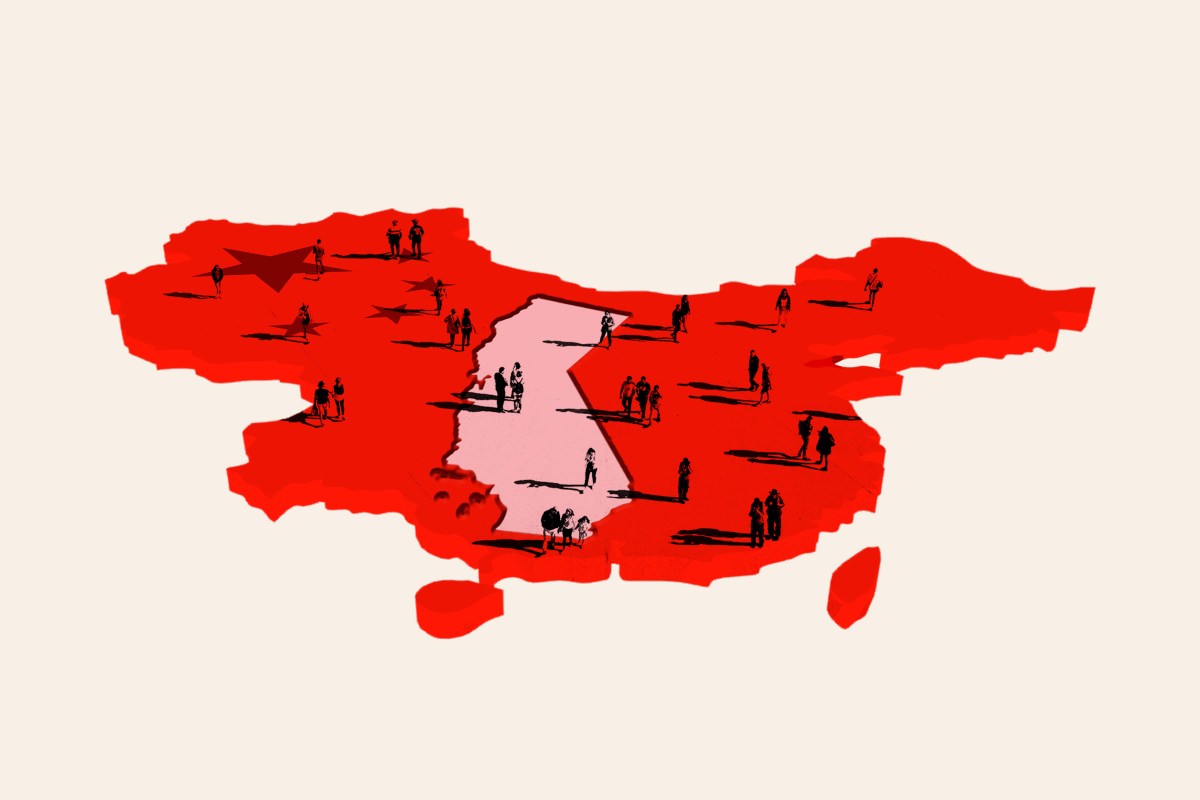
China’s population is projected to fall by more than California’s current population in the next 10 years—and that is only the start. U.N. estimates show the country could be down about 140 million by 2050, and roughly 760 million by 2100.
A falling birth rate means a shrinking, aging population. This results in fewer workers supporting more retirees—which drags on growth, strains pensions and health care, and hampers long-term innovation and fiscal stability. China’s population decline is precipitous, as U.N. data shows:
By Next Year
In Five Years
In 10 Years
In 25 Years
In 75 Years
A Population Shift
For decades, China’s population story was one of rapid expansion. Even into the 2000s, the country was still adding millions of people a year—a demographic tail wind that helped power breakneck economic growth.
Then the trend shifted. The one-child policy, introduced in 1979 and enforced for more than three decades, slashed birth rates.
China later loosened the rules: first to a two-child policy in 2015, then to a three-child limit in 2021. In July 2021, it removed all limits. But the policy pivot came after years of falling fertility, rising housing and education costs, and a workforce that was already beginning to age.
The result is a country facing a decline so dramatic that it can be hard to picture.
The U.N.’s latest population projections show China slipping into sustained shrinkage. Using 2025 as a baseline, the drop begins almost immediately. In 2026, China is projected to have about 3.2 million fewer people than the year before—more than the population of Arkansas.
That annual decline doesn’t stay Arkansas-sized for long. The losses accumulate quickly. By 2030, China is projected to have 17.9 million fewer people than in 2025. That’s close to the combined population of Pennsylvania and Louisiana (about 17.7 million)—or just under the population of New York State.
The comparisons use current population estimates for the U.S. from 2024, and both populations are likely to change over the coming decades. Some projections also show U.S. growth slowing sharply—and even turning negative without immigration.
For China, the steepest declines arrive later. Mid-century, the projected annual losses grow larger still, and the running total accelerates. By 2100, the U.N.’s median projection shows China with about 782.7 million fewer people than in 2025.
State-Sized Losses—in a Year, Even a Month
It is not just cumulative losses that add up. The U.N.’s median projection shows that China’s losses become enormous within single years—and, by extension, within single months.
After turning negative in the early 2020s, losses sit around 3.2 million a year in 2025—2026—about the size of Arkansas (3.09 million).
The biggest drops arrive in the early 2060s. In 2062, China will face an estimated annual loss of about 14 million (13,967,584)—roughly the population of Pennsylvania (13.08 million). That is about 1.16 million people per month on average in that year.
China’s Attempts To Reverse the Trend
China’s leaders have been trying to push birth rates back up—sometimes in symbolic ways, and sometimes with money. In recent years, a growing number of provinces and cities have rolled out child-care subsidies and cash incentives for families, and Beijing has also moved toward a nationwide child-care subsidy program.
One recent policy shift removed long-standing tax exemptions on contraceptives, a move reported as part of Beijing’s broader pro-natal push. At the same time, researchers say China’s mix of national and local measures remains uneven, and has struggled to produce a sustained rebound in births.
The projections aren’t destiny. But the direction for China’s population clear. A country that once added millions each year is now on track to subtract them—at an accelerating pace.
Read the full article here