




Robots that cook and fold laundry have largely remained in the concept/startup phase, with no shortage of highly produced viral videos of humanoid bots making stir-fry or folding laundry in controlled environments; however, the tide may be shifting.
LG, one of the best-known home appliance brands, is set to unveil its first-ever multitasking autonomous home robot, CLOiD, at CES 2026. The launch could mark a major turning point, with blue-chip home appliance brands now feeling compelled to enter the fast-emerging multifunctional home robot market.
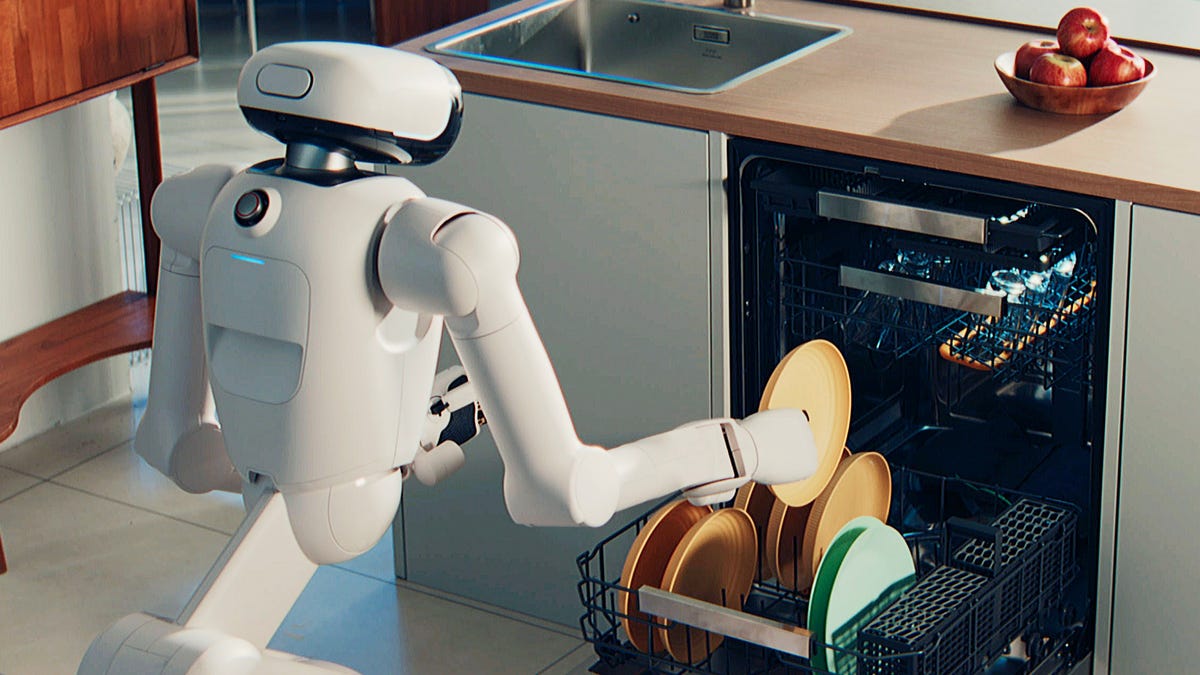
LG’s home robot with laundry, cooking and dishwasher-emptying skills could mark a major turning point in home robotics.
According to the company, CLOiD is an AI-powered home robot that purports to do far more than vacuum, mop or pick up socks. While existing home robots are engineered to perform tasks such as floor cleaning, pool and lawn care, the CLOiD uses AI and vision-based technology to automate more complex household tasks, such as “retrieving milk from the fridge, placing a croissant in the oven for breakfast and folding and stacking garments after laundering.”
In an email, the brand tells us that CLOiD is designed to perform and coordinate household tasks across connected home appliances using LG’s ThinQ ecosystem. This means you’ll need LG appliances for it to function as a go-between that executes several mundane daily tasks.
LG’s CLOiD is engineered to perform simple kitchen tasks like sticking a croissant in the oven for breakfast.
“CLOiD is intended to reduce the time and physical effort required for everyday chores,” LG said in a statement on Sunday.
While we’ve yet to see the robot in action, the AI-enabled home robot will be demonstrated publicly for the first time this week at CES 2026. CNET eagerly awaits a first look at CLOiD ahead of the massive tech show and will report back following the demo.
How LG CLOiD is designed
The LG CLOiD consists of a head unit, torso with two articulated arms and a wheeled base equipped with autonomous navigation.
“The LG CLOiD consists of a head unit, torso with two articulated arms and a wheeled base equipped with autonomous navigation. The torso can tilt to adjust its height, enabling the robot to pick up objects from knee level and above,” LG said.
Each arm has seven degrees of freedom, matching the mobility of a human arm. The shoulder, elbow, and wrist allow forward, backward, rotational, and lateral motion, while each hand includes five independently actuated fingers for fine manipulation. This configuration allows LG CLOiD to handle a wide range of household objects and operate in kitchens, laundry rooms and living areas.
The wheeled base uses autonomous driving technology derived from LG’s experience with robot vacuums and the LG Q9. This form factor was selected for stability, safety and cost-effectiveness, with a low center of gravity that reduces the risk of tipping if a child or pet makes contact.
CLOiD’s head serves as a mobile AI home hub
CNET will get a first look at LG’s new humanoid home robot in action.
The head serves as a central intelligent control center for the household. It houses a chipset acting as LG CLOiD’s central processor, along with a display, speaker, cameras, multiple sensors and voice-powered generative AI. Together, these components enable the robot to interact with people using natural speech and expressive visual cues, understand users’ home environments and daily routines, and autonomously manage connected appliances based on what it learns.
Integration with ThinQ and ThinQ ON
CLOiD’s capabilities expand significantly through its integration with LG’s smart home ecosystem, including the AI home platform ThinQ and hub ThinQ ON. This connectivity allows CLOiD to orchestrate a wider range of services across LG’s various appliances.
Don’t miss any of our unbiased tech content and lab-based reviews. Add CNET as a preferred Google source.
Read the full article here