




For many Americans, the cost of trying to lose weight extends well beyond the scale.
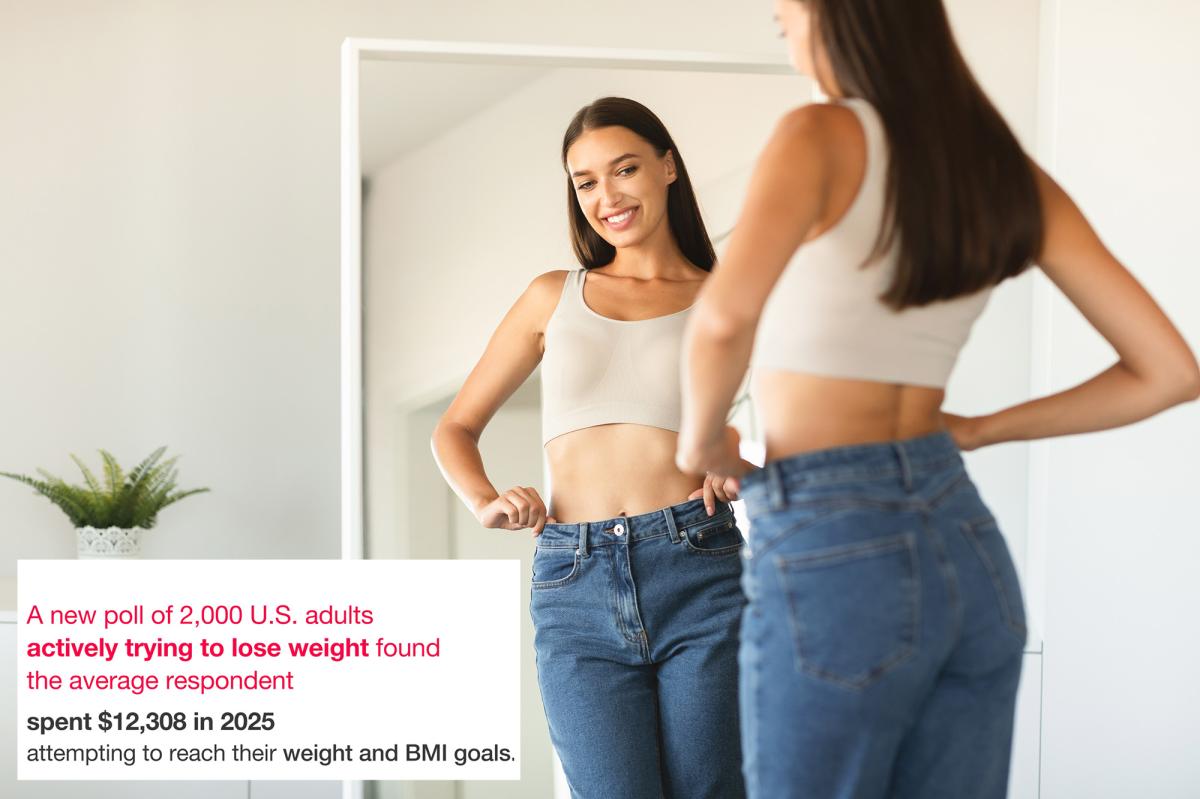
A new poll of 2,000 U.S. adults actively trying to lose weight found the average respondent spent $12,308 in 2025 attempting to reach their weight and BMI goals, highlighting what many describe as a quiet but persistent “weight tax.”
The research, conducted by Talker Research on behalf of Hims, Inc., shows those expenses stretch across everyday life, from groceries to clothing and repeated diet and fitness efforts.
Respondents estimate they would save an average of $197 per month if they reached their target weight. Many believe those savings would come from buying fewer fast-food meals (56%), reducing grocery bills (52%) and purchasing fewer new clothes (31%).
Others point to reduced spending on specialty sizing such as “big and tall” clothing (26%), as well as lower healthcare costs tied to managing weight-related conditions (22%), which can include fewer doctor visits and lower insurance copays.
Nearly one in five (19%) also expect savings from no longer cycling through repeated fad fitness and diet programs like juice cleanses and other short-term weight loss efforts.
“In my experience, most patients living with obesity aren’t just beginning a weight loss journey,” said Craig Primack, Head of Weight Loss at Hims & Hers. “They’ve been navigating it for years, often a lifetime. Each failed attempt not only erodes hope, but comes with real financial consequences.
“For too many Americans, the pursuit of better health has become a cost they simply can’t afford. Evidence-based, personalized care that’s designed for continuity and priced for long-term use offers a more sustainable path forward.”
That cycle is familiar to many respondents. Over the past decade, participants reported trying and failing to reach their target weight and BMI an average of six times.
Beyond financial relief, respondents said weight loss would also improve other aspects of their daily life. Many cited having more energy during the day (61%), fitting into smaller clothing sizes (57%), sleeping better at night (56%), eating smaller portions (56%) and lowering their BMI (53%).
This year, respondents say they plan to approach their goals differently, emphasizing consistency, patience and increasing everyday movement.
One participant shared, “I’m concentrating on consistency this year instead of perfection. I want to prioritize sleep and water, keep a mindful eating journal, and engage in enjoyable physical activities every day. I’m convinced that I can achieve my desired weight and BMI by acknowledging little accomplishments and using self-compassion.”
Motivation remains high heading into 2026: more than three in four respondents (77%) said fitting back into their favorite clothes by year’s end is a key driver.
Still, money may be a stronger motivation. More than eight in 10 (86%) said they would pursue their weight loss goals with greater intensity if a $5,000 financial reward awaited them at the finish line.
“Affordability, access, and fragmented care remain some of the biggest obstacles standing between people and long-term success on their health and wellness journeys,” Primack said. “Many people cycle through disconnected diets, programs and appointments that add up quickly without providing consistent, sustained support.
“Platforms like Hims & Hers that bring access to nutrition, physical activity and medical guidance together into a single, comprehensive plan can reduce both financial strain and dropout, making it easier for people to start and stay on a path that actually works.”
Research methodology:
Talker Research surveyed 2,000 Americans actively trying to lose weight who have access to the internet; the survey was commissioned by Hims, Inc. and administered and conducted online by Talker Research between Jan. 5 and Jan. 12, 2026. A link to the questionnaire can be found here.
To view the complete methodology as part of AAPOR’s Transparency Initiative, please visit the Talker Research Process and Methodology page.
Read the full article here