


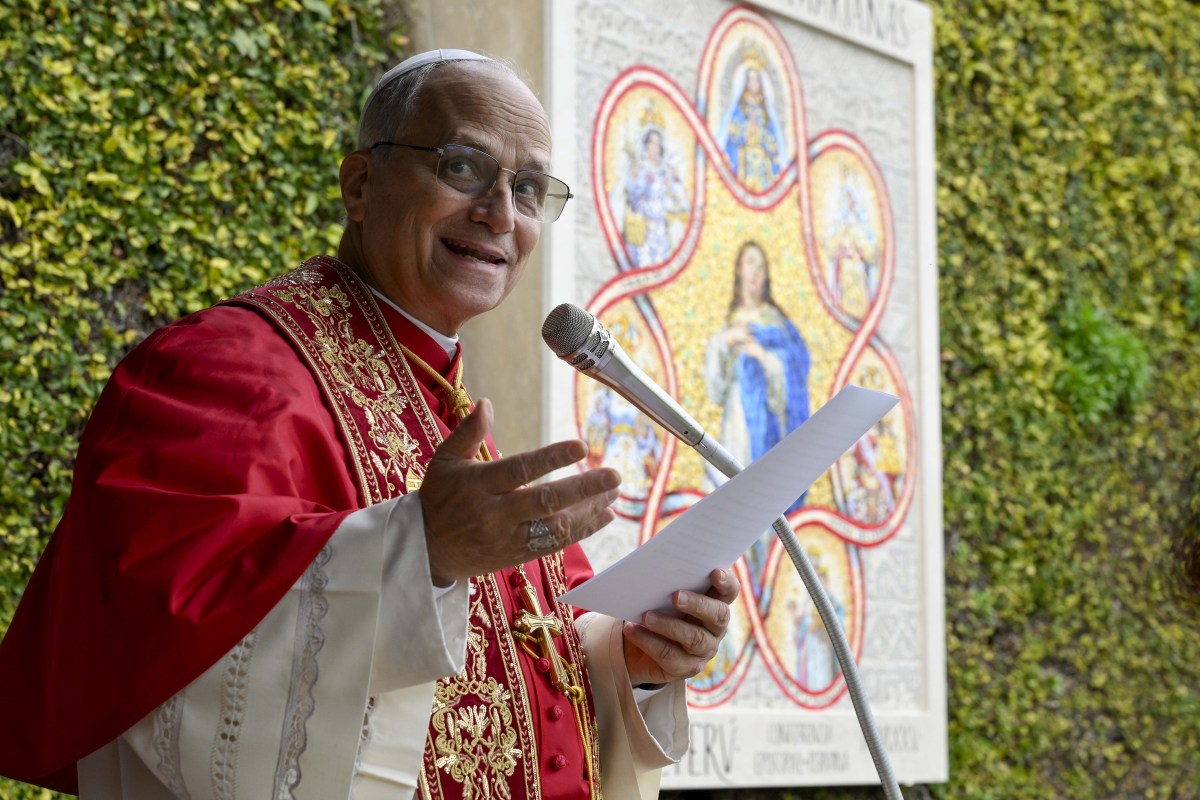
Pope Leo XIV expressed “great concern” on Sunday over escalating tensions between Cuba and the United States, urging leaders from both nations to pursue dialogue rather than confrontation.
Speaking after reciting the Angelus from the Apostolic Palace, the pontiff aligned himself with an appeal from Cuban bishops, calling on officials to “promote a sincere and effective dialogue, to avoid violence and any action that could increase the sufferings of the dear Cuban people.”
The appeal comes as President Donald Trump revealed on Saturday the U.S. has begun talks with Cuban leaders, days after signing an executive order imposing tariffs on countries that supply oil to Cuba.
Newsweek reached out to the White House and Cuban Foreign Ministry via email on Sunday for comment.
Why It Matters
The papal intervention arrives at a critical diplomatic juncture, with Trump simultaneously applying economic pressure while opening communication channels with Havana. The president has predicted the Cuban government is “ready to fall” and suggested the island would “come to us and want to make a deal.”
Cuba had relied heavily on oil shipments from allies such as Venezuela before a U.S. military operation ousted Venezuelan President Nicolás Maduro, whose capture has hit the Cuban economy hard.
Trump’s order punishing any country trading oil with Cuba would add to the economic woes and put pressure on Mexico, which has supplied energy and given support to the island even as Mexican President Claudia Sheinbaum seeks good ties with Washington.
What To Know
The pope’s appeal marks a significant papal intervention in hemispheric politics, explicitly endorsing the Cuban bishops’ call for peaceful resolution.
The pontiff invoked Cuba’s patroness, the Virgin of Charity of El Cobre, stating: “May the Virgen de la Caridad del Cobre assist and protect all the children of that beloved land.” This religious reference carries particular weight in Cuba where the Virgin is revered across the island as a symbol of national unity beyond political divisions.
The Pope’s emphasis on avoiding “violence and any action that could increase the sufferings of the dear Cuban people” directly addresses humanitarian concerns amid the escalating economic pressure.
Trump’s executive order signed Thursday targets any country selling or providing oil to Cuba with tariffs on their goods, primarily pressuring Mexico, which became Cuba’s oil lifeline after Trump halted Venezuelan shipments following Maduro’s ouster in January.
Mexico’s state-owned Pemex had shipped nearly 20,000 barrels daily to Cuba from January through September 2025, though experts say that figure has dropped to about 7,000 barrels following U.S. Secretary of State Marco Rubio’s visit to Mexico City.
Sheinbaum warned the sanctions could cause a “humanitarian crisis” and said Friday she would seek alternatives to continue helping Cuba. Trump dismissed those concerns Saturday, saying “it doesn’t have to be a humanitarian crisis” and predicted Cuba would seek a deal. “I think, you know, we’ll be kind,” he added.
Cuba’s Foreign Minister Bruno Rodríguez condemned the order as a “brutal act of aggression,” accusing the U.S. of “blackmail and coercion.” Deputy Foreign Minister Carlos F. de Cossio said the U.S. was forcing “sovereign states to join the embargo” through “tariff coercion.”
Anxieties are mounting on the island, with drivers sitting in long gasoline lines this week amid uncertainty about future supplies.
What People Are Saying
President Donald Trump told reporters on Saturday: “We’re starting to talk to Cuba…I think they probably would come to us and want to make a deal. So Cuba would be free again.”
Mexican President Claudia Sheinbaum said on Friday: “It could cause a humanitarian crisis” and Mexico would “seek alternatives to continue helping Cuba.”
The Bureau of Western Hemisphere Affairs on X on Sunday: “The illegitimate Cuban regime must immediately stop its repressive acts of sending individuals to interfere with the diplomatic work of CDA Hammer and members of the @USembcuba team. Our diplomats will continue to meet with the Cuban people despite the regime’s failed intimidation tactics.”
What Happens Next
Trump did not specify what level of outreach his administration has had with Cuba or when talks began, leaving the scope and substance of negotiations unclear.
Mexico’s foreign affairs secretary has told Rubio that maintaining humanitarian aid to Cuba is “very important” and offered to serve as an intermediary between Washington and Havana.
Reporting from the Associated Press contributed to this article.
In a polarized era, the center is dismissed as bland. At Newsweek, ours is different: The Courageous Center—it’s not “both sides,” it’s sharp, challenging and alive with ideas. We follow facts, not factions. If that sounds like the kind of journalism you want to see thrive, we need you.
When you become a Newsweek Member, you support a mission to keep the center strong and vibrant. Members enjoy: Ad-free browsing, exclusive content and editor conversations. Help keep the center courageous. Join today.


Read the full article here