




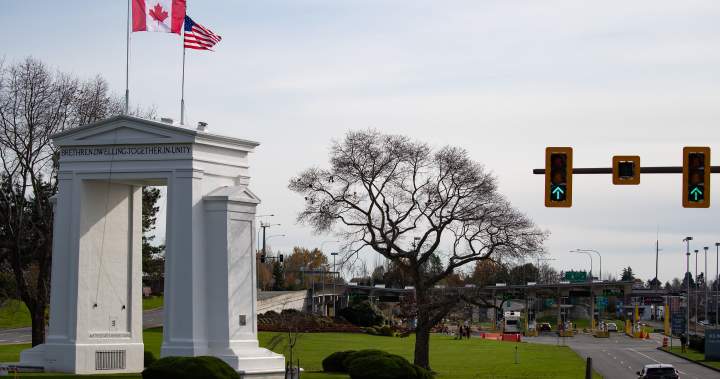
Indigenous travellers crossing the border into the United States are being warned to exercise extreme caution amid an increasingly tense political climate.
“The biggest concern is having many of our First Nations from Canada wrongfully detained in the United States,” said Terry Teegee, the regional chief of the B.C. Assembly of First Nations.
Those fears have prompted travel advisories to be issued by Indigenous groups across Canada.
That includes the Okanagan Nation Alliance, which represents eight First Nations communities.
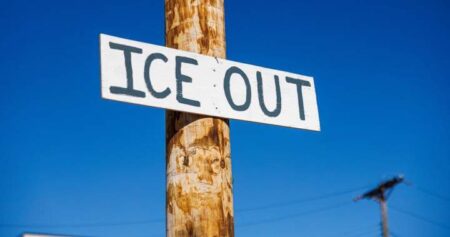
“It has to do with ICE (U.S. Immigration and Customs Enforcement). It has to do with (U.S. President Donald) Trump’s policies,” said Chief of the Osoyoos Indian Band, Clarence Louie.
As ICE agents step up enforcement and scrutiny stateside, concerns are growing on the Canadian side of the border.
“A number of Native Americans are being detained and also being harassed in regards to the many ICE officers that are detaining them,” Teegee said. “So we’re also hearing that First Nations that come from Canada are also getting harassed and detained at the border.”
Get breaking National news
For news impacting Canada and around the world, sign up for breaking news alerts delivered directly to you when they happen.
The Assembly of First Nations, a national advocacy organization, advised “Any First Nations members travelling to the U.S. to carry valid identification. including a Status Card and a valid Passport.”
The travel advisories are unprecedented, according to one immigration lawyer.
Len Saunders of Blaine Immigration said Indigenous people have special border rights under what is called the Jay Treaty.
“It was enacted before the creation of the U.S. — it’s basically the free passage of what they call American Indians or, in Canada, for First Nations to enter the United States with really no restrictions,” Saunders said.
Despite those rights, there are concerns about whether they’re being upheld.
“It’s more of something that the local officers at the border understand, the free passage of First Nations. I can almost guarantee that most ICE officers would not be aware of the existence of the Jay Treaty and how it works,” Saunders said.
It’s why indigenous groups say the travel advisories are critical.
“It’s good that the travel advisories are giving our people a heads up. That’s good,” Louie said.
Read the full article here