



In the ongoing diplomatic chess game over the war in Ukraine, Russia has just delivered a politically stinging (and personal) rebuke to President Donald Trump.
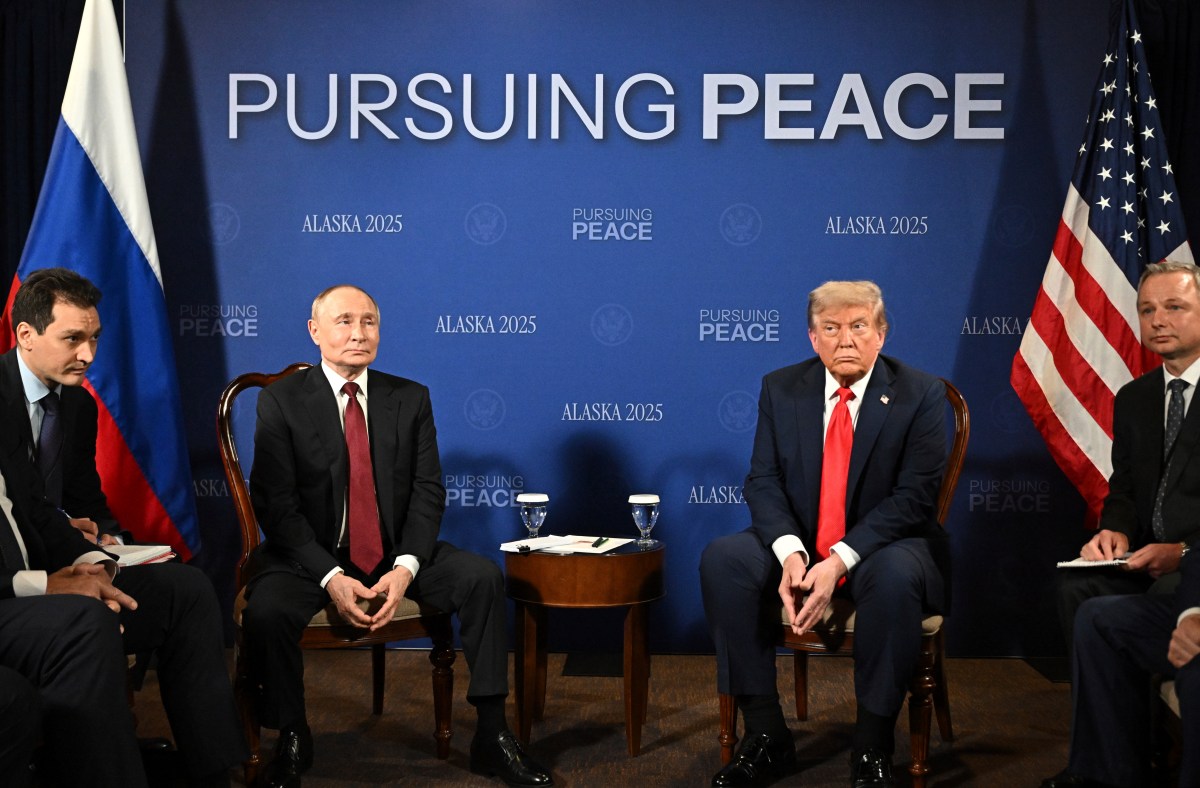
Russian President Vladimir Putin’s foreign minister and close lieutenant, Sergey Lavrov, accused Trump on Monday of continuing “Bidenism” and betraying what was agreed between the two leaders at their summit in Anchorage, Alaska, last August.
“This is pure ‘Bidenism,’ which Trump and his team reject. Yet they calmly extended the law, and sanctions against Russia continue to operate,” Lavrov said.
According to Lavrov, Moscow and Washington reached a “man-to-man” understanding at the summit, only for Washington to turn its back on that understanding.
Why is this happening?
Lavrov’s sneer is designed to insult the U.S. president. During his most recent reelection campaign and before that campaign, Trump sold himself as the anti-Biden: the dealmaker who could end the Ukraine war by force of personality.
Trump has been remarkably consistent about pinning the war on Biden. In his February 26, 2022, CPAC speech, he framed the invasion as part of a predictable pattern of Russian opportunism under successive presidents: “Under Bush, Russia invaded Georgia. Under Obama, Russia took Crimea. Under Biden, Russia invaded Ukraine,” adding that he was “the only president of the 21st century on whose watch Russia did not invade another country.”
Two years later, he escalated from “Biden got rolled” to “Biden helped roll him.” At the June 27, 2024, CNN debate, Trump argued that “if we had a real president… he would have never invaded Ukraine,” then went further: “He did nothing to stop it. In fact, I think he encouraged Russia from going in.” On the trail in September 2024, he said Biden had “egged it all on,” and that “Biden and Kamala allowed this to happen by feeding Zelensky money and munitions.” And once back in office, he made the branding explicit: “The War between Russia and Ukraine is Biden’s war, not mine,” blaming Biden (and Zelensky) for “allowing this travesty to begin.”
But, despite the Alaska summit and regular contacts since, the basic geometry of the conflict hasn’t changed: Russia still occupies roughly a fifth of Ukraine and insists on maximalist territorial terms, while Kyiv rejects formal cession. And now Ukrainian President Volodymyr Zelensky says Washington has put a June deadline on the table for a peace deal, with pressure likely to ramp up if it slips.
Trump has attempted to use money as a lever to force Moscow into genuine negotiations. In October 2025, the U.S. sanctioned Rosneft and Lukoil—Russia’s two largest oil companies—explicitly as pressure tied to peace talks.
Treasury Secretary Scott Bessent urged “an immediate ceasefire” and said the firms “fund the Kremlin’s war machine.”
Analysts at Carnegie noted why that matters: together Rosneft and Lukoil account for “about half” of Russia’s oil output, and—counting other already-sanctioned firms—over 80 percent of Russia’s liquid hydrocarbon production would be under U.S. sanctions.
What is the Right saying?
On the pro-Trump right, the line is that if Moscow is whining, the squeeze is working. When announcing sanctions, Bessent said: “Now is the time to stop the killing.” He framed the oil sanctions as leverage for Trump’s peace push.
Tucker Carlson’s “Morning Note” cheered Trump’s warning of “very severe consequences” if Putin wasn’t serious—while also asking why America is “policing this Eastern European war.”
Meanwhile, hawkish conservatives who distrust Putin argue Trump risks being played: John Bolton, the former Trump adviser who is now a vehement critic, said Putin “clearly won” Alaska by dodging a ceasefire and “escaped sanctions.”
What is the Left saying?
Progressive and Democratic leaders have slammed Trump’s Ukraine peace plan as ill-conceived and dangerously one-sided.
Senate Democratic Leader Chuck Schumer said: “Vladimir Putin is a thug and a butcher. And Trump’s so-called ‘peace plan’ gives this thug and butcher just about everything that he wants. There’s only one word to describe this plan: capitulation.”
What Is the Status of the Russia-Ukraine Peace Negotiations?
A diplomatic push by the Trump administration to end the war in Ukraine has generated momentum, U.S. and European officials say, but it has yet to produce a breakthrough on the central issue dividing the sides: the future of Russian-occupied Ukrainian territory and other land claims being made by Moscow.
Analysts say Putin sees little incentive to compromise, even as his forces face mounting strain along the roughly 600-mile front line. In their assessment, the Kremlin believes time is on its side—betting that Western political unity will fray, military aid to Kyiv will diminish, and Ukraine’s ability to sustain resistance will erode under prolonged pressure.
What happens next
Lavrov’s “Bidenism” jab and criticism of Trump’s post-Alaska actions is a brazen diplomatic slight. It spins Trump’s own efforts to negotiate peace into something amateurish and contradictory.
Moreover, the insult comes at a politically sensitive moment for Trump. He has staked his status as a peacemaker on brokering an end to the war. Now Russia’s foreign minister is publicly undermining that narrative, suggesting that Moscow sees Trump’s sanctions policy as hostile and inconsistent with what Putin thought had been agreed.
It is a public mockery of Trump’s negotiating credibility, just at the moment when peace talks are stepping up: Zelensky said on Monday that the U.S. proposed holding the next round of trilateral talks next week in their country for the first time, likely in Miami.
Read the full article here