





To say it doesn’t feel good to be called pretty by strangers on the internet would be lying — of course it does.
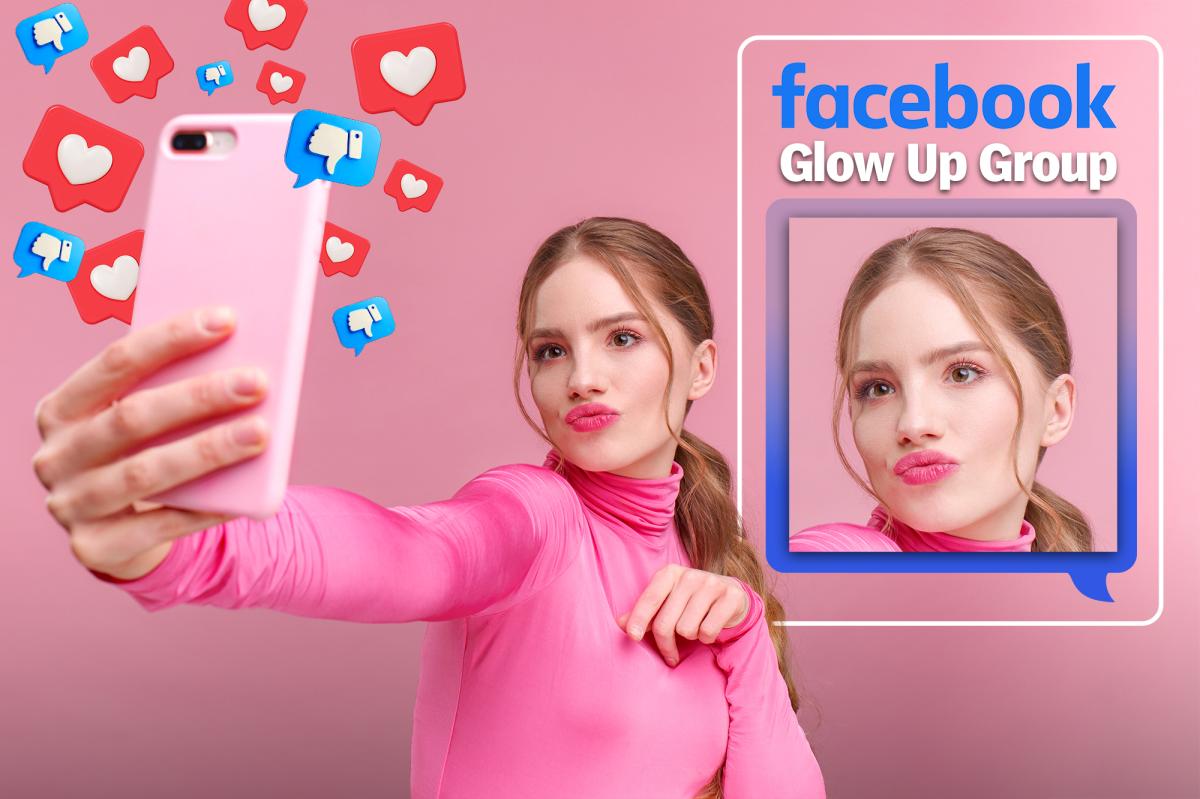
For the nearly 2 million women who are part of the Facebook glow-up groups Glow Up Tips/Advice and Glow Up Advice/Suggestions — online communities where members post pics of themselves explicitly to be judged by strangers in the pursuit of beauty advice — it is par for the social media course.
Virtual queries range from curiosities on amping up one’s skincare routine to more daring requests, such as, “Please be brutally honest, how can I become more conventionally attractive?” — a real caption recently posted over a batch of selfies by a top contributor on one of the forums.
When Vanessa Ashleigh Arradaza, a 26-year-old nursing student, joined Glow Up Advice/Suggestions in November of 2024, she was “braced for an awakening.” Though she initially felt nervous to solicit strangers’ comments about her looks, her desire for candid feedback pushed her to take the plunge and post her first selfie.
“At the time I joined, I was going through major changes, like changing professions,” Arradaza told The Post. “I wanted to seek advice that could enhance my appearance, which I thought would be a big contributor to changing my life.”
Having sought suggestions from the group on potential ways to switch up her hair color, Arradaza was pleasantly surprised when the comments she received were “100% supportive and kind.” She now plans to implement the suggestions IRL, letting go of her highlights and returning to her natural, black hair.
“Just like everyone else, I have my own insecurities — and I was nervous for them to be pointed out,” said Arradaza. “However, the comments I got were (ones like) ‘You are gorgeous!’ and genuine advice on what to do for my hair color. Saying that it brightened my day is an understatement.”
However, on a deeper level, the community comparison game can easily give pause. One has to wonder: Is asking strangers “how to glow up” really a productive, mentally healthy exercise?
Maria, an administrator of both Facebook communities, thinks it can be.
“I think it’s not about being something that you are not, but to glow up as yourself,” Maria told The Post. “You may take someone’s advice or apply a product someone (recommends) and use it yourself, but not in a way that makes you feel insecure about who you are.”
The vibe of the Facebook hubs typically skews positive — think one “You should lose weight” jab for every five kind (if bland) “You go, girl!” stamp of approval. And in a culture that’s increasingly fixated on optimizing the female appearance, with weight-reducing GLP-1s now just an online subscription away, perhaps it’s not surprising that we feel this constant need to improve how we look and present ourselves to the real — and now virtual — world.
Still, that doesn’t make it any less disturbing.
Dr. Rachel Goldman, a Big Apple psychologist and author of “When Life Happens,” has serious reservations about whether they are that helpful, instead skewing more harmful.
“These glow-up groups really make me pause,” Goldman told The Post. “Wanting to feel better about ourselves (and even the need for validation) is so human, but crowdsourcing judgment about our appearance can reinforce the idea that our worth lives outside of us.”
I’d like to say that my own membership in these glow-up groups was a personal blip — that I left quickly after realizing that real beauty comes from self-acceptance, then rode my high horse off into the proverbial sunset.
The truth, however, is messier: I’ve been an active member of both virtual spaces since October of 2024 and still find a twisted sense of value in it, and sometimes even enjoy it.
Even before joining, I had the queasy realization that any virtual judgment could trainwreck my mental health. At the same time, who wouldn’t be enamored by a stranger — one with no impetus to offer BS niceties about one’s looks — who offers practical aesthetic advice that could (hopefully) boost their ego?
Being pretty felt like the societal cost of acceptance, not to mention connection, and as a 20-something female craving both, I was eager to pay the price.
While the comments on my own posts over the years have tended to be supportive — one that read “You look like I want my glow-up to look like” had me smiling dumbly at my phone for hours — I always end up feeling a bizarre mix of pride, indignation and shame that could leave me unsettled for days.
And I’m definitely not alone.
Laura Manaco, a 34-year-old Philadelphia theater professional, felt similarly when she joined Glow Up Advice/Suggestions in October of 2024. After gaining some weight and feeling pressure to look her best for a friend’s wedding, she thought crowdsourcing some new makeup tips or flattering hairstyles might help.
However, as she explored the page, Manaco was dismayed to find a slew of hurtful comments under a host of members’ selfies — often packaged as “helpful” advice. While some notes were “supportive and lovely,” she feared that posting her own face would only lead to more self-doubt and shame.
“There are lots of positive comments, but the ones that are critical are so cutting that my brain would not even allow itself to process the constructive advice,” Manaco told The Post. “It almost feels like the commenters take what’s written in your post, then use it to drive the knife in where it hurts the most.”
To post in these glow-up groups is, in my opinion, to be Midas with his gold: thrilled at first, but ultimately dissatisfied with the lack of deeper connection it inspires. But that first hit of dopamine does feel damn good.
Of course, I don’t plan on leaving the groups — not yet, anyway — so the cycle continues.
Read the full article here