



The state government is facing backlash over the amount of affordable housing proposed for its “once-in-a-century” redevelopment of Glebe Island on Sydney Harbour, triggering criticism that the rare transformation of publicly owned land will be dominated by multimillion-dollar apartments.
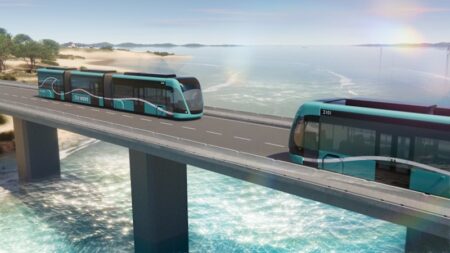
Bulk port operations will be shifted from the industrial site by 2030, making way for a new suburb of 7000 to 8500 homes around a metro station due to open two kilometres west of Sydney’s city centre in 2032, the Minns government revealed on Tuesday.
At least 10 per cent of homes proposed for the site would be so-called “affordable housing”, offered at below-market rent for those on low to moderate incomes. This would include a portion of dedicated homes for essential workers, such as nurses, teachers, paramedics, firefighters and police.
Balmain Greens MP Kobi Shetty said the small proportion of affordable homes on public land was a “disgrace”, and the site should be used “to deliver public good – not be a cash cow for developers”.
“Without significantly more social, affordable, and public housing, this development risks becoming another exclusive waterfront enclave for the rich. The government can’t pretend that young people or essential workers are going to be able to afford to buy these properties,” Shetty said.
Developers have estimated a one-bedroom apartment in the precinct would cost about $2 million.
The publicly owned land in the precinct will be transferred to a new agency, which will mirror the now-defunct Barangaroo Delivery Authority. The land will remain in public hands, but developers will be able to tender for long leases to deliver housing.
Premier Chris Minns said prescribing only 10 per cent of homes for affordable housing would allow the government to reinvest returns from the site into public use including parks and nightlife.
“We need to get the yields in to make it special,” Minns said.
NSW Labor previously committed to ensuring developments on surplus public land would include a minimum of 30 per cent of social and affordable housing. Minns said his government had been able to meet this goal through the $6.6 billion investment in public and social housing in the 2024 state budget.
“We felt it was a better way of achieving our goal of a major net increase in social housing in NSW to directly fund it via the budget, rather than having unnecessary compromises on major land releases like this one,” Minns said.
The former Coalition state government in 2022 proposed to build high-density housing, 30 per cent of which was to be affordable and key worker housing, next to Rozelle Bay, which is a small part of the wider Bays West precinct.
Committee for Sydney think tank chief executive Eamon Waterford said the precinct would boost the supply of sorely needed housing with access to public transport, but said the 10 per cent provision of affordable and key worker homes was “far lower than the original 30 per cent proposed for this site”.
Waterford said the publicly owned land represented a “once-in-a-century opportunity to set a benchmark for a fairer Sydney”, by creating a waterfront suburb for residents of all incomes.
“If we want to see working-class people back in Balmain, the [affordable housing] target needs to be closer to the government’s original 30 per cent commitment.
“Comparable sites in London mandate 50 per cent affordable housing – more ambitious targets for affordable housing would help ensure the people who keep our city running can live in or near the communities they serve.”
Sydney Working Port Coalition spokesman Paul Nicolaou, who is also Business Sydney executive director, was “very disappointed” the government “intended to remove all working port facilities from Glebe Island in favour of high-rise housing”.
The Glebe Society acting president Duncan Leys urged the government to devise a “well-considered” scheme, and said future buyers would be unlikely to “get in for less than $2 million or $3 million”.
The long-awaited plan for Bays West reveals the Minns government’s attempt to balance more intensive residential development with the working port near Rozelle, and represents the most radical reshaping of a harbour-front site in Sydney since the $10 billion Barangaroo foreshore.
Minns also disputed claims that moving Glebe Island’s port operations would materially increase the cost of constructing homes. He said government advice found that rerouting concrete supplies to Port Kembla, south of Wollongong, would cost the equivalent of $50 per apartment.
Architect and former City of Sydney councillor Philip Thalis, part of the team that created an international competition-winning scheme for Barangaroo that was later abandoned, said designs for the site should prioritise generous public spaces and connections to the rest of the city.
“The danger is that it’s Barangaroo on steroids. You inevitably get, in these areas, super high-density, upmarket [developments].”
Thalis said the proposed allocation of affordable housing was “trivial – it should be much higher”.
“I think the big mistake, like with Barangaroo, is to cast this as [being about] a development opportunity, rather than public benefit. That is the key recalibration the city really needs.”
Emeritus Professor James Weirick, who is former director of the University of NSW’s graduate program in urban development and design, called for “the genuine provision of public space and access to the waterfront, and an ensemble of towers that makes a contribution to the skyline of Sydney”.
“We the citizens of NSW give that air space to developers who’ll take over, it’s a gift from us to developers, it’s not a right, so we should really set the standard for what should be built.”
Start the day with a summary of the day’s most important and interesting stories, analysis and insights. Sign up for our Morning Edition newsletter.
 Max Maddison is a state political reporter at The Sydney Morning Herald.
From our partners
Read the full article here