



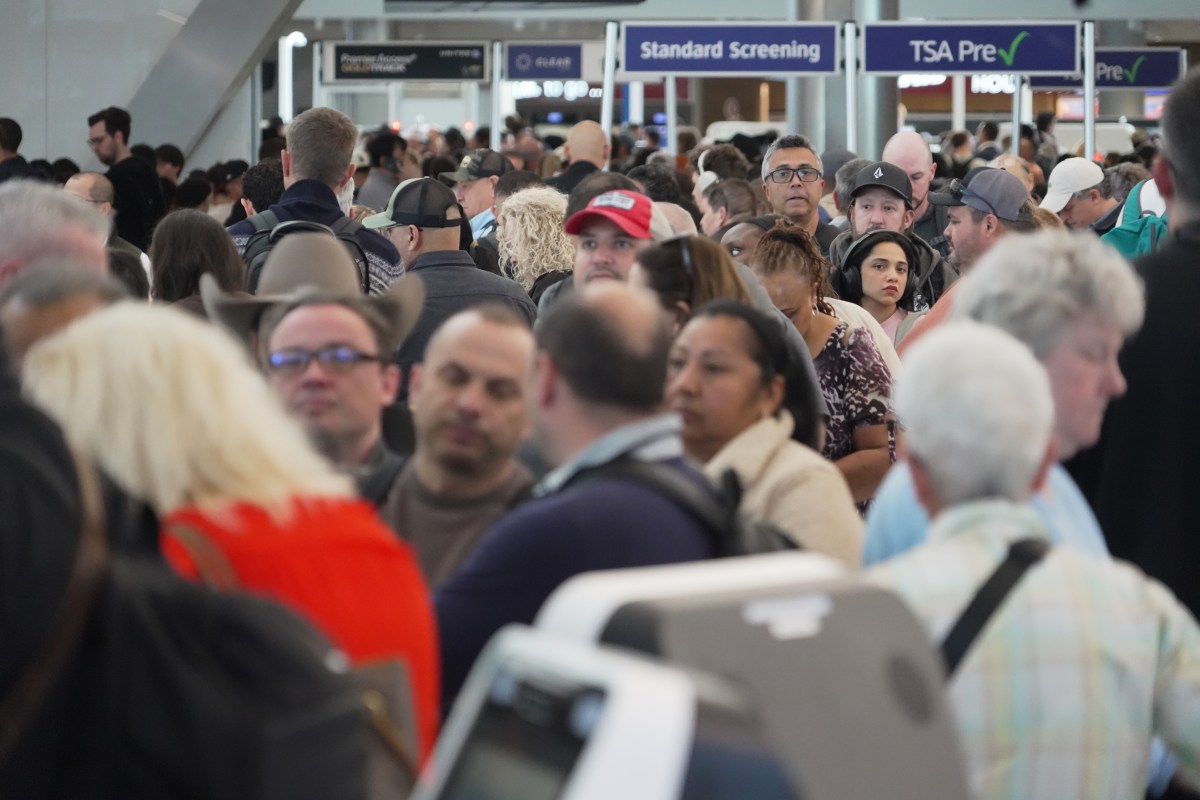
As the Department of Homeland Security (DHS) shutdown has entered its second month, airport security wait times stretch into hours as millions of Americans travel for spring break.
Why It Matters
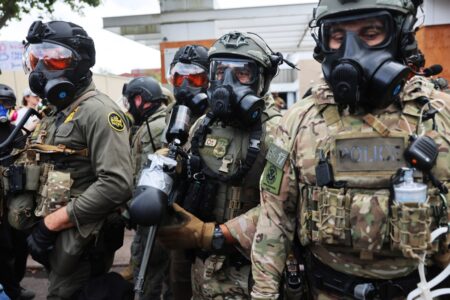
Earlier this year, Senate Democrats agreed to move forward with a broader spending bill to avert a wider government shutdown after DHS funding was carved out of the package. The dispute followed the fatal shootings of two U.S. citizens by federal immigration officers in Minnesota and fueled Democratic calls for reforms to Immigration and Customs Enforcement (ICE) and Customs and Border Patrol (CBP) enforcement practices.
The DHS appropriations bill provides funding for several agencies, including the TSA, the Federal Emergency Management Agency (FEMA), the Coast Guard, and the Secret Service, among others. DHS oversees the TSA, meaning that TSA workers have been working without pay during the shutdown. If the impasse continues, DHS says screening disruptions could worsen, particularly at smaller airports with fewer staffing reserves.
Airports across the country have warned that TSA security lines were “longer than usual” and advised passengers to arrive earlier for their flights.
Why Are TSA Lines So Long?
Long waits continue at airport security checkpoints across the U.S. as TSA staffing shortages worsen during the DHS shutdown, with some officers calling out after missing paychecks.
Travelers have been advised to arrive hours prior to their flights to accommodate for fewer staff and an influx of spring break travelers. Around 366 TSA agents had quit since the shutdown began on February 14.
On Sunday and Monday, call-outs spiked at more than 50 percent in Houston and 30 percent in New Orleans and Atlanta, resulting in fewer officers screening an ever-growing number of travelers, the DHS said. Typically, the TSA average call-out rate is about 2 percent. During the last shutdown, TSA saw attrition rates of 25 percent at some airports. During the current shutdown, the highest single-day airport call-out rate was 55 percent at William P. Hobby Airport on March 14.
CEOs from American, Delta, United, and other carriers published a joint letter on Monday warning that the system was at a “breaking point.”
A DHS spokesperson told Newsweek on Wednesday that the shutdown was leaving some TSA officers struggling to cover basic expenses, including food and commuting costs, contributing to elevated call-out rates and staffing shortages.
“As these situations arise, TSA officials evaluate operations on an airport-to-airport basis and adjust accordingly,” said the spokesperson.
Why Did DHS Funding Lapse?
On February 14, DHS partially shut down as lawmakers clashed over reforms to ICE and CBP enforcement following the fatal shootings of 37-year-olds Renee Nicole Good and Alex Pretti during immigration operations. Democrats pushed to evaluated the DHS appropriations bill separately, seeking to make certain reforms while trying to avoid a full government shutdown.
Last year, the government shut down for 43-days, the longest in U.S. history.
What Is Congress Doing About DHS Shutdown?
Several congressional leaders met privately with Trump’s border Czar Tom Homan on Thursday to negotiate the end of the shutdown. Senator Patty Murray, a Democrat on the Senate Appropriations Committee, said that bipartisan members of the group are still far from coming to an agreement, “I’m glad the White House is here, but we’re still a long ways apart.”
The Republican chair of the Senate Appropriations Committee, Senator Susan Collins, said Democrats were making negotiations challenging, saying, “Unfortunately, the Democrats’ list of demands keeps growing and growing. But the group that was in there is operating in good faith, and I hope we’ll get together again very soon.”
The Senate has a planned recess at the end of next week, but Senate Majority Leader John Thune said that that might not come to fruition if the shutdown is not resolved before then.
What People Are Saying
Senate Majority Leader John Thune said on Thursday: “We need to get this resolved and it needs to get resolved, you know, by the end of next week. I can’t see us taking a break if the [department’s] still shut down.”
Senator Adam Schiff, a California Democrat, wrote on X: “Democrats offered to fund TSA. Republicans blocked it. Now they want to hand more money to ICE without reform. They control the whole of government, but can’t seem to govern.”
Transportation Secretary Sean Duffy said in a March 16 X post: “TSA workers are PATRIOTS and many of them have no choice but to get additional jobs because DEMOCRATS are refusing to make sure they GET PAID! @SenSchumer this is on you and your party. CALL CHUCK and tell him to fund @DHSgov.”
Senate Minority Leader Chuck Schumer, a New York Democrat, wrote on X: “Democrats have offered legislation to fund TSA, Coast Guard, and FEMA while we continue ICE negotiations. Republicans BLOCKED the funding. We must fund TSA, Coast Guard and FEMA TODAY.”
Acting Deputy TSA Administrator Adam Stahl told Fox News: “If this continues, it’s not hyperbole to suggest that we may have to quite literally shut down airports—particularly smaller ones if call-out rates go up.”
House Speaker Mike Johnson wrote on X on Tuesday: “Democrats are denying the pay of roughly 120,000 employees of the Department of Homeland Security—fueling the third longest shutdown in American history. They REFUSE to reopen TSA and FEMA unless they can reopen our borders for criminal illegal aliens. There is really only one word to describe their position: CRAZY!”
What Happens Next
It remains unclear when the shutdown will end as Republicans and Democrats continue to disagree over DHS funding and immigration enforcement policy.
Read the full article here