


For any radio announcer, the greatest fear of all is dead air. It’s a nightmare that wakes you in a cold sweat. So the news last week that one of Australia’s largest and most loved community radio stations might soon be silenced was particularly chilling.
Volunteers at Sydney’s 2SER-FM were informed on Tuesday that the station may be off the air permanently as soon as July. They were told that following Macquarie University pulling its funding late last year, the University of Technology was also threatening to withdraw its financial support. It would be a tragic end to a much-loved pillar of the Sydney cultural landscape. For nearly half a century 2SER has nourished the city’s music, art and cultural scenes. It’s been a bastion of independent journalism, a beacon of diverse voices and a showcase for our city’s great talents.
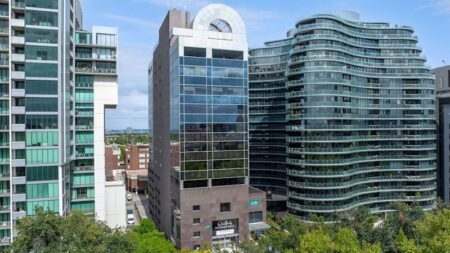
I first walked through its doors in 1992. I’d just stepped off the XPT from Lismore, backpack in hand, looking for adventure. Back then the studios were at the top of the brutalist UTS tower. After a long, rickety ride in an ageing lift, I was ushered into a back room where a volunteers’ meeting was under way. We were given the rundown. Here was a station that served all of Sydney. It ran on the sweat of volunteers and just a few skeleton staff. It was cool. It played music you wouldn’t find anywhere else. It fostered amazing talent. And it prided itself on a dedicated audience right across the city – an audience who put its money where its mouth was by coughing up supporter pledges each year to keep the station on air.
In the midst of the volunteer meeting, the co-ordinator, a wonderful woman named Kath Duncan, mentioned that they had a hole in the schedule that night. It was the graveyard shift. Did anyone want it? I looked around at the distinct lack of hands being raised and slowly lifted mine. Right, she said, you’re on air at 1am. And that was it. That was the start of my Sydney broadcasting career.
That same thrill has been enjoyed by thousands of volunteers since the station first went to air in October 1979. And many of them have gone on to enjoy extraordinary careers. Social Services Minister Tanya Plibersek volunteered, as did Michael Rowland of ABC News Breakfast fame, the BBC China correspondent Stephen McDonell, Eleanor Hall from ABC’s The World Today, ex 702, JJJ & Radio National manager Cath Dwyer, Michael Koziol from this masthead, Four Corners Supervising producer Alice Brennan as well as ABC presenters Sarah Dingle, Richard Kingsmill, Sarah Macdonald, and many, many more. All drawn to the sense of community, fun and intellectual challenge that this unique entity offered.
The fact that so many high-profile media names have come through 2SER is no fluke. Not only is it a priceless cultural asset for Sydney, it’s also an unparalleled training ground for its students and volunteers. When Macquarie retreated last year, Professor Chris Dixon wrote an email to the arts faculty, where he said the loss of the station wouldn’t affect the standard of students’ education. He wrote: “Macquarie continues to offer rich experiential learning through purpose-built, on-campus studios. These facilities provide high-quality, industry-standard training embedded in the curriculum.”
Unfortunately, as a broadcaster with more than four decades of experience, I’d have to question whether that isn’t a loss for students. There’s simply nothing else that compares to working in a true broadcast environment. The deadlines, the pressure, the camaraderie, the adrenaline and, yes, the unadulterated joy. There’s also the experience of giving back to the community, in a wholly unique way. You simply don’t get that by sitting in a recording studio that’s not connected to a transmitter. And that transmitter is special too. Its signal is connected to the 107.3 bandwidth on the FM spectrum – that’s worth untold millions. The last time a slice of the Sydney FM spectrum was auctioned off was in 2004. The winning bid came from the DMG group, which now hosts Smooth FM on that frequency. What did it pay? A whopping $106 million dollars. And UTS is prepared to let that asset go for nix?
So what’s gone so wrong? Well, this is the question we, as 2SER alumni, have been putting to the 2SER board and the UTS council over the past few weeks. They’re saying that after Macquarie pulled out, they’ve been forced to find other financial partners to carry the load, in the form of either the University of NSW or University of Sydney. At this stage, there’s been no word from UNSW, but University of Sydney has declined.
So, how competently has the process been handled? Macquarie announced its departure in September last year and I’ve been told the partner prospectus didn’t go out to the other bodies until mid-March. That’s six months later. Staff were warned in March that the prospectus must be picked up within a few weeks or they could lose their jobs. You’d think that given this was the greatest fiscal crisis in the station’s history, all stops would’ve been pulled out to find a solution as early as possible. But the volunteers weren’t aware of the looming threat until last week. And apparently there hasn’t been a single station meeting called in the past year, despite the precarious situation.
The other question is: why were only two sandstone universities being approached? Why not a more creative angle? One that looks at other bodies such as the Australian Film Television and Radio School, the education department, government bodies, etc?
While UTS claims it can no longer carry the funding alone, it’s worth placing its fiscal commitment in perspective. The university handles a budget of well over a billion dollars. According to the 2024 2SER financial report, the core funding from Macquarie was $325,000 and UTS just over $300,000, plus in-kind contributions. It’s small fry for an institution of its size. In the scheme of things a decision by UTS to continue to fund the station wouldn’t touch the sides. But it would generate some much-needed positive news, for an organisation that’s weathering its worst reputational damage in history.
The ABC’s Four Corners put a blowtorch to the recent governance of UTS. And an interim report from the NSW Parliament Standing Committee into higher education has been equally scathing, writing “the committee was very troubled by evidence relating to council processes, the management of conflicts of interest, and the use of external consultants in workforce and performance decision-making”. That final point is a big one. UTS easily spends more than $40 million a year on consultants. A tiny fraction of that would save 2SER. Not to forget the $1.5 million spent on a leadership consultant being flown up from Victoria to teach the executive group how to … umm … lead.
Last week’s shocking news has triggered a wave of concern from across the country, as former volunteers, musicians, journalists and radio lovers share their distress at the prospect of no more 2SER. Our message to UTS is clear. Announce you’ll continue funding for future years, with or without partners. And above all else, give us your assurance that you won’t let 2SER fall silent. Because that dead air, as we know, would be a nightmare.
Start the day with a summary of the day’s most important and interesting stories, analysis and insights. Sign up for our Morning Edition newsletter.
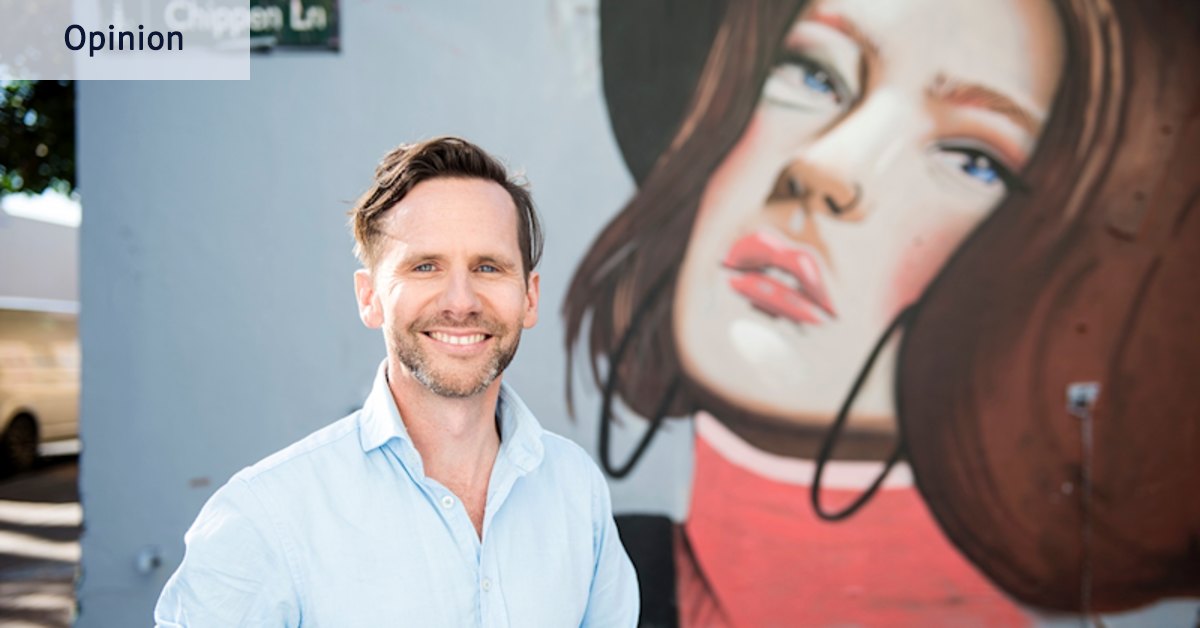
 Robbie Buck hosted the breakfast show on ABC Radio Sydney for eight years and fronted the Australian youth broadcasting network triplej for 13 years.
From our partners
Read the full article here