




Donald Trump’s brand has always been a strangely efficient machine: part celebrity, part ideology, part storefront.
It throws off cash when the spotlight is hottest—through merch drops, licensing, “official” products, and crypto-adjacent ventures—then sputters when attention moves elsewhere.
The central question hanging over the entire enterprise is simple but unforgiving: what happens when the presidency ends and the daily oxygen supply disappears?
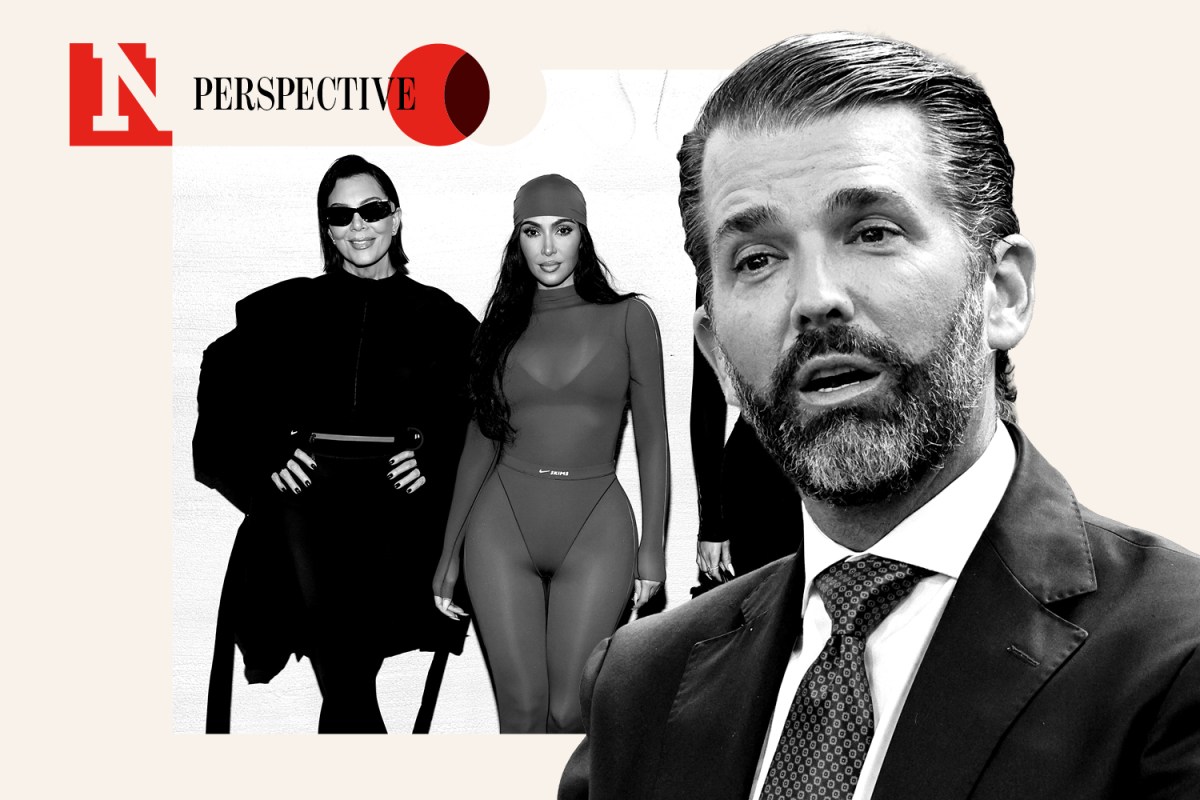
That is why a Wall Street Journal report that Amazon executives have internally discussed rebooting The Apprentice—with Donald Trump Jr. as a potential host—matters far beyond reality television gossip and political griping.
If it happened, it would represent the first serious attempt to solve the Trump brand’s biggest weakness: that it is still overwhelmingly founder‑led.
Keeping Up With the Trumps
A Don Jr.-hosted The Apprentice would not just revive an old show or generate episodic revenue. It could fundamentally change what “Trump” is as a commercial product.
It would begin the process of converting a volatile, attention‑driven, merch‑led brand into family‑governed intellectual property—something materially closer to the Kardashian model, which prioritizes durability over dominance and shelf life over spectacle.
The Kardashians are the most relevant comparison because they have already crossed the line Trump is approaching: institutionalization.
Their brand has a high, defensible floor because it is anchored by a real operating business.
SKIMS—Kim Kardashian’s shapewear company—raised $225 million at a $5 billion valuation in a Goldman Sachs-led funding round and is projecting annual net sales above $1 billion for 2025.
That kind of capital does not chase celebrity chaos. It bets on scalable systems with governance, repeat customers, and a future that does not require the founder to monopolize the news cycle.
Trump’s brand, by contrast, still behaves like a high‑beta exposure trade. Forbes estimates Donald Trump’s net worth at roughly $6.5 billion, driven by a shifting mix of crypto ventures, licensing deals, golf properties, and the market swings of Trump Media.
Reuters’ summary of Trump’s disclosures showed more than $600 million in reported income tied to crypto, licensing, golf, and related ventures in a single year.
This is lucrative, but volatile. And it feeds controversy precisely because the brand depends on constant leverage and relevance.
Like Father, Like Son
The irony is that Trump has already solved this problem once before.
The Apprentice was more than a hit show to Trump. It was the core asset that rebuilt Trump’s brand in the 2000s.
NBC paid Trump more than $213 million over 14 seasons, and tax‑record investigations later found he earned roughly $427 million when licensing and endorsements linked to the show were included.
The show paid him well, but it also industrialized a character. It created a legend (Democrats would say myth) of Trump as the decisive boss at a moment when many of his underlying businesses were far shakier than the television narrative suggested.
A Don Jr.-fronted reboot asks an important question: can that character be transferred? Can “Trump” operate as a format rather than a performer?
If the answer is yes—even imperfectly—the brand graduates into a new category. It becomes franchisable rather than personal, governed rather than improvised.
The Brand Decay of Former Presidents
To test that idea, we modeled post‑presidency brand decay curves. In the founder‑led scenario, brand power drops quickly once the political spotlight fades, settling into a low residual value.
In the family‑governed IP scenario—where a Don Jr. The Apprentice launches on a major platform and earns renewals—decay slows and the floor rises.
The difference emerges not at the peak, but in the middle years, where most political brands collapse.
Five years after a presidency ends, a founder‑led Trump brand falls to roughly a third of its peak strength in our model.
With a credible The Apprentice handoff, the Trump brand retains nearly two‑thirds of its initial power, roughly matching the Kardashian trajectory at that point.
Ten years out, the founder‑led brand approaches memorabilia status, while the family‑IP version remains meaningfully alive.
Fifteen years out, the gap becomes the difference between a faded cult and a functioning dynasty.
Translated into cash‑flow terms, the change is not cosmetic. The Don Jr. handoff increases the estimated present value of post‑presidency “brand rent” by roughly a third in our framework, driven almost entirely by a higher floor and longer half-life rather than a short‑term spike.
That number is worth billions of dollars.
And that is exactly how the Kardashians built endurance long after reality TV made them famous. Not by chasing perpetual virality, but by building a system that keeps paying once outrage and novelty fade.
The Referendum on Brand Trump
None of this is risk‑free. A failed The Apprentice reboot would do the opposite, publicly proving the brand is not substitutable and accelerating decay. But that is precisely why the attempt matters.
Whether Don Jr. can carry the format is much bigger than a television question. It is a succession referendum for one of the most monetized personal brands in American history.
If Amazon moves forward, we will not just be watching a reality show. We will be watching an experiment in whether Brand Trump can evolve from a man and his history-bending moment into a dynasty—and whether it will be keeping up with the Kardashians long after the presidency ends.
Hey gang, Carlo Versano here. I hope you enjoyed this article. As Newsweek‘s Director of Politics and Culture and editor of the 1600 newsletter, I’m keen to hear what you think. Now, Newsweek is offering a new service to allow you to communicate directly with me in the form of a text message chat. You can sign up and get a direct line to me, as well as the reporters who work for me. You can shape our coverage.
As a Newsweek member, we’re offering this service to you for free. You can sign up below, or read more about how it works here. Let’s talk!
Read the full article here