





W
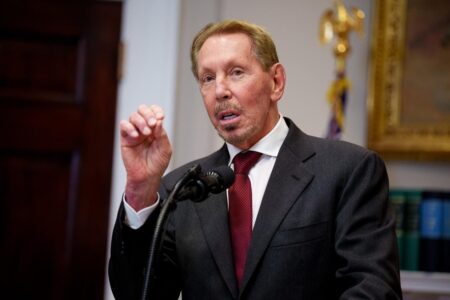
hen Larry Ellison co-founded enterprise software developer Oracle in 1977, the first wave of personal computers had just hit the market. Leveraging his first mover advantage, he made Oracle’s relational databases, software that organizes huge amounts of information into connected tables, a standard across industries, reaching a market cap of more than $150 billion during the dot com boom in 1999.
But the 2010s saw the rise of cloud computing. Suddenly Oracle, which relied on enterprise specific installations of its products in corporate server rooms, looked more like a dinosaur, as Amazon Web Services and Microsoft’s Azure ate into its market share. After having declined 75% during the dotcom bust, Oracle’s stock was limping along as competitors like Salesforce surged ahead. So Ellison rebuilt Oracle for the new age, investing in Oracle Cloud Infrastructure (OCI) and more recently, by building high-performance data centers.
Says Baird analyst Rob Oliver, “Ellison never lost sight of the absolute core differentiation of the company and continues to innovate on that core, and that is the database.”
Now in his early eighties, Ellison is doing it again, riding the AI boom to a market value that briefly approached $1 trillion in September 2025 – and a personal net worth of $295 billion, placing him among the five richest people in the world.
He expanded that influence last August when his son David gained control of Paramount through its merger with Skydance Media. With the company’s $111 billion acquisition of Warner Bros Discovery expected to close by September, Ellison is set to reign over a media empire which spans from CNN and CBS to HGTV and HBO.
One of the most valuable assets now under the Ellisons’ ownership is the magical wizarding franchise created by Iconoclast 50 member J.K. Rowling.
A survivor of domestic violence, Rowling was a single mother on welfare when she started writing the first Harry Potter book in 1990. The series has sold more than 600 million copies worldwide, spawning 11 films with box office earnings ranging from $400 million to over $1 billion each. In 2004, Forbes named her a billionaire. But Rowling’s generous charitable giving caused her net worth to fall and she exited the three-comma club in 2012.
Then in 2019, Rowling was hit with a wave of online vitriol over her views on transgenderism, leading Harry Potter stars like Emma Watson and Daniel Radcliffe to publicly distance themselves from her. “People have written tweets, worn T-shirts and carried placards not only calling me a transphobe, but calling for my death,” wrote Rowling on X in August of last year.
However, Rowling has come back strong in 2026. A new Harry Potter HBO Max series will begin airing in 2027. Forbes estimates the show’s first season cost as much as $100 million to produce, and budgets could increase dramatically if HBO produces seven seasons to match the original seven books. (A second season was already greenlit in May.) Also, a third expansion at Epic Universe’s Wizarding World in Orlando welcomed visitors last summer. All told Rowling’s Harry Potter franchise has been touched by the “resurrection stone” and now generates an estimated $80 million per year in royalties across books, theater, merchandise, video games and more. After falling off our global billionaires list for 13 years, Rowling is now worth $1.2 billion.
Michael Saylor was first featured in the pages of Forbes in September 1998 when he was only 33 years old. Back then, MicroStrategy, the Tysons Corner, Virginia–based software firm he cofounded in 1989 fresh out of MIT, was in the data mining and business intelligence software business. It was riding high during the dotcom bubble, and Saylor’s personal net worth swelled to nearly $14 billion at its peak. Then the bubble burst, Microstrategy ran afoul of the Securities and Exchange Commission, and data mining software became ubiquitous. MicroStrategy’s stock languished for years and not much was heard from Saylor until his bitcoin awakening in 2020.
“One of the interesting things about [Saylor] is early on in the 2010s he actually criticized bitcoin publicly,” says Sam Callahan, Director of Bitcoin Strategy at OranjeBTC, “He’s a brilliant thinker but he also has the humility to go back and challenge his prior beliefs.”
Now Saylor sits atop the world’s largest “Bitcoin Treasury Company” holding about 840,000 bitcoin, or more than 4% of total supply. Saylor, now worth an estimated $4.7 billion, makes our list, not merely because of his amazing comeback, but because his financial engineering is rewriting the rules of corporate finance and has produced scores of corporate imitators.
SoftBank founder Masa Son launched his $100 billion Vision Fund in 2017 to drive tech into the future, building on the success of his legendary investment in Alibaba in 2000. But after WeWork’s collapse and massive losses across SoftBank’s portfolio in 2022, Son became a symbol of startup excess.
It was ChatGPT’s boom that eventually validated Son’s vision of AI dominance, restoring his reputation as a visionary. SoftBank is now one of OpenAI’s largest backers, having invested $65 billion. In the first quarter of 2026, Softbank logged a $25 billion gain on its Open AI stake.
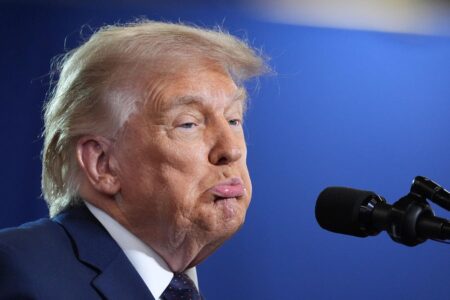
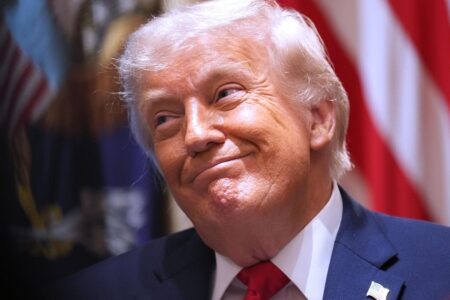
However, of all the comebacks on Forbes Iconoclast 50, none is greater or more significant from a historical standpoint than that of the 47th President of The United States, Donald Trump. By the time he left office after his first term in 2021, Forbes estimates that Trump’s net worth had dropped to $2.4 billion from his pre-political-career high of $4.5 billion, placing him out of reach of the Forbes 400 list for the first time in 25 years.
Despite all of the convictions, legal judgments and negative poll reports, Trump’s second term has thrown all presidential norms to the wayside. President Trump 2.0 is focused on getting rich. Today, the president is worth an estimated $6.5 billion, including more than $1 billion from crypto.
Read the full article here