



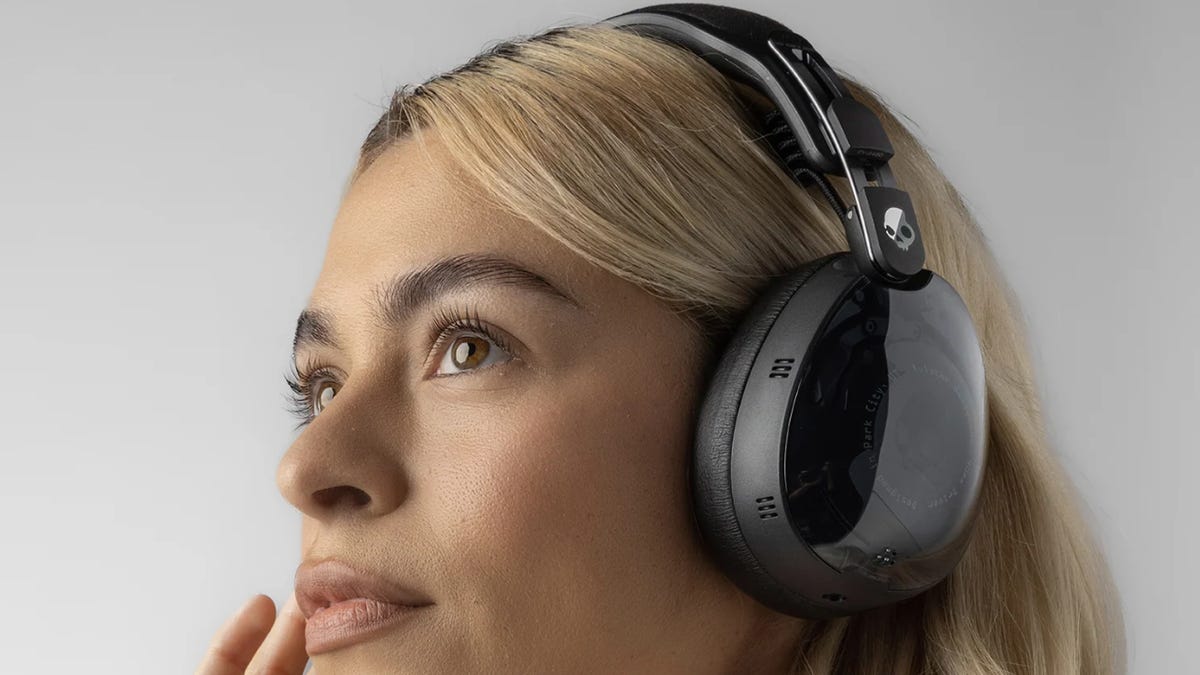
Focal Bathys: French audio company Focal is known for its high-end speakers and headphones. You might call it the Bowers & Wilkins of France. Back in 2022, it finally did done what a lot of high-end audio companies have had to do in this age of on-the-go wireless music listening: They made active noise-canceling Bluetooth headphones. Easily one of the best-sounding wireless headphones, the pricey Bathys (now down to $600 from their list price of $850) feature not only wireless connectivity but also a built-in digital-to-analog converter for USB wired listening with any computer, smartphone or tablet with USB-C. Read the full review.
Noble Fokus Apollo: Noble is an audiophile brand known more for its in-ear monitor headphones, but it released a wireless noise-canceling headphone called the Fokus Apollo a couple of years ago that sounds terrific and features a special dual-driver design that combines a 40mm dynamic driver with a 14.5mm planar-magnetic driver (the upgraded $699 Fokus Apollo Pro arrived in May of 2026). The result is rich, open sound, with tight bass and excellent treble detail and clarity, especially for a wireless headphone (it sounds a tad better in wired mode but it’s not a huge difference). It’s more dynamic than many monitor headphones that have a flatter, more neutral sound profile, but it still leans toward being an accurate, well-balanced headphone.
Anker Soundcore Space One: While the newer Soundcore Space 2 offer a more streamlined design and beter performance across the board, the Soundcore Space One by Anker are still a decent at less $100, offering a strong feature set along with good sound quality and performance. They can’t compete sound-wise with many of the premium noise-canceling models, but you don’t feel like you’re giving up that much on the sound front to save a good deal of money. They lack a bit of that natural, refined quality you look for in a great set of cans, but the Space One sound respectable, with decent clarity and bass definition and measure up well to the more expensive Soundcore Space 45.
CMF Headphone Pro: Nothing started out with a few different wireless earbuds but has now branched into the over-ear headphones market with its eye-catching Nothing Headphone (1) and the budget-oriented CMF Headphone Pro, which also have a pretty unique look and feature interchangeable ear pads in a few different color options. I was expecting all that much from these headphones, but after using them for a week, they check a lot of boxes for a top value headphone, including a comfortable fit (they pretty lightweight at 283 grams), decent build quality and good sound quality that’s highlighted by powerful bass that can be dialed up or down with a slider control on the left ear cup (you can also tweak the sound in the companion app). The Skullcandy Crusher 2 headphones have a similar slider, but the CMF’s bass doesn’t get to head-rattling levels (the Crusher 2’s bass literally makes the headphones vibrate).
Earfun Wave Pro: Earfun has made some very solid budget earbuds, and now it’s entered the full-size ANC headphone space with a few different over-ear models, including the Wave Pro (add the code EWPROCNET at checkout on Amazon to receive an additional 10% off). While they may not sound as good as premium noise-canceling headphones from Bose or Sony, they’re comfortable to wear, feature decent sound with punchy bass (they’re a bit lacking in clarity and bass definition compared to more expensive models), and they offer respectable noise canceling (you can toggle between two levels of ANC) and voice-calling performance. The headphones do come with a cable for wired listening — you can plug into an inflight entertainment system — but the noise canceling cuts off when you’re in wired mode, which is unfortunate.
Edifier W830NB: The Edifier W830NB remain a good value noise-canceling headphone pick. They look slightly more premium than their predecessor, W820NB Plus, and and are fairly lightweight (265 grams) and comfortable, with cushy memory foam ear pads. They also sound very good for their price, offering decent clarity and fairly well-defined bass with an amply wide sound stage (they lack the refinement and depth of higher-end headphones, but you can’t expect the world from sub-$80 headphones). You can tweak the sound profile in Edifier’s companion app for iOS and Android.
QCY H3 Pro: QCY is another Chinese brand like Tribit, Earfun and plenty of others that make budget-priced headphones that sound better than you’d think they would for their relatively low price (the company says the Q stands for quality, C stands for creative and Y stands for youth). Its new-for-2024 H3 Pro headphones are similar to models in this price range from 1More, Tribit and Edifier, but they arguably sound a touch better and I found them relatively comfortable to wear, as they feature a lightweight design and memory foam ear pads.
Bose QuietComfort Headphones: When Bose released its new flagship QuietComfort Ultra Headphones in late 2023, it also replaced the QuietComfort 45s with a slightly updated model simply called the QuietComfort Headphones. Like the QC 45s, this model carries on the comfortable tried-and-true legacy QuietComfort design that’s been around for a few generations that a lot of people continue to love. The QC Ultra Headphones add Bose’s new Immersive Audio feature and have a more refined design with some metal parts (they also have Bluetooth 5.3 instead of Bluetooth 5.1). But the QuietComfort Headphones still have good sound (the Ultras offer a small step up in sound quality), excellent noise canceling and strong voice-calling performance.
Sony WH-1000XM5: Sony has released its new-for-2025 WH-1000XM6 headphones, but its former flagship model, the XM5 is still an excellent headphone that’s often on sale for closer to $300. Their noise-canceling, voice-calling and sound isn’t quite as good as what the XM6 offers (the XM6 sounds a little more detailed with improved bass performance) and the XM6 has a dual-hinge design that allows them to fold up, not just fold flat. As a result, the XM6’s case is a little smaller. Additionally, the XM6 is powered by a new QN3 chip that Sony says delivers 7 times the performance of the QN1 chip found in the XM5s. All that said, while the jump in performance from the XM5 to the XM6 is certainly noticeable, it isn’t huge; the XM5 still offers good sound, noise-canceling and voice-calling performance that should satisfy most people. Read my Sony WH-1000XM5 review.
Sennheiser Accentum Plus: If you can’t afford Sennheiser’s flagship Momentum 4 Wireless headphones or other premium models from Bose, Sony and Apple, the Sennheiser Accentum Plus is a good midrange alternative that doesn’t quite offer the same performance as those higher-end models. However, it does offers better build quality and sound than most budget noise canceling headphones. In essence, these are a slightly stripped down version of the Momentum 4 Wireless and share a similar aesthetic and the same touch controls but feature different drivers (the Momentum Wireless 4 have larger 42mm drivers and offer richer, more detailed sound with slightly better bass performance). Still, these sound good for the money, offer respectable noise canceling and support USB-C audio wired listening and the AptX Adaptive audio codec that’s compatible with some Android devices.
Master & Dynamic MH40 (2nd gen): All of Master & Dynamic’s headphones are well-built and have a unique retro-modern look. The higher-end MW75 has active noise canceling and sounds a little better than the updated MH40 ($400), which features new drivers and a new chipset that delivers improved sound and performance. The MH40 sounds more refined than its predecessor, with better clarity and definition, and now offers support for the AAC and AptX audio codecs, plus improved voice-calling performance. Additionally, you can plug its USB-C cable into a computer or Android smartphone for a wired digital connection for high-resolution audio. Battery life is rated at a healthy 30 hours.
Shure Aonic 50 Gen 2: Many of us liked Shure’s original Aonic 50 headphones, but they had relatively mediocre noise cancellation. Well, the 2nd-gen version addresses that issue — the noise canceling is much improved — and Shure has more than doubled the battery life to around 45 hours (they now have a quick-charge feature) and also shrunk the headphone’s carry case a bit, although it’s still not that compact. Those upgrades make the Aonic 50 Gen 2 a top noise-canceling headphone. The Aonic 50 Gen 2s are pretty heavy at 334 grams, they’re built sturdily and are also comfortable to wear, with nicely padded ear cups. They feature excellent sound quality with very good clarity and well-defined bass. Shure calls them a “studio headphone,” so the sound profile is fairly neutral, but you can add more bass in the EQ settings in Shure’s companion app for iOS and Android (engaging the Spatializer setting in the app expands the soundstage slightly but doesn’t make a big difference).
Bang & Olufsen’s Beoplay HX: Bang & Olufsen’s Beoplay HX headphones are the successor to the company’s H9 series headphones (the X is the Roman numeral for 10) and, like those earlier H9 models, the HX headphones carry a list price of $599 (some colors are discounted at Amazon). That price makes it a direct competitor of Apple’s AirPods Max, which is heavier at 385 grams versus the HX’s 285 grams. I don’t know if the HX headphones are more comfortable than the AirPods Max, but I found the two models pretty equal in the comfort department over longer listening sessions, and these do feature the usual swanky B&O lambskin-covered memory foam earpads. Their sound measures up well to the AirPods Max’s sound — overall, it’s well-balanced, with deep, well-defined bass, natural-sounding mids (where vocals live) and inviting detail in the treble.
V-Moda M-200: V-Moda’s M-200 is one of the few wired headphones on this list. Released in late 2019, these clean- and detailed-sounding over-ear headphones have excellent bass response, and the cushy earcups mean they’re also comfortable to wear. Featuring 50mm drivers with neodymium magnets, CCAW voice coils and fine-tuning by Roland engineers — yes, V-Moda is now owned by Roland — the M‑200 is Hi‑Res Audio-certified by the Japan Audio Society. Other V-Moda headphones tend to push the bass a little, but this set has the more neutral profile that you’d expect from studio monitor headphones. They come with two cords, one of which has a built-in microphone for making calls. It would be nice if V-Moda offered Lightning or USB-C cables for phones without headphone jacks. Note that last year V-Moda released the M-200 ANC ($350), a wireless version of these headphones that includes active noise canceling. They also sound great, but their noise cancellation, call quality and overall feature set don’t match those of the AirPods Max.
Mark Levinson No. 5909: These are premium audio brand Mark Levinson’s first headphones and, yes, they’re really expensive at $999. They’re also really good. They have a sturdy design without managing to feel hefty on your head (read: they’re substantial but not too heavy) and they’re comfortable to wear over long periods, thanks to their nicely padded and replaceable leather-covered earcups and headband. Read our Mark Levinson No. 5909 hands-on.
OneOdio A10: The OneOdio A10s deliver more than you’d expect for their relatively modest price, which is why they’re featured on several of our best lists. They’re built better than you think they would be for around $90 and are pretty comfortable to wear. They have a dual-hinge design and feel sturdy, weighing in at 395 grams, making them perfect headphones for a workout. They sound surprisingly decent and have reasonably good noise canceling with a transparency mode (which has a slight audible hiss). The headphones also have very good battery life. No, they’re not as comfortable as Bose’s and Sony’s models (they do feel a tad heavy) and their sound lacks that extra bit of clarity, bass definition and depth that more premium headphones tend to deliver. They did exceed my expectations and come with a decent carrying case, even if the OneOdio logo splayed across it is a bit garish.
Technics EAH-A800: There’s a bit of an old-school vibe to the Technics EAH-A800 — and it’s not just the Technics brand, which Panasonic resurrected in the last few years. Their design is something of a throwback, but these headphones are comfortable and both fold up and fold flat. They feature a big, energetic sound with powerful bass and good detail, although they take a day or two to break in.
Read the full article here