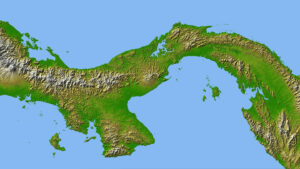




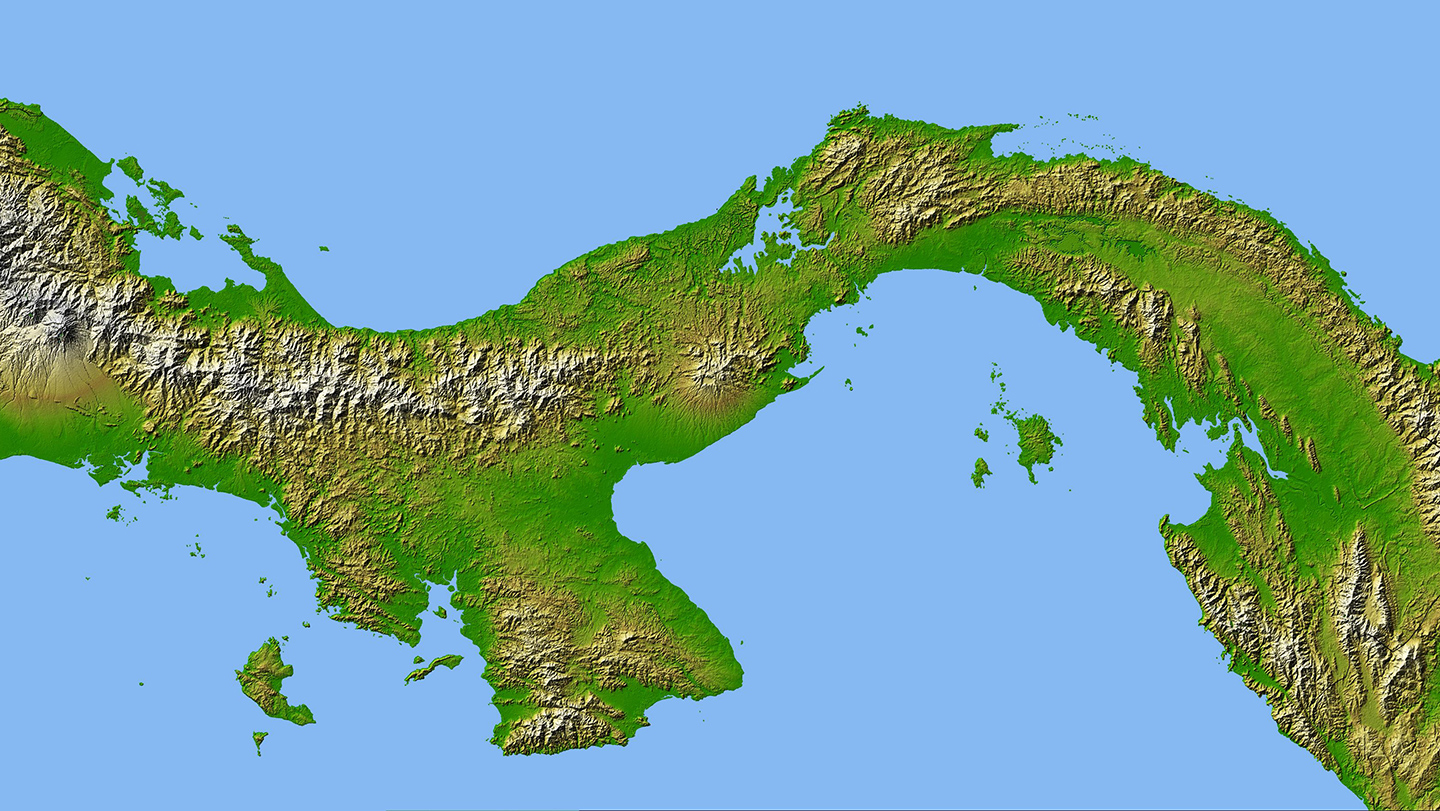
In the Miocene, 10 million years ago, the Central American Seaway separated North and South America, leaving the southern continent in what scientists call “splendid isolation.” By 2.8 million years ago, the two continents were joined at the Isthmus of Panama. Mammals stampeded across the new land bridge in both directions.
But the species trade wasn’t equal. Today, more than half of the 217 mammal genera present in South America have origins in North America. Only four genera in South America can be traced to the north. The key to the North American mammals’ success could be an extensive vacation. Over several million years, northern mammals moved into the low-lying “holding pen” of what is now the southern United States, Mexico and part of Central America, diversifying and adapting to the climate before the Isthmus of Panama arose, researchers report July 30 in Science.
Scientists have focused on ancient Mexico as a spot where mammals moving from South to North America adapted to new conditions over evolutionary time, says Jack Tseng, a vertebrate paleontologist at the University of California, Berkeley. Before the Isthmus of Panama joined the two continents, warm Central America and Mexico would have been the first stops north for animals coming across the sea from South America. Fossils of ancient sloths from Mexico, for example, indicate that after they arrived from South America 9 million years ago, they “stayed for a while … before they continued their journey further north” into the colder latitudes of the U.S. and Canada, Tseng says.
Tseng and his colleagues wondered if the holding pen might have been bidirectional, allowing animals from the north a warm ecosystem in which to diversify and adapt before heading south. The scientists pulled together a fossil library of mammals from Mexico, nearly doubling the known mammal fossil record for the area. This wasn’t the result of digging up double the fossils, Tseng says. Instead, the team collected Spanish-language papers, papers from smaller journals and samples from a museum in central Mexico.
Tseng and his colleagues showed that both Mexico and South America saw an explosion of mammal diversity between 10 million and 7 million years ago, before the two continents were connected. But the Mexican mammal diversity hit a much higher peak—nearly double that of South America.
As mammals in Mexico and Central America were diversifying, new ones were arriving from North America. This created a mammalian cage match as a high diversity of species competed for limited resources. During the period afterward, the climate also began to dry out, creating a tougher environment to adapt to. “North American mammal faunas have essentially gone through the test time and time again,” Tseng says.
In contrast, South American mammalian diversity was declining at the time. “Those mammals have been isolated since the extinction of the dinosaurs,” Tseng says. On their side of the sea, the climate also remained tropical and wet, leaving the mammals less well-equipped for dry environments.
As North and South America began to link up, culminating with the final formation of the Isthmus of Panama 2.8 million years ago, North American mammals flooded into the south in pulses, armed with adaptations like larger body size and tolerance to dry environments from their time in Mexico and Central America. Canids, camelids, felids, raccoons and other mammals charged into South America and diversified.
The idea of Mexico and Central America as an adaptation hotspot is “a hypothesis [that] was established in the literature for plants and animals moving from South America to North America,” says Jenny McGuire, a paleoecologist at Georgia Institute of Technology in Atlanta, who wrote an article that accompanied the paper. “This paper flips that hypothesis and considers the opposite direction.”
The results “allow us to rewrite the timeline of an intercontinental migration,” says Alberto Boscaini, a paleontologist at the University of Buenos Aires. But that doesn’t mean, he notes, that northern mammals were somehow “biologically superior.” Instead “they acquired preadaptations that became useful during a moment of profound tectonic change.”
Read the full article here