




A new suburb with 12,000 homes and seven schools has been approved in a bid to keep pace with the population boom in Melbourne’s west – the fastest-growing region in Australia.
The Carroll government has given the green light to a structure plan for Melton East, in a signal to developers to seek permits to start building in the new suburb while authorities deliver the required infrastructure, including the new schools and open space covering the equivalent of five MCGs.
There are also plans for four community hubs, three new arterial roads and five bridges, as well as cycling and pedestrian connections, while the new Melton Hospital is already under construction in nearby Cobblebank.
Melton East is expected to be home to more than 36,000 people while supporting about 1600 jobs once it is fully developed by the middle of the century.
By 2050, the overall population in Melbourne’s west is expected to double to 1.8 million people, and an alliance of major local employers, councils and community leaders argues the region needs a formal housing strategy to co-ordinate and deliver plans across the different local government areas.
In the next decade, 10,000 homes need to be built in Melbourne’s west annually to cope with demand, predominantly in Melton and Wyndham.
That is roughly in line with the state government’s plans, but in some areas, particularly the outer-west, new builds aren’t keeping up with population growth, says the West of Melbourne Economic Development Alliance (WoMEDA). That is especially true for affordable homes close to the region’s biggest employers, such as hospitals.
The push for a sweeping housing strategy is one in a suite of demands WoMEDA has for all political parties ahead of the November state election, one year on from the alliance’s West of Melbourne Summit, presented with The Age.
“As the fastest growing region in Australia, the west of Melbourne needs an integrated approach,” said WoMEDA chair Peter Dawkins.
Melbourne could follow the NSW government’s approach of a decade ago, establishing a western city commission (modelled off the now defunct Greater Sydney Commission) to create a whole-of-west plan, the alliance says.
Sydney’s commission created an ambitious 40-year blueprint to transform the city into a three-CBD metropolis – Parramatta being one. The goal is similar for Melbourne’s Sunshine, with the Labor government prioritising the suburb for major infrastructure, including the airport rail link.
But there is no equivalent body driving change across the whole of the city’s west, according to WoMEDA executive director Giulia Baggio.
“It would need to be as non-partisan as possible and involve the three levels of government, private sector and community, overseen by a state government agency,” Baggio said.
“It could develop, say a 20- or 30-year plan.
“Rather than allow housing to keep sprawling, especially across our greenfield communities, a West of Melbourne Commission could oversee a curated, intelligent design backed up by a staged, funded plan on a development timeline.”
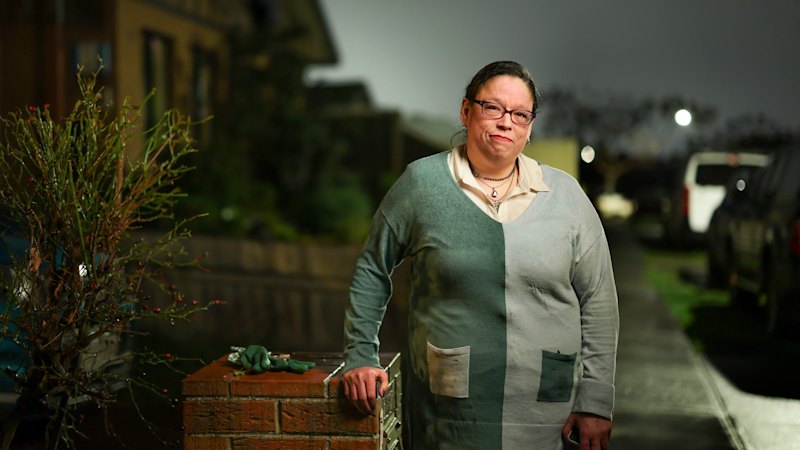
For some residents of Melbourne’s west, it is already too late. On Hope Way in Tarneit, Sarah McDougall is packing up.
Boxes are strewn through her two-bedroom brick duplex, which she bought in 2013 when these suburbs were quieter and sparser. Her dog paces restlessly in her small fenced backyard, and too-dim street lights glow above cars sprawled on grass and driveways beside the narrow street.
“It used to be, get out of Hoppers and open countryside to Melton,” said McDougall, who is in her early 40s.
“Now, it’s almost to the point of suffocating because it’s all filled in and there’s no space any more.
“End of the year, I’m gone.”
McDougall is retreating to Ballarat for its open space, in a backfiring of the boom for the city’s west as it is choked with industry, warehouses and bottle-necked traffic. While new housing is built, infrastructure isn’t keeping pace, McDougall says, a concern shared by WoMEDA.
About half of the workforce in Melbourne’s west has to leave the region to reach their workplace.
Under the state government, a suite of new tertiary institutions are in train, including a Melton TAFE and a tech school in Brimbank. In the immediate term, though, TAFE places at Victoria University and The Gordon in Werribee need to double to meet demand, the alliance argues.
Melton Mayor Lara Carli adds that while a new TAFE is expected to open in Cobblebank in 2028, “our city has no university”.
“Housing needs to be matched by investment in transport, roads, education, services and employment precincts,” she said.
WoMEDA is also asking for expedited electrification of the Melton line – it was promised in 2018 – and planning for the Suburban Rail Loop’s western end, as annual average population growth of 3 per cent puts “enormous strain” on transport in Melbourne’s west.
The state government is working to finalise the project design for Melton electrification, with the new local station due to open on September 1.
On Friday, it will also open consultation for a structure plan to unlock another new suburb called Merrifield North, a 970-hectare precinct that is expected to support 4700 jobs across industries including warehousing, transport and logistics.
“The plans for Melton East and Merrifield North are about building connected places for more Victorians to live, work and thrive,” Planning Minister Sonya Kilkenny said.
Victoria continued to build more housing than any other state, a government spokesman added, while acknowledging that “we know there is more to do”.
But opposition planning spokesman David Southwick says that because of “Labor’s neglect, housing and basic infrastructure hasn’t kept up with the growth” in Melbourne’s fastest growing suburbs.
“Under a Liberal and Nationals government, we will work with the community to deliver housing and the infrastructure into Melbourne’s fastest growing suburbs where we know people want to live,” Southwick said.
The Victorian Greens, meanwhile, have committed to doubling public housing across the state, “because essential workers increasingly can’t even find somewhere to rent, let alone somewhere they can afford”, Footscray candidate Elena Pereyra said.
The Greens have also promised $245 million to improve the frequency of regional trains and coaches, and $270 million to reform Melbourne’s bus network, starting in the city’s west.
McDougall won’t stick around to wait for those changes.
When she makes the move to Ballarat, it’ll take her about an hour on the train to travel to her workplace in Sunshine. That’s an hour she’d otherwise spend in peak-hour traffic, driving to and from Tarneit every day.
Standing in the dark outside her home on Hope Way, she says freedom is one of the things she’s most looking forward to.
Start the day with a summary of the day’s most important and interesting stories, analysis and insights. Sign up for our Morning Edition newsletter.
From our partners
Read the full article here