





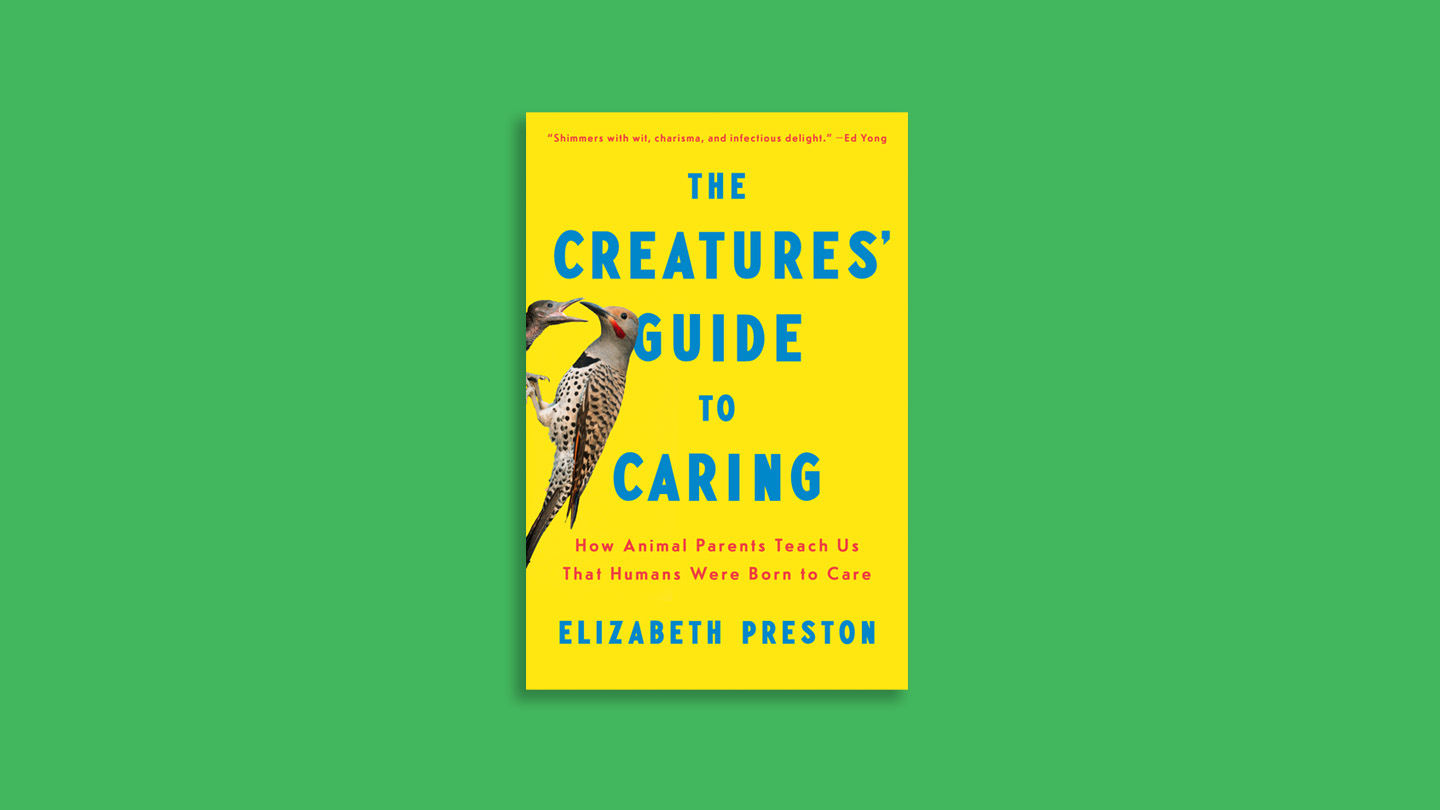
The Creature’s Guide to Caring
Elizabeth Preston
Viking, $30
My early days of nursing a newborn felt like I’d transformed into a 24-hour diner. A demanding yet adorable customer flagged me down with piercing cries to demand milk around the clock. Unfortunately, I was also on clean-up duty, wiping spit-ups and poopy butts.
Breastfeeding is hard work. But after reading science journalist Elizabeth Preston’s book The Creatures’ Guide to Caring, I’m glad I’m not a burying beetle.
The critters use mouth and anal secretions to knead small dead animals into slick balls of meat. Parent beetles then bury the smothered carcasses and lay their eggs nearby. Some species even feed their brood regurgitated bits of carcass, helping the young beetles grow to 200 times their original size in just six days. “A newborn human growing at that rate would be the size of a beluga whale in less than a week,” Preston writes. Suddenly my own kid doesn’t seem so heavy.
The Creatures’ Guide to Caring was born out of Preston’s growing fascination with the biology of parenting after having her first child. “If so many people have done it before you, and are doing it right now — if so many animals are doing it without books or apps or advice to heed — why is it the hardest thing you’ve ever done?” she writes. Perhaps by finding kinship in the animal world, Preston could learn something about her new role as a parent. Each chapter dissects the benefits and drawbacks of parenting, piecing together how it evolved in humans and other creatures.
The book starts with a scene familiar to many human parents: Preston cares for her infant alone in a dark room, feeling like life is going on without her. Well, it is familiar until Preston regurgitates food into her child’s mouth. She has mistaken herself for a wasp. “Sometimes I get mixed up because I still don’t get enough sleep. What can I say? I have kids,” Preston deadpans.
Unsavory feeding habits aside, Preston digs into the evolution of child-rearing with humor and admiration, examining parenting practices across the animal kingdom. The book is an entertaining exploration of all kinds of parents, from species with single parents to humans who rely on villages.
Take the second chapter, which looks at how fish dads emerged as some of Earth’s first parents. Despite being distantly related to humans, fish have their own versions of the same hormones involved in our own pregnancies and childcare. For instance, as three-spined stickleback males care for eggs, genes that make the bonding hormone oxytocin turn on. The fishy fathers also make progesterone and estrogen, which may affect how they respond to predators and care for offspring.
Humans don’t lay eggs as fish do. Nor, mercifully, do we push babies through pseudopenises like female spotted hyenas do. (Preston stops asking questions after a scientist tells her there is “a lot of tearing.”) But like mother hyenas, we bond with our children for life and fiercely protect them. Spotted hyena moms push other adults out of the way at kills to ensure their cubs can eat, just as we might cut to the front of the buffet line to ensure picky kids get the only food they’ll swallow.
Parenting in nature also has its dark side. A long-tailed skink female might eat all her eggs if she faces off with predators one time too many, perhaps because it’s better to try again than keep fighting. Marmosets and tamarins, species in which mothers depend on others to care for offspring, are more likely to reject their babies if there’s not enough help around.
Humans, too, often face difficult decisions about children they didn’t want or can’t care for. That difficulty exists in part because for us, parenting isn’t a two-person job. We evolved to parent alongside a community of relatives and friends who share some of the burden.
I, along with readers in any stage of raising kids — whether the children have yet to be born, have left the nest or are in-between — can take comfort in the fact that we’re not the only species struggling. Creatures across the animal kingdom have had hundreds of millions of years to find nearly infinite solutions to rearing young, Preston writes. There’s more than one way to be a good parent.
Buy The Creature’s Guide to Caring from Bookshop.org. Science News is a Bookshop.org affiliate and will earn a commission on purchases made from links in this article.
Read the full article here