





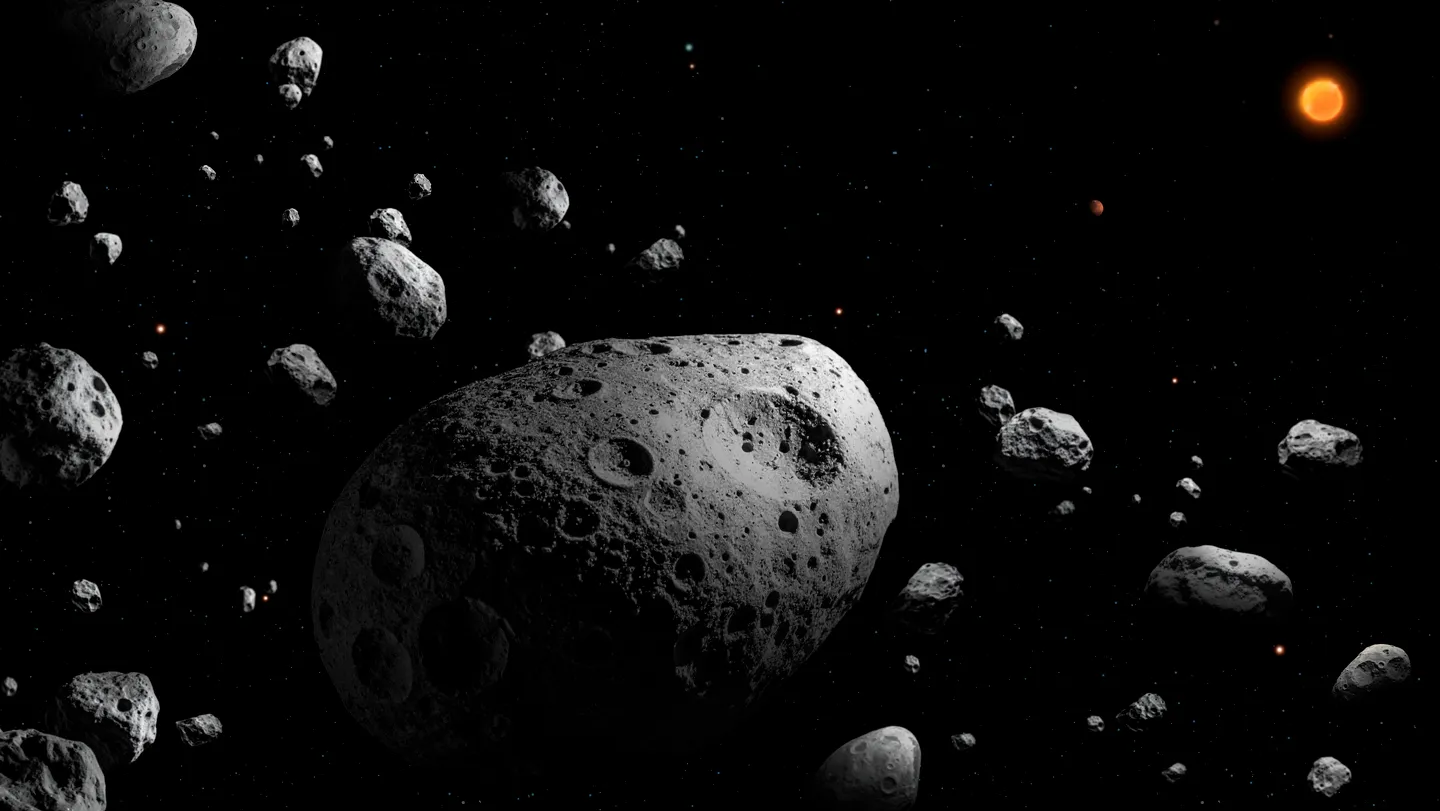
PHOENIX — A newly discovered asteroid spins about as fast as a Ferris wheel. With a rotation period of just 112 seconds, it’s the new record holder for fastest-spinning asteroid wider than 500 meters. Scientists think it must be made of solid rock to avoid breaking apart.
“It’s unlike anything we’ve been able to see before,” said astronomer Sarah Greenstreet during a January 7 news conference at a meeting of the American Astronomical Society. The previous record holders have rotation periods of about 30 minutes to an hour. “That makes our fastest-spinning asteroid much, much faster than anything we reliably knew about previously,” she says.
The rock, called 2025 MN45, is one of the first asteroids discovered by the Vera C. Rubin Observatory in Chile. Rubin is imaging the entire southern sky every few nights for 10 years, giving it an unprecedented view of celestial things that move and change — such as asteroids.
Rubin’s “first look” images, taken over nine nights last spring and released in June, contained about 2,100 solar system objects, about 90 percent of which had never been seen before. By watching how the brightness of the asteroids in that set changed over time, astronomers measured the rotation periods of 76 of them.
“Rotation speeds are important because they’re one of the only ways we can learn about the internal strengths, compositions and collisional histories of asteroids,” said Greenstreet, of the University of Washington in Seattle. Fast rotation means an asteroid must be solid enough to hold itself together. Most large asteroids with known densities are loosely bound “rubble piles” that would fly apart if they spun faster than once every 2.2 hours.
Sixteen of the asteroids Rubin discovered were spinning faster than that limit, Greenstreet said. Three rotated faster than once every five minutes — roughly the previous record for fast-spinning asteroids of this size. (Smaller ones can spin faster because they have less matter to hold together.)
All the ultrafast rotators, including 2025 MN45, are probably made of solid rock or clay, Greenstreet said. 2025 MN45 may have been liberated from the dense core of a larger parent body after a massive collision.
“We think that there could be potentially lots” of these speedy spinners in the belt between Mars and Jupiter, Greenstreet said. Knowing more about the diversity of asteroids can help astronomers piece together the history of our solar system.
Read the full article here