





With right-to-repair legislation coming into effect around the world, it’s never been more timely for companies that manufacture our technology to prioritize self-repair features in their design processes.
The bigger the device, the easier this is to do. Take Lenovo’s ThinkPads, for example. For the past few years, the company has worked with iFixit to ensure its laptops are easily repairable. But tech companies would have us believe that it’s trickier to make smaller devices, such as smartwatches and other wearables, repairable at home.
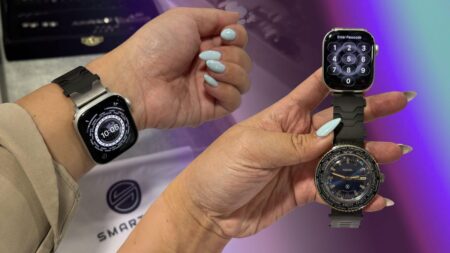
At CES 2026, I saw a smartwatch concept design from Cambridge Consultants, a British deep-tech research company, that proved this wrong. Not only was the device user-repairable, but it did so without compromising on design or user experience. The company is referring to the proof of concept as “Ouroboros.” The idea is to challenge established tech companies to improve their sustainability and product longevity, while demonstrating that it’s in their business interests to do so.
“Consumers are expecting more from brands with regard to sustainability,” said Matt White, head of sustainable design at Cambridge Consultants.
Repairability plays an important role in sustainability. The longer we can hold onto our tech — either through refurbishment or repair — the less likely it is to contribute to the growing piles of electronic waste around the world, and the less need there is to mine new minerals to produce new tech.
This new architecture is based on a Garmin smartwatch.
To engineer the Ouroboros concept, Cambridge Consultants used the Garmin Fenix 7 as a reference product, “to make sure we weren’t straying too conceptual,” said White (although he noted that this was not an official collaboration).
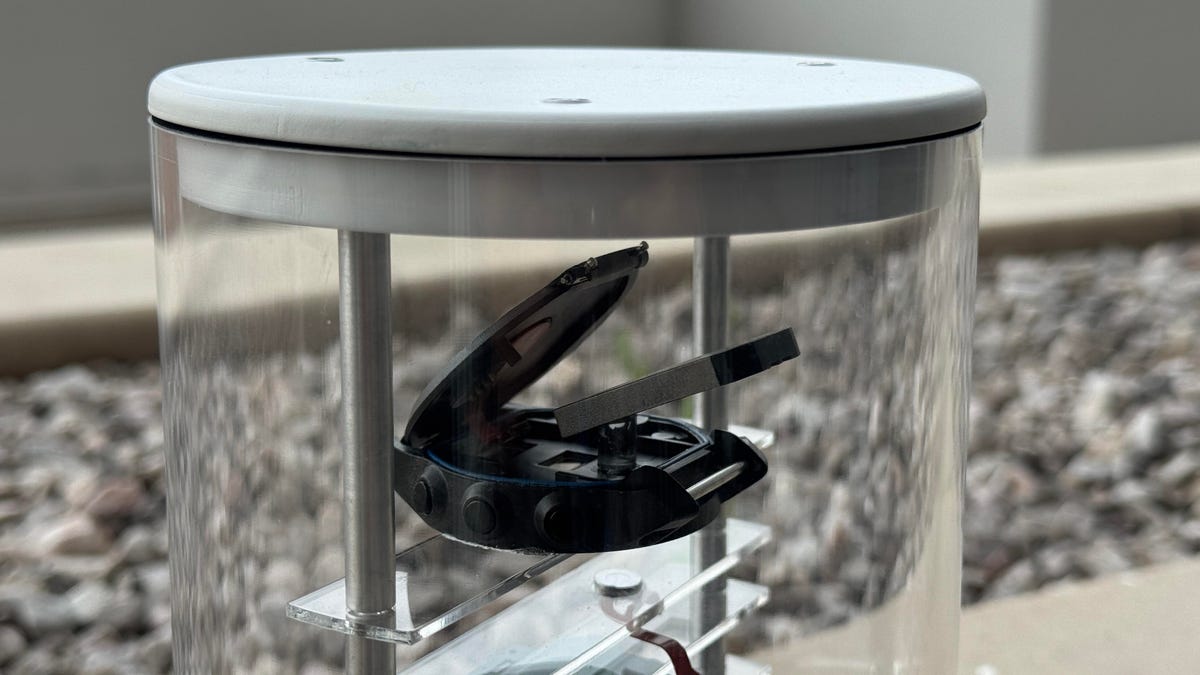
The team rearchitected the interior of the watch to ensure the battery was accessible and removable directly under the back cover. A hinge mechanism was then added to the rear of the watch that would make it easy to open while maintaining waterproofing — something that White said is crucial for wearables.
It’s important not to compromise on waterproofing when it comes to wearables.
The Ouroboros design would make it easy for people to replace the battery themselves, but if they did need to send it off for more complex repairs, a series of test pins placed directly under the battery would make it easy for someone repairing the smartwatch to triage for problems without having to take the whole thing apart.
Some wearable-makers are starting to take sustainable, repairable design seriously — notably Google with its recent Pixel Watch 4 — but it’s still far from mainstream. However, the tides are shifting, and as we can see from the Ouroboros concept, it’s becoming increasingly difficult for tech companies to justify not getting on board.
Read the full article here