




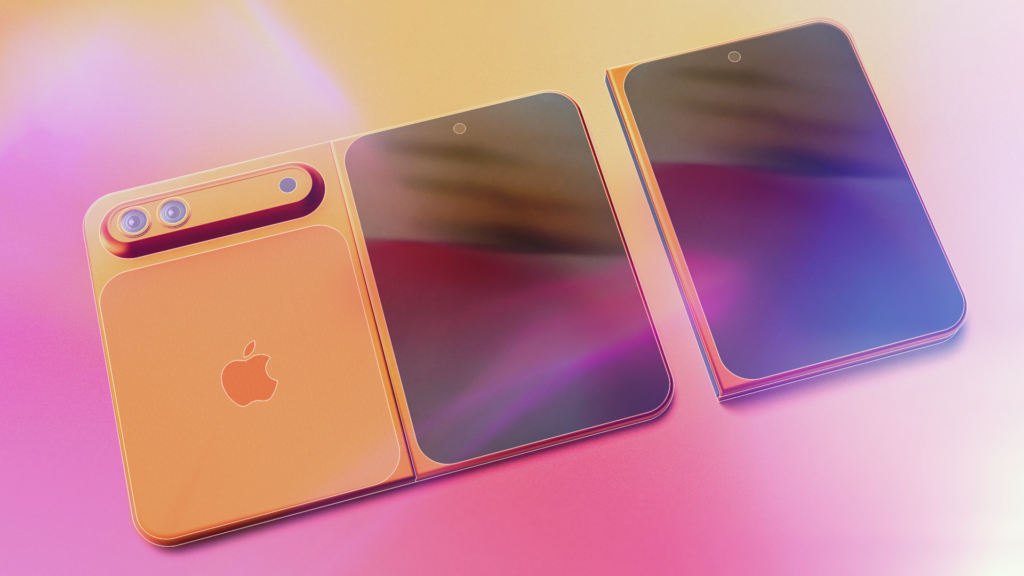
Apple’s fall launch event is just days away, meaning Samsung, Google and Motorola may have to share the foldable spotlight with a new rival. After years of rumors, mounting reports suggest this could finally be the year Apple launches its first foldable iPhone, which is rumored to be called the iPhone Ultra.
But there might be a wait between announcing the foldable and getting it into people’s hands. Analyst Ming-Chi Kuo, as reported by MacRumors, says Apple could unveil the foldable alongside the iPhone 18 lineup, but the company wait until later in the year to put it on sale, similar to the iPhone X launch in 2017. Apple sent out invites to an event on Sept. 9, where we expect the next iPhones to be unveiled — and likely the foldable as well.
That event will be a landmark for other reasons beyond the potential launch of a folding iPhone. It’s the first after outgoing CEO Tim Cook formally hands the keys to the Apple kingdom to its new head, John Ternus. To celebrate this occasion, CNET has been reliving fun and pivotal moments from our decades covering the company with our Apple a Day series.
A folding iPhone is expected to arrive at a starting price north of $2,000. The name that’s stuck in the rumor mill for years, the iPhone Fold, might even change before it hits store shelves. Leaks increasingly point to iPhone Ultra, a label that would elevate the device above the Pro lineup and signal a new tier of Apple hardware. Here’s everything the leaks, analyst reports and dummy unit images have revealed so far.
While the inside of the iPhone foldable will have a near tablet-sized 7.8-inch display, it may not have all the functionality of an iPad, Bloomberg reporter Mark Gurman recently told Yahoo Tech. From what he’s heard, the Mac-like multitasking that Apple added to iPadOS won’t quite be what’s in the iPhone foldable. Instead, expect side-by-side app layouts that should still let users drag and drop things between them.
We’ve gotten far more design leaks suggesting how Apple’s foldable may look. Most leaks suggest that the iPhone Fold will be a book-style foldable that’s squat and wide, looking more like the original Pixel Fold or the new Galaxy Fold 8 than taller, thinner models, such as the Galaxy Z Fold 7 or the Pixel 10 Pro Fold.
The screen on the iPhone Fold is rumored to have little or no crease, according to a recent report by the Chinese publication UDN. Screen creases, especially on early foldable phones, have long annoyed consumers and critics, and they still remain, despite the seam getting less noticeable over the years. Even Samsung’s most advanced Galaxy Z TriFold has two screen creases, one for each of its hinges. It would be a major breakthrough if Apple were to find a way to fold a screen in half without leaving a crease.
Another report from leaker Fixed Focus Digital on Weibo suggests that Apple’s hinges could be made of liquid metal, an alloy possibly provided by Liquidmetal Technologies, with which Apple has had an exclusive contract since 2010. It’s been the topic of many rumors since then and the basis of several patent applications, but so far, no products other than the SIM ejector tool that once shipped with iPhone models.
Even days before its potential release, we’ve yet to hear any official word on a foldable iPhone from Apple.
Mock-ups of potential iPhone foldables, including a clamshell “iPhone Flip” on the left and a book-style foldable on the right, along with a flat iPhone for comparison on the bottom.
Zain bin Awais/CNET
Foldable phones represent a tiny fraction of all phones sold globally. In a recent survey, CNET found that 64% of people said they don’t want a foldable phone. But those numbers could change if Apple were to sell a foldable iPhone. As of April, IDC analysts predict that global foldable sales will jump 19% if the iPhone Fold launches in 2026, with Apple’s folding device capturing around 24% of the global market share.
A lot of hope and high expectations have been placed on Apple’s release of a foldable phone. And if rumors are correct, we won’t have to wait much longer for the company to do so.
iPhone Fold release date: It could launch on Sept. 9… or in 2027

Apple has neither confirmed the iPhone Fold nor announced a release date. But analysts and rumors have predicted that the foldable could come out in 2026 or be pushed until next year. So while the upcoming Sept. 9 Apple event is the most likely release date, as the first device of its kind released by Apple, we can’t be sure until the company shows it off.
As for timing, since the iPhone Air was released alongside the iPhone 17 models, the Fold is likely to come alongside the iPhone 18 series, which is expected to launch during the Sept. 9 event. Apple could even delay the launch of the standard iPhone 18 to the spring of 2027 to make room for the iPhone Fold in Apple’s Sept. 9 launch, according to an ET News report. Given that Samsung offsets its standard and foldable phone releases at Unpacked events months apart from each other, Apple could do the same.
Once the foldable iPhone does go on sale, it may be hard to get. Leaker Fixed Focus Digital said in a Weibo post that although the initial run of foldable iPhones will be around 10 million units, production could take three to five months to ramp up. That’s about 30%-40% slower than the iPhone 17’s production of 5 million units per month. That could mean a supply shortage delaying people from picking up the folding iPhone for some time after its launch.
It’s been an open secret for years that Apple is working toward a foldable iPhone, but buzz and possible release dates have been floated for just as long. Early rumors pointed to 2021 as a potential target date, but the year passed with no foldable iPhone in sight, as have successive rumors for potential releases in 2023 and 2025.
Top Foldable Phones for 2026
iPhone Fold price
Analyst Kuo predicted that a book-style iPhone foldable coming in 2026 could be priced anywhere from $2,000 to $2,500, as it’s “expected to generate strong replacement demand — despite the premium price — provided quality meets expectations.”
A report last year found that half of American consumers are interested in buying a foldable phone, though Apple customers are slightly less willing to make the leap than Samsung or LG users. Perhaps the “Apple effect” will change those stats if and when a foldable iPhone ever becomes a reality.
Although Motorola offers one of the most affordable folding phones with its clamshell Razr at around $800, most others in the category are book-style foldables, such as the Galaxy Z Fold 8 and Pixel 10 Pro Fold, which cost around twice as much as most flagship phones. We don’t expect a foldable iPhone to be cheaper than its rivals, which hover around $2,000 to start.
iPhone Fold specs
There are no confirmed specs for the iPhone Fold; Apple hasn’t even confirmed one exists or is coming out. Even if we expect it to come out soon, it’s tough to predict what kind of internal specs the iPhone Fold will have. Presumably, Apple will equip it with its most powerful A-series chip, along with enough RAM to handle two or three displays (depending on whether it folds inward or outward and needs a dedicated outer screen). That could mean an A20 Pro chip, if Apple follows precedent in equipping this year’s iPhone Pro models with successors to last year’s A19 Pro silicon.
We do have some predictions for other specs, though only for the rumored book-style Fold (not the clamshell). In March 2024, analyst Kuo predicted the larger Fold could have a 5.5-inch outer screen and a 7.8-inch inner display. When folded, it’s rumored to be 9 millimeters to 9.5mm thick and 4.5mm to 4.8mm when unfolded. Plus, a front-facing camera is also rumored to work whether the phone is folded or unfolded; the phone is also rumored to have two rear cameras.
Kuo predicted that the device would use the same high-density battery cells as used in what he referred to then as the “ultrathin iPhone 17,” which presumably meant the iPhone Air. But that trim thickness means the foldable may forgo Face ID, so the device could end up using Touch ID in a side button.
Some rumors about hardware have emerged, too. In January, an analyst note seen by MacRumors suggested Apple’s foldable could launch with 12GB of RAM, the same amount in the Galaxy Z Fold 7‘s starting configuration. That could mean Apple doesn’t need much memory to handle multiple screens or isn’t banking on large AI features that require significant RAM.
And we finally have a prediction on the iPhone Fold’s battery, with Weibo leaker Fixed Focus Digital posting that it could have a 5,500-mAh capacity, as 9to5Mac first reported. That’s larger than batteries on some other foldables. (The Galaxy Z Fold 8 Ultra, for example, has a 5,000-mAh battery, but Samsung has been in the foldable game for years and has likely improved efficiency in an effort to slim down its devices.) Yet if the Weibo leak is true, this will be the largest battery ever on an Apple handset. The iPhone 17 Pro Max has a 5,088-mAh battery.
Design: What will the foldable iPhone look like?

This illustration, according to Apple’s patent filing, shows a “device that bends along a flexible portion, such as a flexible seam associated with a hinge.”
Apple/US Patent and Trademark Office
Apple seems to have taken out every patent under the sun when it comes to foldable displays, including an origami-style folding display, a flip-up display and even a wraparound display. As far back as 2021, a report from Bloomberg indicated Apple already had a prototype of a foldable iPhone display, and rumors since then have bounced back and forth between suggesting Apple will opt for either a clamshell- or a book-style foldable first.
In March 2025, analyst Kuo made several specific predictions for Apple’s foldable: It would be a book-style device with a 5.5-inch outer screen that unfolds into a 7.8-inch internal display, measuring 4.5 to 4.8mm thick when unfolded and 9 to 9.5mm when folded. It would also use the same high-density battery cells as the “ultrathin iPhone 17” and include a hinge made of stainless steel and titanium alloy — a favorite material in Apple’s iPhone 16 Pro and Pro Max, as well as the Apple Watch Ultra 3.

A mock-up of the iPhone Fold based on unofficial leaked CAD renders from @SonyDIckson on X.
Jeffrey Hazelwood/CNET
Per Kuo’s predictions, the foldable will have two rear cameras and a front-facing camera on both the external and internal displays. Most interestingly, Kuo also expects that Apple’s book-style foldable will see the return of Touch ID as a side button, as Face ID might be left out due to space constraints — presumably for the array of depth-of-field sensors and cameras needed for the tech.
Then there are the renders, which have gone from a trickle to a steady stream through 2026. One set of 3D CAD renders from leaker Sonny Dickson (pictured above) points to a squat, wide design that looks much more like the original Pixel Fold than the tall, thin Galaxy Z Fold 7 or the Honor Magic V6 Foldable.
iPhone 2026 lineup

CNET’s Jeffrey Hazelwood created these custom renders of what an iPhone 18 Pro might look like.
Jeffrey Hazelwood/CNET
There’s no guarantee about which phones Apple will release during its usual September window, but the safest bet is on another series of flat phones, which we expect to be the iPhone 18 line. But what else could be coming alongside the usual lineup?
There could be an iPhone Air 2, though rumors conflict over whether to expect one next year. There’s been a lot more evidence for an iPhone Fold, though whether it comes out in 2026 or in later years is still uncertain. If the iPhone Fold does launch next year, more rumors have suggested a clamshell device has been prioritized and may come first — given reports of Apple researching a book-style foldable, we could get one of those as well.
In mid-January, MacRumors reportedly saw a research note from analyst Jeff Pu suggesting that the iPhone Fold will pack 12GB of memory — as will the entire iPhone 18 line. Apple never discloses how much RAM is included in its phones, but specs sites such as GSMArena have reported that the standard iPhone 17 has 8GB of RAM, while the rest of the series (iPhone Air, 17 Pro and Pro Max) all have 12GB. If correct, that means Apple doesn’t think its foldable will need more memory than its standard flat phones; it would have more screen area but potentially no more advanced hardware than its iPhone 18 siblings.
It’s also interesting to see the standard iPhone 18 packing 12GB of memory, as the RAM shortage is predicted to hike prices on phones released in 2026 and potentially even wipe out the cheapest budget phones from the market until memory prices drop enough to make low-cost phones profitable again. Apple may be willing to absorb the costs for a more capable basic model of the iPhone 18, or perhaps it’ll pass those costs on to the consumer with a price hike.
Read the full article here