





This is a developing story and will be updated periodically.
For the first time in more than half a century, humans are flying toward the moon.
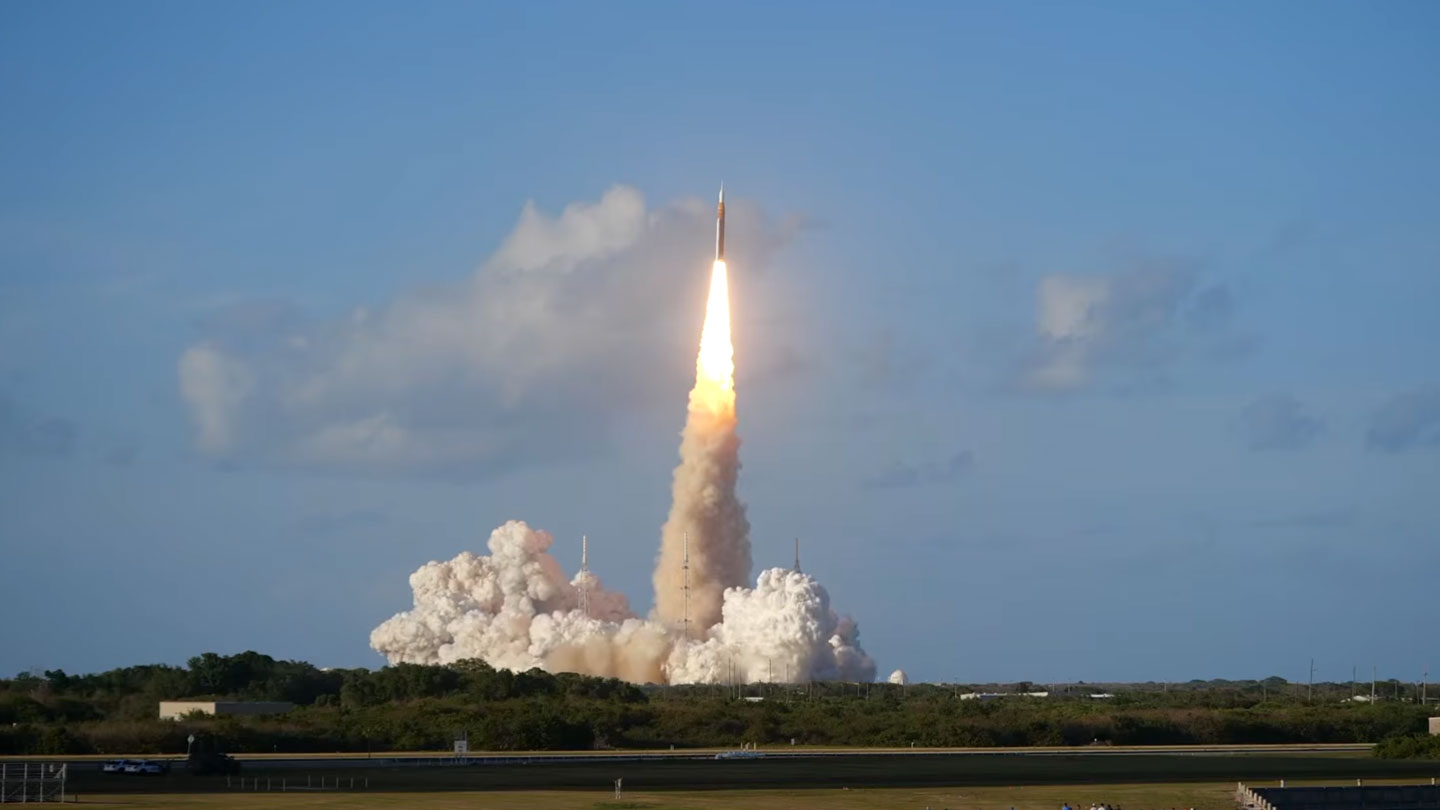
At 6:35 p.m. Eastern on April 1, NASA’s Artemis II launched from the Kennedy Space Center in Florida, setting out on a 10-day journey around the moon. The historic voyage is expected to carry the four-member crew deeper into space than any human before — more than 400,000 kilometers from Earth.
“We have a beautiful moonrise, we’re headed right at it,” said Artemis II Commander Reid Wiseman a few minutes after launch.
Artemis II will fly by the moon at an altitude of roughly 8,000 kilometers. Its main goal is to test NASA’s Space Launch System, which launched the mission into orbit, along with deep-space systems on the Orion spacecraft, which will fly the astronauts around the moon. These systems will be used during the Artemis IV and V missions, scheduled to land on the moon in 2028.
Reaching supersonic speed, the Space Launch System rocket raised the Artemis II astronauts to space in about eight minutes, at which point the rocket’s main engines detached and fell back to Earth.
“I’m shaking still because of the adrenaline,” planetary scientist Paul Byrne of Washington University in St. Louis told Science News 15 minutes after the launch. He watched Artemis II take off from about 17 kilometers away. “This is a historic moment,” he says. “Hopefully it will simply be the first step in a long, long journey in which we see humans return to the moon to stay.”
Over the next couple hours, the rocket’s remaining upper stage will push Orion and the astronauts aboard into an orbit high above Earth, where they will spend about one day checking the spacecraft’s systems.
If all goes well, Orion will head toward the moon on the flight’s second day. The astronauts should fly closest to the moon, and farthest from Earth, on day 6. People can track the crew’s progress using the Artemis Real-time Orbit Website or the NASA mobile app.
Onboard are NASA astronauts Wiseman, Victor Glover and Christina Koch as well as Canadian Space Agency astronaut Jeremy Hansen. Glover and Koch are, respectively, the first person of color and first woman to travel beyond low Earth orbit.
“The four of them seem to have really bonded into a spectacular team … where everyone is bringing their expertise and elevating the entire game for everyone,” says planetary scientist Lindy Elkins-Tanton of the University of California, Berkeley. Differences like “gender, race, background, nationality … fade into the background when you become a great team,” she says. “And that’s the most inspiring part of all to me.”
The launch was originally scheduled for early February but was delayed by hydrogen fuel leaks and a problem with helium flow to the rocket’s upper stage.
In late March, NASA announced it would dramatically increase the frequency of lunar missions over the next seven years with the goal of building a permanent lunar base. “Our strong hope is that this mission is the start of an era where everyone — every person on Earth — can look at the moon and think of it as … a destination,” Koch said March 29 at a news event.
Witnessing today’s launch felt like watching the Apollo launches decades ago, says planetary geologist James Head of Brown University in Providence, R.I., who worked on the Apollo program from 1968 to 1972. “The dream is alive,” he says. “It’s this generation’s opportunity to experience the excitement of this kind of exploration.”
Read the full article here