






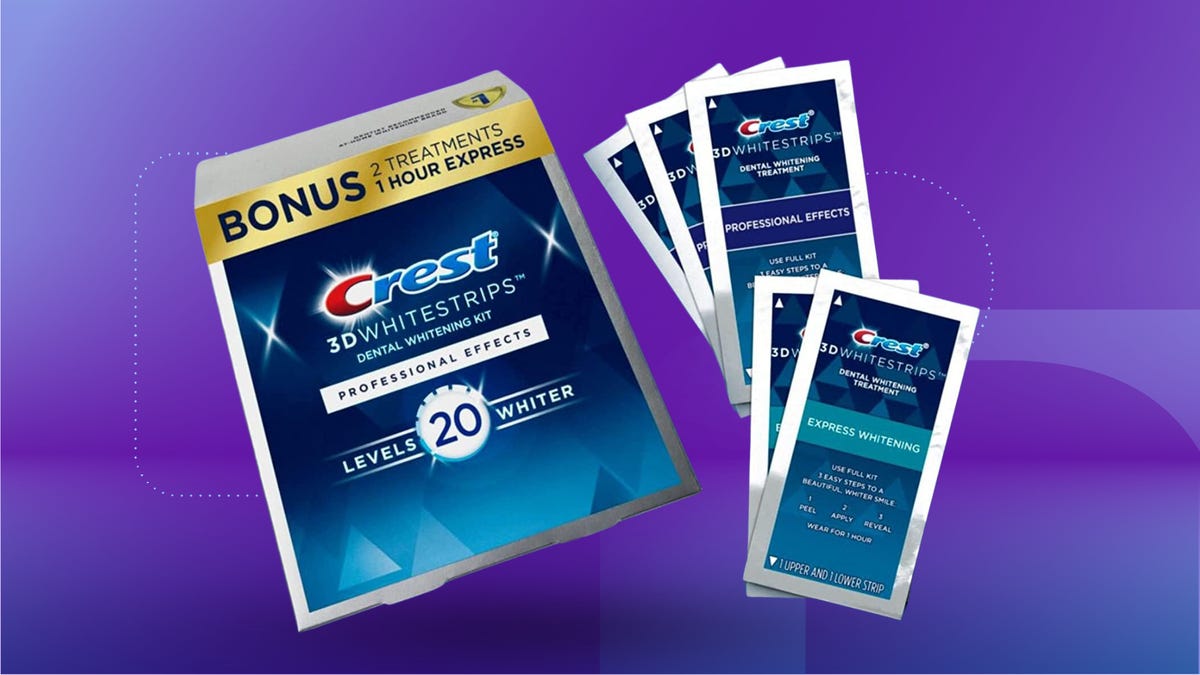
“It’s like comparing a professional car wash to doing it yourself in the driveway,” states Man. “Professional whitening uses stronger bleaching agents and gives you dramatic results in just one or two visits. Plus, if something goes wrong, your dentist is right there to fix it. They can also customize the treatment for your specific needs and address any sensitivity issues immediately. Strips are the DIY option that costs way less and lets you whiten while binge-watching Netflix. The downside? It takes longer to see results, and you might end up with some uneven spots if your teeth aren’t perfectly straight.”
Sachar provides the following advantages and disadvantages for each type of treatment:
Advantages of at-home whitening strips:
• More affordable than professional in-office treatments.
• Convenient and easier to use on your own schedule.
• Gradual whitening allows for subtle changes over time instead of quick one-day whitening.
• Reduced risk of sensitivity.
Disadvantages of at-home whitening strips:
• Lower peroxide concentrations mean slower and less dramatic results.
• Strips may not fit perfectly, which can lead to uneven whitening, especially between the teeth or along the gumline.
• Greater chances of improper use resulting in adverse side effects, such as leaving them on too long.
Advantages of professional teeth whitening:
• Fast and dramatic results in just one or two visits.
• Custom trays that fit the teeth exactly are sometimes included for continued home whitening or touch-ups.
• Protection for the gums to prevent sensitivity.
• Supervised by a professional, reducing the risk of misuse or complications.
• Professional in-office peroxide concentrations with enhanced activation using LED or laser light can produce a more dramatic and fast result.
Disadvantages of professional teeth whitening:
• Significantly higher cost.
• May cause temporary tooth sensitivity in some patients.
• Less convenient, requiring scheduling and attending a dental visit.
Read the full article here