





Bulgaria entered the New Year on Thursday to become the 21st country to adopt the euro, a milestone met with both cheers and concerns, nearly 20 years after the Balkan nation joined the European Union.
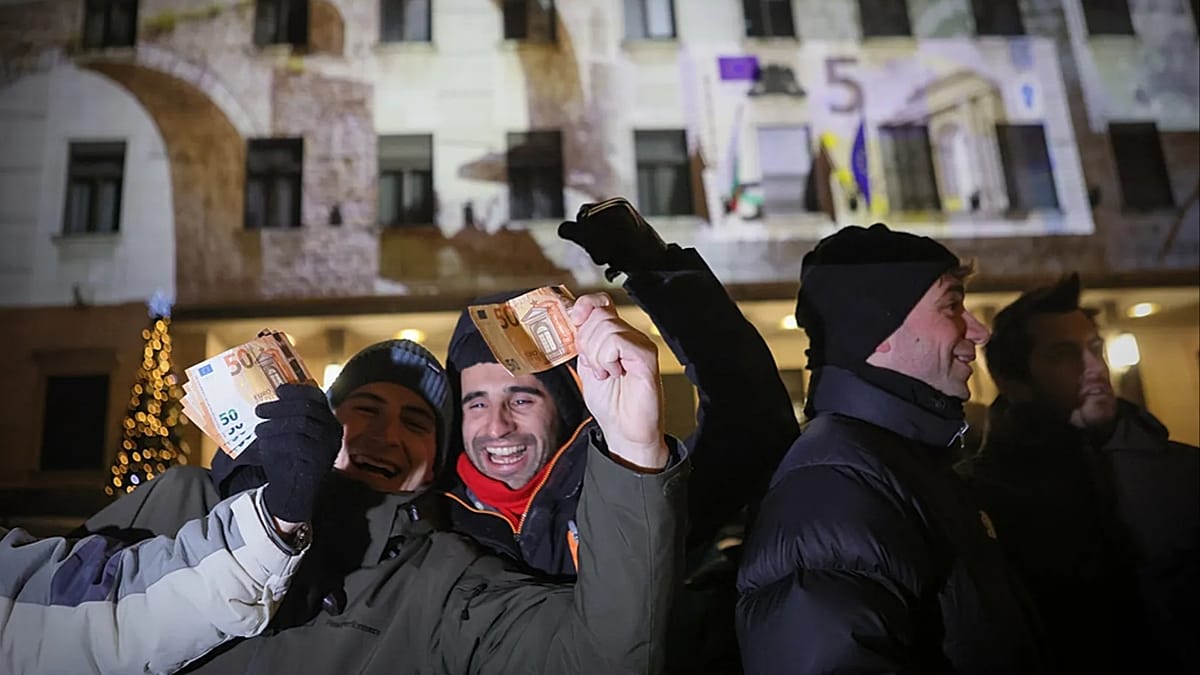
At midnight Bulgaria gave up the lev — meaning “lion,” a symbol present in Bulgaria for centuries — and Bulgarian euro coins were projected onto the central bank’s building.
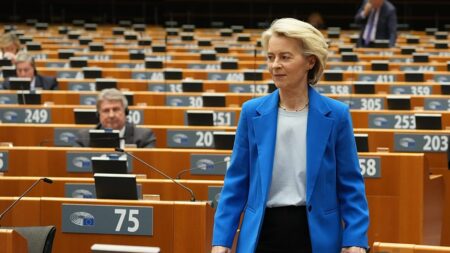
“I warmly welcome Bulgaria to the euro family,” said Christine Lagarde, president of the European Central Bank, calling the euro a “powerful symbol” of “shared values and collective strength”.
“Great! It works!” exclaimed Dimitar, a 43-year-old man after withdrawing €100 from an ATM shortly after midnight.
Successive governments in the country of 6.4 million people have advocated joining the euro, hoping that it will boost the economy of the EU’s poorest member, reinforce ties to the West and protect against Russia’s malign influence.
But Bulgarians have long been divided over the switch, with many concerned that the introduction could lead to higher prices and exacerbate the political instability rattling the country.
In a speech broadcast shortly before midnight, President Rumen Radev hailed it as the “final step” in Bulgaria’s EU integration, as thousands of people braved sub-zero temperatures in the capital Sofia to celebrate the New Year.
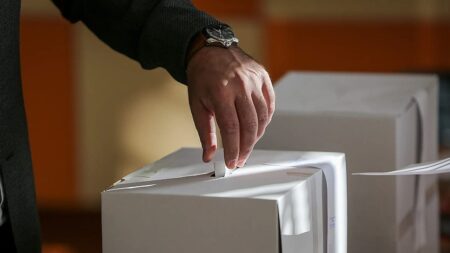
Radev however voiced regret that Bulgarians had not been consulted by referendum on the adoption.
“This refusal was one of the dramatic symptoms of the deep divide between the political class and the people, confirmed by mass demonstrations across the country.”
Anti-corruption protests swept a conservative-led government from office in mid-December, leaving a country anxious about inflation on the verge of its eighth election in five years.
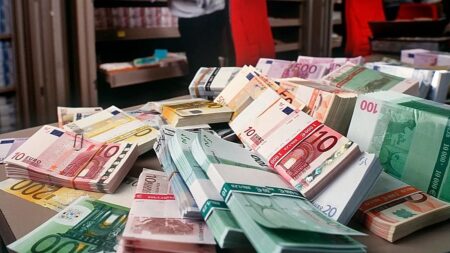
At one of the city’s largest markets, stalls displayed prices of everything from groceries to New Year’s Eve essentials like sparklers in both levs — in use since the 18th century, originally with a value equal to the French franc —and euros.
“The whole of Europe has managed with the euro, we’ll manage too,” retiree Vlad said.
‘It is a sign of belonging’
European Commission President Ursula von der Leyen said Wednesday that Bulgaria’s move into the eurozone marked “an important milestone” for the country’s citizens.
“It will make travelling and living abroad easier, boost the transparency and competitiveness of markets, and facilitate trade,” she said.
Central Bank Governor Dimitar Radev said the euro symbolised much more than “just a currency — it is a sign of belonging”.
However, according to the latest Eurobarometer survey, 49% of Bulgarians oppose the switch.
Outgoing prime minister Rosen Zhelyazkov sought to reassure the public ahead of the move, saying he was “counting on the tolerance and understanding of citizens and businesses”.
He added that inflation in the Black Sea nation, which joined the EU in 2007, was not linked to the euro’s adoption.
But Bulgarians’ concerns about inflation are not idle.
Food prices rose by 5% year-on-year in November, more than double the eurozone average, according to the National Statistical Institute.
“Unfortunately, prices no longer correspond to those in levs,” pastry shop owner Turgut Ismail, 33, said, adding that prices have already begun surging.
‘It’s not the right time’
A euro protest campaign in 2025, led mainly by far-right and nationalist parties, tapped into a generally negative view of the single currency among much of the population, also fanned fears of price hikes.
Some people, including business owners, have complained that it has been difficult to get their hands on euros, with shopkeepers saying they have not received the euro starter packages they ordered.
“It’s not the right time,” complained Stephane, a 64-year-old economist. “Yesterday I saw the figures for Italy, Spain and Germany: their debt is enormous. And eventually we will be carrying it on our backs.”
“The bigger effect is the long-term effect, basically boosting confidence when it comes to the currency, to the purchasing power of the currency, the confidence of foreign investors, people who buy Bulgarian debt, but also people who invest in the country, in different sectors,” Petar Ganev, Senior Research Fellow at the Institute for Market Economics told Euronews.
The adoption of the euro could also impact Bulgaria’s credit rating.
“Credit agencies deduct from our credit rating because of the currency board,” Ganev explained.
What is on Bulgaria’s freshly minted euros?
The motifs Sofia chose were already on the lev, and include The Madara Rider, a rock relief created at the beginning of the eighth century during the first years of the formation of the Bulgarian state, which graces the one, two, five, 10, 20 and 50-cent euro coins.
The artwork, showing a knight triumphing over a lion, is carved into a cliff near the village of Madara in northeast Bulgaria. The site has been on the UNESCO World Heritage List since 1979.
The €1 coin features Bulgarian patron saint Ivan or John of Rila, who lived in the 9th and 10th centuries, and is regarded as the founder of the Rila Monastery, the largest in the country.
He is believed to have been Bulgaria’s first hermit and to have lived in the mountains, in the hollow of a centuries-old tree.
The €2 coin features Paisiy Hilendarski, or Paisius of Hilandar, an 18th-century monk of the Orthodox monastery on Mount Athos who wrote a key work of Bulgaria’s national revival.
The edge of the coin bears the inscription: “God protect Bulgaria”.
The euro was first rolled out in 12 countries on 1 January 2002. The Adriatic country of Croatia was the latest to join in 2023.
Bulgaria’s accession will bring the number of Europeans using the euro to more than 350 million.
Amandine Hess contributed reporting.
Read the full article here