





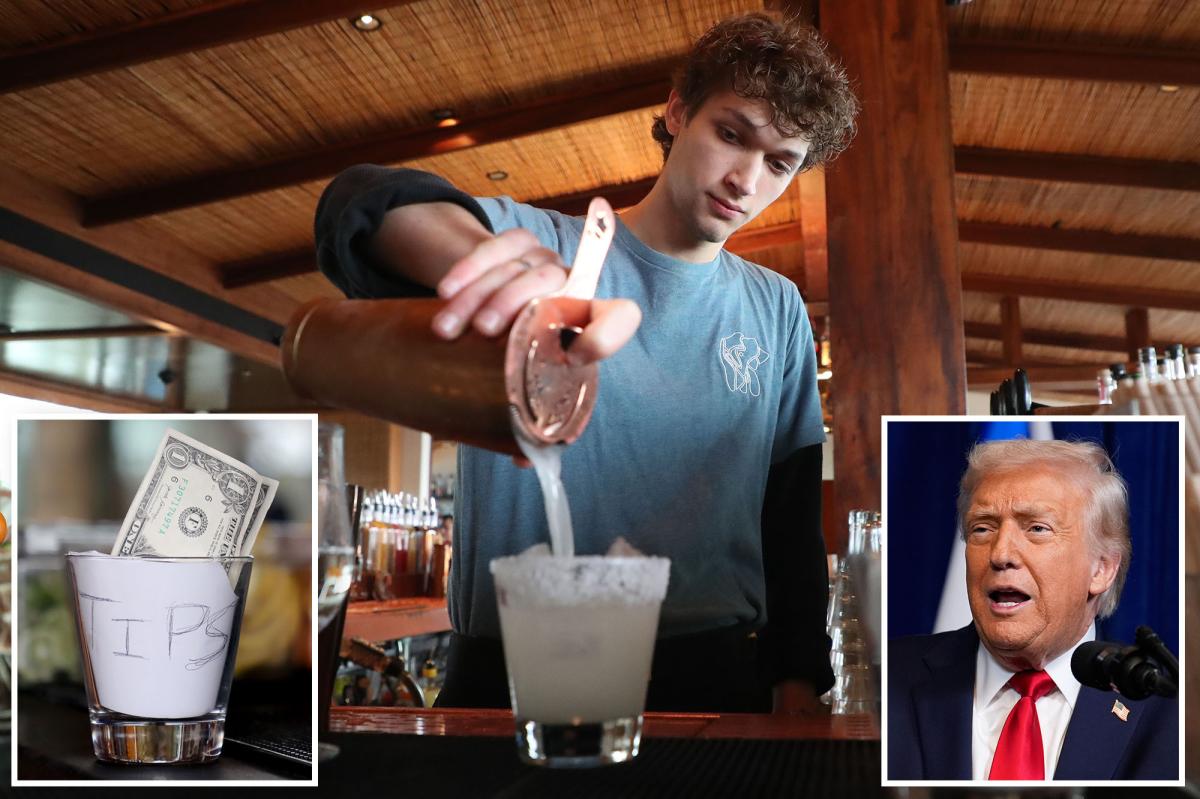
California is among the blue states that won’t be adopting President Donald Trump’s “no tax on tips” policy — and hardworking waitstaff and bartenders in the Golden State aren’t having it.
“It would put a lot more money in my pocket if they didn’t tax [tips],” said Alex Frost, a longtime bartender at Baja Cantina in Marina del Rey. “I don’t really quite understand it. I mean, California already taxes you more than any other state. I don’t see what they need my money.”
Frost said he didn’t vote for Trump, but still supports the “no tax on tips” provision of the One Big Beautiful Bill that allows federal tax deductions for tips and overtime. Tax breaks could help him stay afloat in notoriously expensive California, he said.
“I mean, it’s the whole reason pretty much anybody in the industry does the job is for tips … being able to deduct even a portion of that would would help significantly,” Frost said.
California is one of several states, including Illinois and New York, that won’t conform to the federal tax policy — meaning tips will still be taxed under state law.
The federal tax breaks on tips, one popular provision in Trump’s One Big Beautiful Bill, allows waiters, hairdressers, delivery drivers and other eligible workers to claim up to $25,000 in federal income tax deductions through 2028. A number of states have fully or partially aligned their own tax policies to match.
But tax deductions on tips could cost California $3.2 billion as it faces massive budget deficits, according to Reuters, and leftie lawmakers have shown no appetite for cutting service workers a break.
“For a state that prides itself on championing working people, it’s disappointing that California chose not to adopt tax relief on gratuities,” said Joel Dixon, president of Santa Monica-based Rustic Canyon Family. “This was a simple, targeted way to help tipped employees and small businesses, and it feels like the voices of the people doing the day-to-day work were ignored.”
Gov. Gavin Newsom’s office said that changing how tips are taxed would require changes to state law.
“The vast majority of Californians pay lower overall taxes than they do in high-tax states for workers like Texas and Florida, while also benefiting from our higher minimum wage, which is more than double Trump’s mediocre $7.25 an hour,” said Newsom spokesperson Brandon Richards in a statement.
Some service workers interviewed by The Post said they appreciated California’s high minimum wage, but felt it would be only fair to adopt the federal tip rules.
Everett Brenza, a barback at Élephante in Santa Monica who relocated from Boston in August, said the cost-of-living jump was a shock: “Gas alone is almost double.”
“It would definitely be nicer if a portion of our tips wasn’t taxed,” Brenza said. “I can’t lie. But again, I’m grateful that in California I can at least make the state minimum.”
Chris Elsenbroek called the tax policies a “mixed bag.”
“My bigger concern is that this becomes a distraction from the real conversation about who should be taxed,” Elsenbroek said. “We’re talking about minimum-wage workers, even in Los Angeles, while billionaires and wealthy individuals continue to avoid paying their fair share.”
Wayne Blasingame, who operates nine restaurants in Los Angeles, said he wasn’t a fan of the “no tax on tips” idea, arguing it paints the industry in a selfish light. But now that it’s passed into federal law, he feels it should be enacted at the state level too.
“Industry employees will benefit greatly from it and I’ll be happy for them,” he said.
Read the full article here