




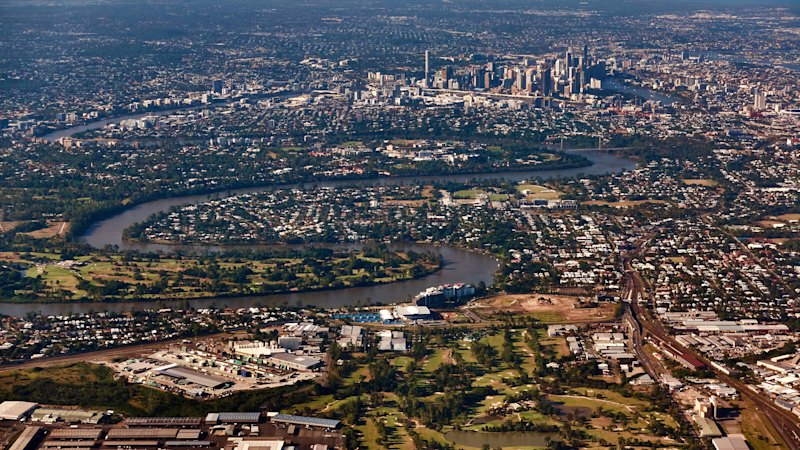
The Brisbane backyard will be squeezed out as suburban neighbourhoods become more contained and the city finally sheds its sleepy tag to become a true 24-hour economy.
Those were the main takeaways from a new report from a global consulting firm, to be released this week, which explores how Brisbane is changing and what opportunities could be harnessed from its population growth and events such as the 2032 Olympic and Paralympic Games.
The RSM 2026 Leading Cities – Brisbane report found the city was becoming “more like an Asian-style metro city” with contained neighbourhoods dominated by apartment blocks and village-style shops and professional services.
RSM Brisbane managing partner Steve Healey said with the proportion of detached housing set to decrease from 60 to 46 per cent within the next 20 years, the region’s rapid growth meant the “big Brisbane bunch-up” was accelerating.
Just last week, Brisbane City Council endorsed plans to allow higher density in Wynnum, while also putting forward proposals for high-rise development around Indooroopilly, Carindale and Nundah.
“Our population is gravitating towards apartment living in areas that are self-contained and localised,” Healey said.
“In many respects, we are moving toward a denser, mixed-use urban form, with self-reliant neighbourhoods and more tower developments featuring retail and services at street level and residences above.
“This is something that appeals to younger people and those who do not want the maintenance lifestyle of their parents.
“In addition, economic growth will create more opportunities for a 24-hour economy, and to use the river more effectively for recreation and entertainment.”
That was music to the ears of Suburban Futures director Ross Elliott, who has long advocated for policies and funding to focus on Brisbane’s suburbs.
“You won’t need to travel as everything will be available locally,” he said.
“I see this as a good thing – a stronger sense of the ‘local’ community, with stronger local connections.”
Lord Mayor Adrian Schrinner said suburban renewal was redefining how people lived, worked and moved in Brisbane.
“Neighbourhoods like South Bank and New Farm, once industrial, have transformed into vibrant lifestyle destinations, creating jobs and enhancing local amenities,” he said.
“We will continue this city-shaping approach to ensure more opportunities for housing, dining and recreation across Brisbane.”
Brisbane City Council Labor opposition leader Jared Cassidy said the city needed to be “clear-eyed” about the challenges it faced, but strong in its resolve about what it wanted to achieve.
“Genuine suburban renewal, like the urban renewal we saw in the 1990s in Brisbane, needs to be done with intent and strong leadership. Deliberate decisions were made about enhancing public spaces, investing in the arts, creating malls, opening the river, building mega libraries, and making council services more responsive,” he said.
“Modern suburban renewal will not cut it if it’s simply increasing height limits and rezoning land. A strong vision for liveable communities is key.
“Brisbane has changed a lot in the last generation. We are a bigger, busier place. People’s expectations of home ownership are different now and big yards aren’t for everyone. But the lifestyle we lose from our backyards must be replaced in public spaces.”
Along with Elliott, the RSM report drew on expert input from Business Chamber Queensland chief executive Heidi Cooper, Springfield City Group chief executive Raynuha Sinnathamby, Data #3 strategy and innovation lead Matthew Gooden, Olympian Natalie Cook, University of Queensland vice chancellor Deborah Terry and Urbis managing partner James Tuma.
“Brisbane is uniquely placed to accelerate its development as the world’s leading subtropical city, using the Games as a leverage point for the transformation,” Tuma said.
“Above-trend investment in transport and mobility infrastructure, sports and wellness facilities, housing, and open spaces and the public realm will change the shape of the city, change the way in which we move around it, and change the kinds of things we do for recreation and entertainment.”
Healey said Brisbane had a compelling narrative that went beyond population growth, big infrastructure at the 2032 Olympic and Paralympic Games.
“It is just as much about a state of mind and a potpourri of lifestyle, attitudes and niche opportunities that converge in a very powerful way,” he said.
Start the day with a summary of the day’s most important and interesting stories, analysis and insights. Sign up for our Morning Edition newsletter.
From our partners
Read the full article here