






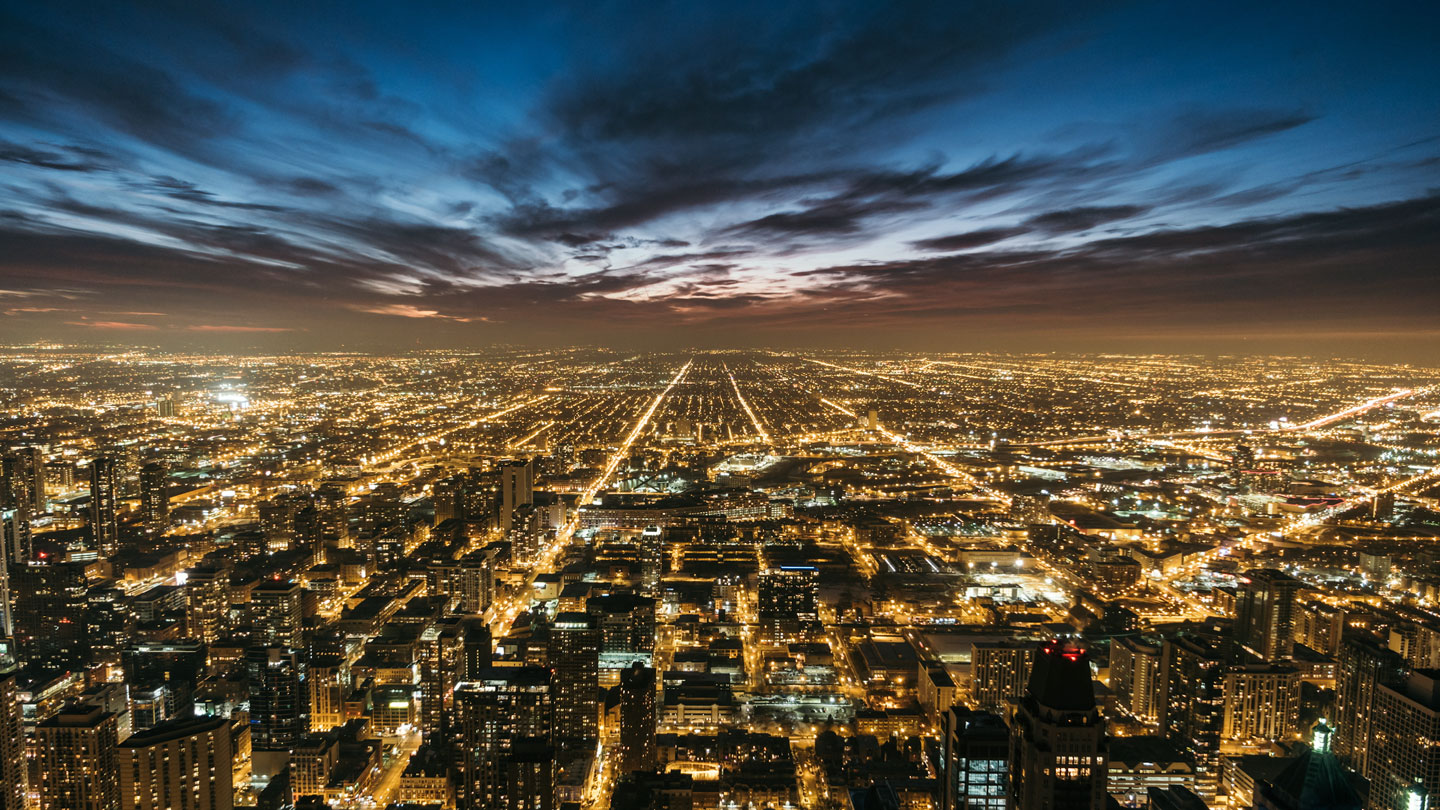
Skyscrapers don’t just reshape a city’s skyline; they may also shape the sky itself.
Nighttime satellite observations show that 44 major U.S. cities have more cloud cover over their urban areas than over nearby rural land, researchers report February 5 in Nature Communications. Computer simulations indicate that building height and density matter.
“To make precipitation, you need to have clouds,” said Qi Li, an atmospheric scientist at Peking University in China. Clouds influence not only rainfall distribution but also a city’s heat retention after sunset and rooftop solar panel effectiveness.
For years, scientists have known that urban areas tend to be warmer than rural areas. The temperature difference can change the lower atmosphere, influencing when and where clouds form. But most previous studies focused on individual cities or short-term observations.
To look for broad patterns, Li and colleagues analyzed nighttime observations collected between April and September every year from 2002 to 2020 by a NASA satellite–based imaging instrument. In all 44 cities analyzed, urban cloud cover was higher than that of nearby rural areas, ranging from under one percent cloudier to about 15 percent.
Next, the researchers asked whether city design helps explain that range. Instead of simply averaging building heights across each city, they grouped each city’s neighborhoods based on their urban design. For example, some areas are dominated by high-rise towers and others by shorter, more spread-out buildings. The team calculated how tall the buildings are compared with the width of the streets between them and how tightly buildings are packed together.
Cities with taller buildings relative to street width tended to show stronger cloud increases, while cities where buildings are packed more densely tended to show weaker increases. City size itself made no measurable difference.
Finally, to understand why this pattern emerged, the team ran computer simulations of hypothetical city blocks, testing how different building heights, densities and layouts change wind flow, trap heat and move moisture.
The simulations suggest that taller buildings enhance upward air motion, helping warm, moist air rise and form shallow clouds. Densely packed buildings reduce this vertical mixing, which limits cloud formation. At night, cities tend to have less wind, allowing warm air to rise, explaining why cloud enhancement was especially pronounced at night.
Li sees this study as a first step. Next comes understanding how changes in clouds translate into changes in rainfall and extreme precipitation.
Read the full article here