




The owners of a coastal block in NSW have waged a costly court battle with the local council after a scenic walking and cycling path was built in front of their property, blocking road access.
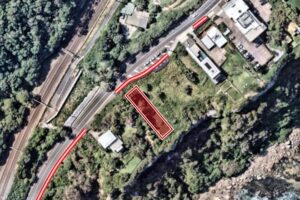
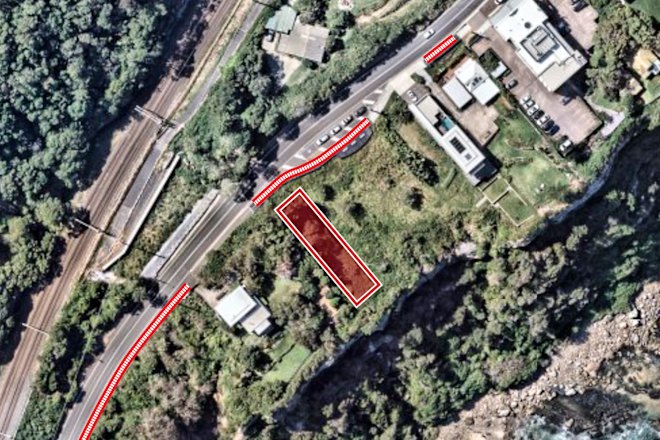
The NSW Supreme Court heard members of the Khouri family had owned a 411-square metre parcel of land in Clifton, between Sydney and Wollongong, since the early 1980s. It adjoins a main road, Lawrence Hargrave Drive.
But it is a tricky clifftop block: steeply sloping, overgrown, and undeveloped.
In 2013, Wollongong City Council released its “vision” for the Grand Pacific Walk, a 60-kilometre trail snaking from the Royal National Park in Sydney’s south through the Wollongong CBD to Lake Illawarra. It is being built in stages.
A second stage of the coastal walk was completed in late 2023, including an elevated concrete and steel boardwalk with fencing that runs in front of the property owned by a company controlled by Peter Khouri and his wife.
The land was previously owned by Khouri’s father and two uncles, but the court heard the trio sold it to the company in 2020 for $500,000.
The lawsuit
The company launched court action against the council in 2024, alleging “the construction work has caused the land to become landlocked and inaccessible by foot and by vehicle from the public road”.
Lawyers for the company said the walkway constituted “an ongoing nuisance to the plaintiff in respect of the use and enjoyment of land” because it was being denied a “right” under the NSW Roads Act to access the property from the main road.
‘The construction work has caused the land to become landlocked and inaccessible by foot and by vehicle from the public road.’
The property owner
The law of nuisance relates to substantial and unreasonable interferences with the use and enjoyment of land.
Justice Ian Pike visited the land during court hearings. He wrote in a decision this month that it was “undeveloped and presently has knee to waist high vegetation on it”.
He noted nearby developed properties did have “driveway vehicular access across the walkway”.
The council’s offers
The court heard the council made an offer in 2025 to install a gate in the railing on the boardwalk, along with steps down to the road reserve adjoining the property, to enable access on foot.
The council also said it would be “willing to undertake to make all reasonable accommodations to the footpath to enable the construction of a driveway at the property” if the company or a subsequent landowner “procures all necessary consents for … a driveway”.
Pike said the proceedings had been “adjourned for an extended period last year to enable the plaintiff to consider lodging a DA to develop the land”, but no application was submitted.
Future development
A bone of contention between the council and the company was whether the land was likely to be able to be developed.
The council contended that the land, at 411 square metres, could not be developed because it did not meet minimum lot size requirements. It argued this was fatal to the nuisance claim.
Peter Khouri gave evidence he wanted to build a cottage on the land and retire there.
Pike said he was unable to assess whether the company was “likely to obtain development approval to develop the land in some way” because of a lack of evidence.
However, he said there were “a number of difficulties” with the nuisance claim, including that the company did not have an “unqualified and absolute right to access the land by vehicle”.
In addition, Pike said he was not satisfied the property had historically been accessed by vehicle and noted the site was “relatively steeply sloping … and bounded to the east (ocean side) by a vertical cliff”.
He said a photo tendered in court showed a car belonging to Khouri’s father parked on the road reserve above the land, rather than on the land.
“Such access as there has been, has been by foot. That foot access to the land is still possible from the area to the south,” the judge said.
Pike added that “any foot access to the land, both historically and now, needs to deal with the fact that … the road reserve to the land and the land itself is sloping, making access difficult”.
He said the evidence for the company suggested the site had “primarily been left as a vacant block, used for the occasional picnic [by the Khouri family] and barbeques”.
“There is also some evidence of the picking of wild spinach and some growing of crops. However, there is no probative evidence that such activities could not be undertaken now.
“As the plaintiff’s practical use of the land remains essentially unchanged, the alleged interference does not rise above a mere inconvenience or dissatisfaction.”
The judge was not satisfied the company had demonstrated there had been “any substantial and unreasonable interference … with the future development of the land”.
“Any future development of the land would require development consent,” he said.
“Whether development consent would be granted is a matter of conjecture and would require council to exercise its discretion to depart from existing planning controls.
“More importantly, council has undertaken that in the event that development consent is granted for the construction of a driveway, council will make all reasonable accommodations to the footpath to enable construction of a driveway to the land.”
Claim dismissed
The judge dismissed the company’s claim.
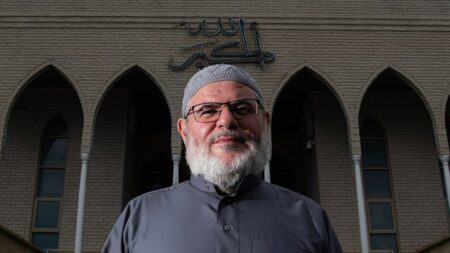
Emanueli Oliveri, principal of Sydney firm Oliveri Lawyers, acted for the Khouri family company.
He said the family had been left with “no choice” but to take legal action and had spent hundreds of thousands of dollars fighting the council.
The decision was “pretty disappointing”, Oliveri said. His clients were “devastated by the actions of the council, and are now considering all available options”.
“This property’s been in the family for 40 years,” he said.
The council was approached for comment.
Be the first to know when major news happens. Sign up for breaking news alerts on email or turn on notifications in the app.
From our partners
Read the full article here