





Parents across the country are shelling out more money than ever before on education costs for their children.
In New York City, the average private school parent is paying $27,322 for high school tuition, with some prestigious schools topping $70,000. Additionally, families are making enormous expenditures on back-to-school supplies as well as tutoring, test prep, extracurricular enrichment, and summer programs.
But even these significant financial investments in their students’ education are proving inadequate — parents are increasingly discovering that their children are unprepared for the real world.
While $50,000 per year can equip their children to analyze Chaucer, speak Mandarin and conduct research in a cutting-edge chemistry lab, it’s not enough to teach them to create a budget, schedule a meeting or keep track of their weekly assignments independently.
Teenagers across the academic spectrum lack the executive functioning skills needed to manage deadlines, hold a conversation with a professional in their field of interest, problem-solve effectively and navigate the real world.
A recent study, for instance, found that about one-third of high school students surveyed felt that their secondary education left them unprepared for life after graduation, with students expressing particular fears around falling behind, not having a clear plan, and losing support systems.
These findings were echoed in a Gallup report, which found that less than 30% of high schoolers felt “very prepared” for their postsecondary pathways.
These deficiencies constitute a real-life readiness crisis for Gen Z students—and parents are seeking new ways to fill in the gaps.
Helping Sometimes Hurts
In the past decade, the demands placed on ambitious teenagers have skyrocketed. As the college admissions landscape becomes more competitive than ever before, high school students are taking on more challenging coursework, balancing a greater number of extracurriculars and volunteer work involvements, while scaling increasingly ambitious passion projects.
Yet, amidst the increased pressure and responsibilities, students fail to cultivate the basic life skills that parents assume accompany strong grades and impressive accolades.
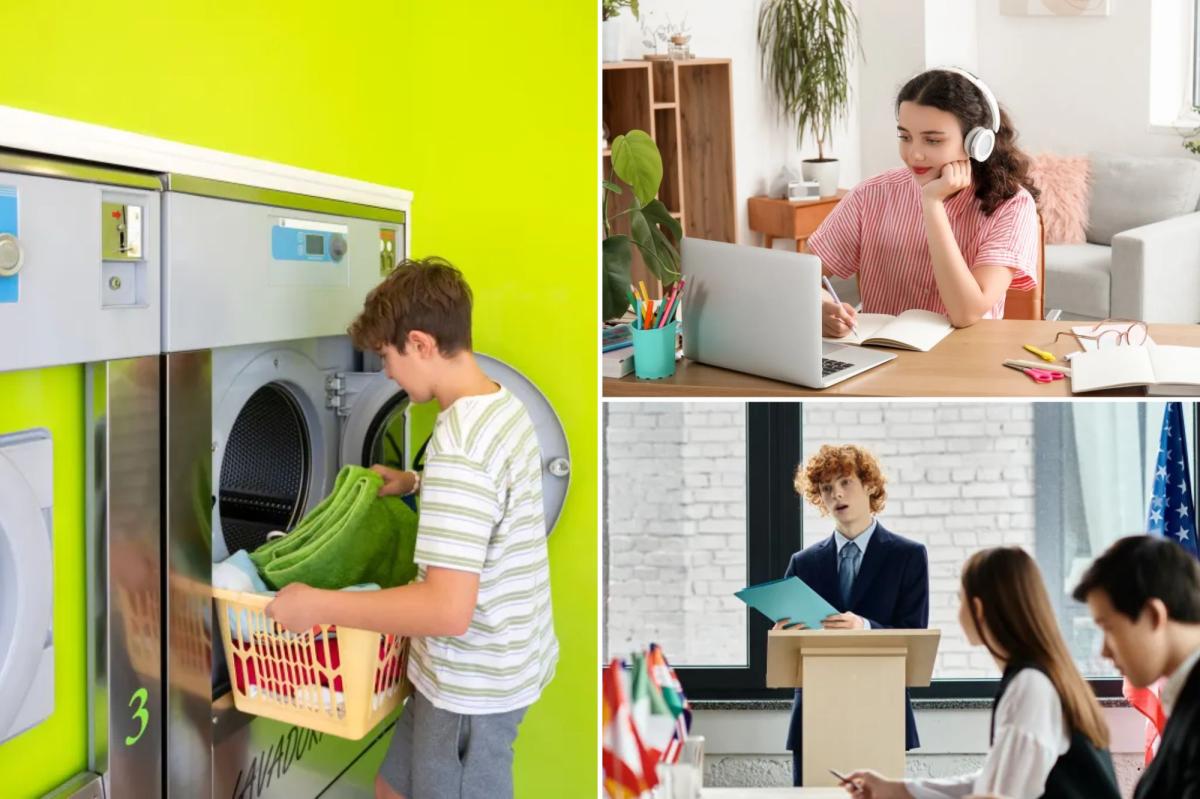
“Easy” everyday tasks—from changing a lightbulb to creating a simple budget — have become confounding and overwhelming to ill-equipped Gen Z-ers. As the founder and CEO of Command Education, a boutique college consulting firm, I’ve worked with students who can explain the intricacies of CRISPR gene editing and excel at multivariable calculus but panic at the thought of sending a professional email or sorting their own laundry.
Those parents who don’t outsource often assume that a stern conversation or nagging reminders about upcoming assignments will suffice to get their student organized and on track. But helicopter parenting only strains the relationship between parent and child while further hindering students’ growth.
A checklist related to their courses and extracurriculars will only further overburdening students who lack the tools to keep their already packed agendas straight. Likewise, tutoring and academic coaching do little to help teens become savvier outside of the classroom.
What Students Really Need
It may be tempting to hope that the solution lies in more robust school curricula that will teach students life skills alongside academic proficiencies. But it simply won’t address the sprawling nature of the problem.
The solution lies in more robust school curricula that will teach students life skills alongside academic proficiencies.
Students struggle to build real-world readiness for vastly different reasons. Some teens lack executive functioning skills because they receive too little parental support, while others are smothered by their parents’ involvement. Certain students are overwhelmed by their packed schedules, whereas others have too much free time on their hands. Some are paralyzed by the pressure to perform, while others need to be challenged to meet a higher standard.
Kids succeed for vastly different reasons as well. Preparing students for college entails more than just test prep and college list building; it’s helping students advocate for themselves, plan ahead, communicate effectively and manage their stress. And, as every parent knows, these needs are constantly evolving as students grow and mature.
A one-size-fits-all approach simply will not meet the needs of every student. Rather than a checklist of what to do, an effective support system will empower students to learn how to do it.
Students succeed when they receive individualized support from near-peer mentors who empower them to grow both academically and as burgeoning adults. That’s why parents are willing to invest upwards of $1,500 an hour in personalized mentorship—they are not investing in short-term solutions, but in essential skills that will carry their student through the rest of their lives.
I have seen students transform from high school freshmen who were terrified of public speaking into seniors who confidently lead their communities; from teenagers who relied on their parents to keep their assignments straight into young adults who juggle many responsibilities with ease; from barely being able to make eye contact to commanding a conversation with local professionals in their future field.
Teenagers in today’s competitive landscape don’t just need help boosting their GPA, starting a club at school or scaling a passion project. They need personalized guidance to learn how to become autonomous adults and navigate the world with confidence.
Christopher Rim is the CEO of Command Education, an education partner of the New York Post.
Read the full article here