





The EU began the gradual rollout of its new Entry/Exit System (EES) in October this year, requiring third-party nationals to navigate new technology at borders where it is in place.
Despite the current threshold for use set at 10 per cent of eligible travellers, the new requirements have already been causing significant delays for air passengers.
A report from Airport Council International (ACI) Europe has highlighted the extent of this disruption and is calling for an urgent review of the system.
In the coming months, more and more airports will be introducing the EES, which aims to be fully operational across the Schengen borders by 10 April 2026.
EES results in waiting times of up to 3 hours at airports
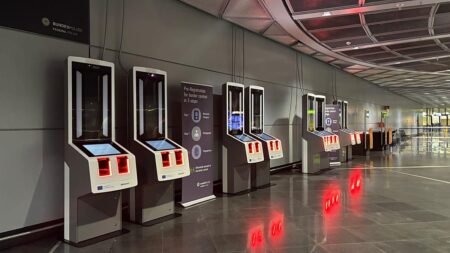
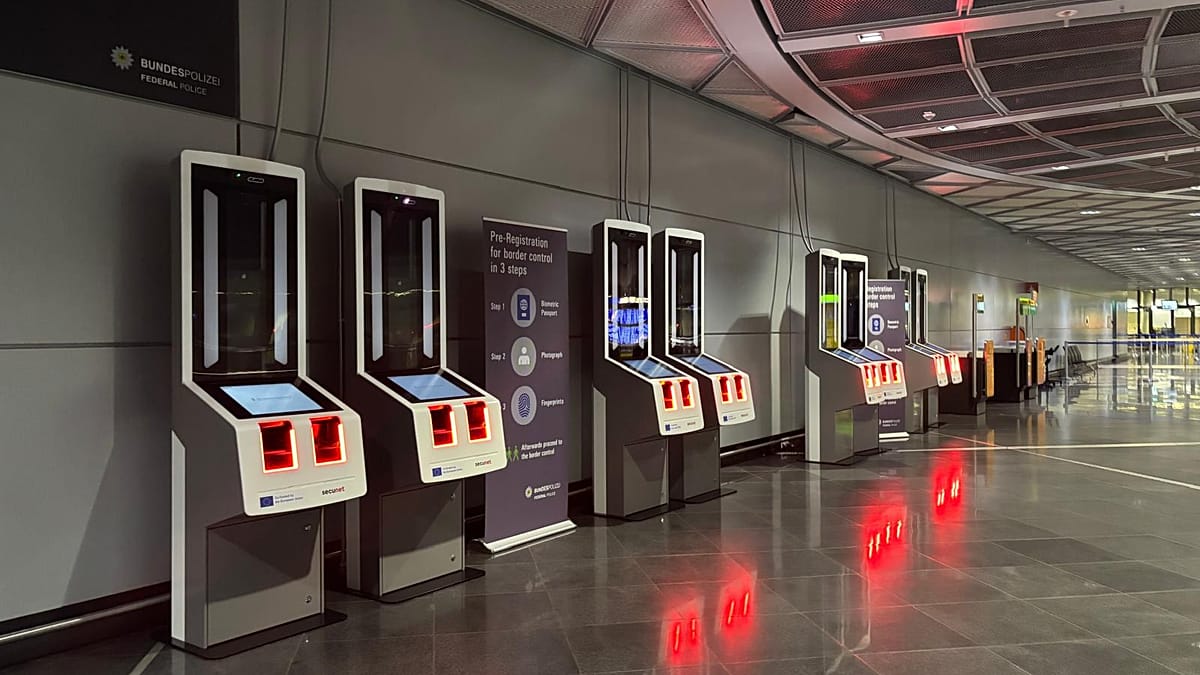
At airports where the EES is operational, visa-exempt travellers from the UK, US and other non-EU countries must register their biometric data at dedicated kiosks.
The new border checks are already causing headaches for passengers, who have reported long lines as people navigate the processing procedures for the first time.
In some cases, delays have resulted in passengers missing their flights.
“The progressive scaling‑up of the registration and capture of biometric data from third country nationals entering the Schengen area has resulted in border control processing times at airports increasing by up to 70 per cent, with waiting times of up to three hours at peak traffic periods,” the ACI review found.
It added that airports in France, Germany, Greece, Iceland, Italy, Portugal and Spain are especially badly impacted by EES-related delays.
EES introduction plagued by outages and staff shortages
The ACI said the disruption at borders reflects the combination of several operational issues with the deployment of the EES.
Regular EES outages and persistent configuration problems, including the unavailability of self‑service kiosks, undermine the predictability, regularity and resilience of border operations, it said.
It also questions why there is no effective pre‑registration app available.
The report also notes that border checks are slowed by insufficient deployment of border guards at airports, reflecting acute staff shortages at the authorities in charge.
EES operational issues pose ‘serious safety hazards’
The ACI is calling for an urgent review of the system, particularly given that more and more airports will be phasing it in over the coming months.
“Significant discomfort is already being inflicted upon travellers, and airport operations impacted with the current threshold for registering third country nationals set at only 10 per cent,” said Olivier Jankovec, Director General of ACI Europe.
“Unless all the operational issues we are raising today are fully resolved within the coming weeks, increasing this registration threshold to 35 per cent as of 9 January – as required by the EES implementation calendar – will inevitably result in much more severe congestion and systemic disruption for airports and airlines.”
He warned that this could result in “serious safety hazards”.
Jankovec added that if the current operational issues cannot be addressed by early January, they would call for action from the European Commission and Schengen Member States to allow additional flexibility in the EES rollout.
Read the full article here