





First Nations leaders are warning members to take extra precautions when travelling to the U.S. amid reports of ICE detentions and increased immigration enforcement, with some communities advising against non-essential travel altogether.
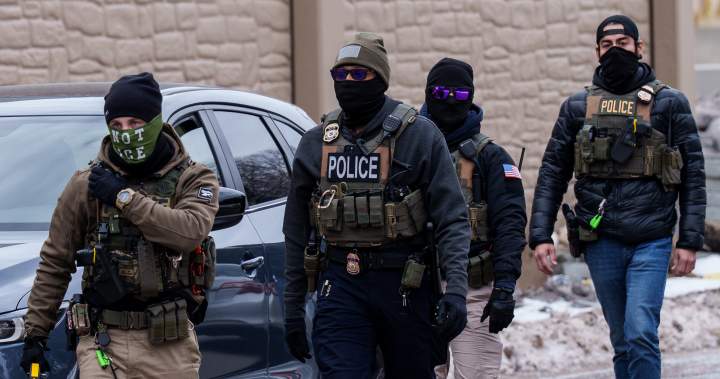
Alberta’s Blood Tribe Chief and Council issued a public advisory this week urging members to use caution when crossing the U.S. border, citing recent incidents in which Indigenous people were stopped or detained by American authorities, including U.S. Immigration and Customs Enforcement (ICE).
The notice said both the Assembly of First Nations (AFN) and Indigenous Services Canada (ISC) are aware of cases in which Canadian status cards were not respected by U.S. officials. Members were also encouraged to consult Global Affairs Canada for travel information specific to Indigenous travellers.
“Blood Tribe Chief and Council is urging Blood Tribe members to use caution when crossing the border into the United States, notwithstanding our inherent rights and the promises of the Jay Treaty, during the current time of political unrest,” the advisory said. The Jay Treaty, signed in 1794, was intended to guarantee free cross-border mobility for Indigenous peoples.
The chief and council said it cannot provide legal advice on U.S. matters, but recommended that, at minimum, travellers carry documentation showing they were born in Canada, as well as proof of their percentage of “American Indian Blood.” This includes a long-form birth certificate, a passport or other government-issued identification, and a blood quantum letter from the membership department. The advisory noted that Canadian federal certificates of Indian status have reportedly not been accepted as proof of blood quantum, and that such documentation must come directly from an individual’s First Nation.

Get daily National news
Get the day’s top news, political, economic, and current affairs headlines, delivered to your inbox once a day.
It said it is prepared to provide members who need to travel through U.S. customs or reside in the United States with letters confirming their membership and blood quantum under the Blood Tribe Membership Code. It also advised members to avoid travelling south of the border unless absolutely necessary.
The warning comes as the Assembly of First Nations confirmed at least one First Nations person recently had a negative encounter with ICE and has since returned to Canada. AFN National Chief Cindy Woodhouse Nepinak said the case prompted the organization to issue its own cautionary statement.
“These actions are a violation of our inherent rights and a breach of the Jay Treaty, which guarantees the free passage of First Nations peoples across the border,” Woodhouse Nepinak said in an interview. She called on U.S. President Donald Trump’s administration to fully uphold those rights and prevent harassment or undue hindrance.
Ontario Regional Chief Abram Benedict said he was also aware of the detained individual, adding that ICE seized the person’s certificate of Indian status.
“He was lucky that he wasn’t put into the deportation system,” said Benedict, a co-chair of the Jay Treaty Alliance. “The last thing we want is one of our First Nations citizens being in a detention centre.”
In a statement, Indigenous Services Canada said it is aware of reports involving the confiscation or damage of status cards in the United States and can issue emergency replacements, with expedited requests for those affected. The department said it has met with Global Affairs Canada and the Canada Border Services Agency to discuss supports for people returning to Canada without their cards.
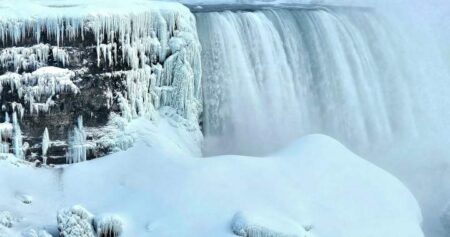
Several First Nations across Canada have issued similar advisories. Kashechewan First Nation, which recently evacuated residents to Niagara Falls, Ont., passed a motion directing evacuees to remain on the Canadian side of the border due to the current political climate.
Mississauga First Nation, Six Nations of the Grand River, Garden River First Nation and Saint Regis Mohawk Indian Territory have also urged members to carry proper identification and avoid unnecessary travel.
Reports of ICE detentions involving Indigenous people have surfaced across the United States in recent years, including cases involving members of the Oglala Sioux Tribe, the Navajo Nation and the Salt River Pima-Maricopa Indian Community.
Mohawk Council of Kahnawake Grand Chief Cody Diabo said heightened enforcement actions are undermining relationships that long predate the creation of the Canada–U.S. border.
Woodhouse Nepinak said she plans to meet with the National Congress of American Indians later this spring to discuss ongoing border mobility concerns.
–with files from The Canadian Press and The Associated Press
Read the full article here