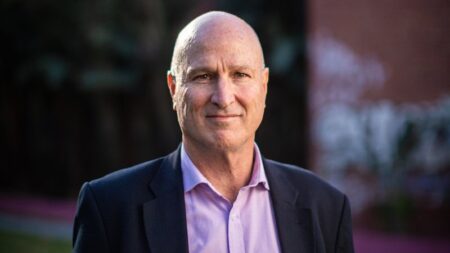




A former executive of major contractor CPB has said state government policies and involvement in bargaining for initial workplace deals “swayed the negotiating balance” on Brisbane’s multibillion-dollar Cross River Rail project.
The firm was also all but forced to hire CFMEU-suggested health and safety figures to end a 2023 project lockdown by the union and its allies, Don Johnson told the Queensland inquiry into the union and construction sector on Thursday.
The Crisafulli government launched the $19.7 million probe after reporting by this masthead and 60 Minutes into criminality, corruption and misconduct in the union and construction sector nationwide.
It has turned to the rail project after last week focusing on potential institutional corruption at Workplace Health and Safety Queensland, with staff telling of unlawful directions targeting CFMEU adversaries.
During evidence on Tuesday and Wednesday, Cross River Rail Delivery Authority chief executive Graeme Newton was questioned about 480-plus pages of tendered material, detailing a years-long campaign of union pressure involving Labor government figures.
This then shifted, and saw the union instead using its influence on the safety regulator – and health and safety representatives it had placed on the project in 2023 – to damage and disrupt the project for its broader industrial aims.
Johnson held roles at CPB until early this year – including as executive general manager from 2018, along with chief operating officer from 2022.
He said after the consortium including CPB was selected as the project’s preferred contractor in early 2019, pressure built to reach a financial close with the delivery authority and government sign-off by July.
This was exacerbated by government “best practice principles” requiring either union agreements or “best endeavours” to achieve them before financial close, which “swayed the negotiating balance” and seemed a “de facto” way for the state to impose Queen’s Wharf rates and conditions.
While CPB’s position was that it had begun discussions with the AWU about an agreement for the tunnelling and shaft elements, it was open to deal with all unions on two other agreements to cover the remainder of the project.
In one email from Johnson to his bosses on May 8, he noted the Building Trades Group of unions led by the CFMEU were pushing for a single agreement over the whole project, or at least to be included in the AWU tunnel agreement and have the rest to themselves.
Later, the group provided them a document from the Queen’s Wharf casino development outlining how they could also extend any such deal to all subcontractors on the job, which Johnson said CPB viewed as “not compliant with federal code”.
The inquiry was told of a series of meeting in the crunch week before June 30, in which delivery authority staff or advisors who appeared to be in direct contact with then deputy premier Jackie Trad pushed for a legal workaround.
Johnson says this was still unacceptable, but the consortium had also decided by this time that “unless we conceded to those [Queen’s Wharf base] rates of pay, we were going to get nowhere”.
The following week, Trad herself then appeared to directly intervene with a text to Michael Wright – the chief executive of CIMIC Group, of which CPB is a subsidiary – outlining the “very concerning” reports of “hostile” behaviour from CPB despite financial close being achieved.
Johnson, who was forward the message from Wright, responded with his version of events from a meeting crashed by the uninvolved rail union in which he said the Queen’s Wharf agreement had again been put forward as a “base document”.
His notes state he was also “called out of the meeting” by delivery authority staffer Matthew Martyn-Jones, who was said to have agreed the rail union should not be there, but that “a way for us to remove them was to offer more concessions to the other parties”.
Ultimately, a deal with the Building Trades Group was deemed by CPB to be unworkable, and two agreements were struck with the AWU within weeks in late 2019.
Johnson later gave evidence he convened the 2023 “safety reset” that contributed to health and safety-driven disruption of the project, through the hiring of CFMEU-suggested representatives.
The meeting was called on July 28, three days after Nation “Nash” Kouka – a subcontractor employee – was seriously injured in a fall from scaffolding at the Boggo Road site.
Held at CPB headquarters after workers chained and picketed gates across the project, the meeting was attended by all involved unions, including the CFMEU and AWU.
Then-assistant state secretary of the CFMEU Jade Ingham, on behalf of the Building Trades Group which included the ETU, plumbers and manufacturing unions, put forward a list of seven demands to be met for workers to return to their jobs.
This included a “full safety reset”, employment of full-time union health and safety representatives, a union audit of all safety documentation, full union organiser access to the sites, weekly safety meetings and a return to work on July 31.
CPB agreed to all, except for “unrestricted” access for organisers and the removal of turnstiles at site entries, Johnson’s own 400-plus page submission to the inquiry detailed.
Ultimately, 15 resumes for the safety representatives were sent through by the CFMEU – which Johnson understood to have been picked by Ingham – for onboarding processes including suitability checks. All but one was hired.
Johnson conceded that despite the risks, and the disruption that followed, “we had to live with that in order to get the job back”.
“I didn’t like it, but this was the most pragmatic way forward,” he said. “We held them to account, initially, not as strongly as I would have liked, but in time … we tightened up.
“I think probably we’d make the same decision again.”
One hired on the Gabba site was Richie Atutolu – ultimately described by Geoffrey Watson in his report for the CFMEU administration as a “dangerous” person who should be booted from the union.


From our partners
Read the full article here