




When a woman in Alabama lost her younger brother to leukemia when he just five years old in 1948, there was no treatment and no hope of recovery.
Now, 77 years later, her great-grandson is fighting the same disease but this time things are different.
Madeline Staples is close to her grandmother Brenda Ogle, in almost every sense of the word. “I actually live in her old house and she lives directly across from me,” Staples told Newsweek. “We see each other almost daily!”
Ogle was one of 14 children growing up in a farming family and often spoke about what happened to her younger brother Tommy Jr., or “Junebug” as he was affectionately known, when he was just five. “He was running through a freshly plowed field and cut his foot on a piece of broken glass and it wouldn’t stop bleeding. That’s how they diagnosed him,” Staples said.
Ogle would often tell the story of how her brother “never came home from the hospital” after that day. It was a story that stayed with Staples, giving the sense that a leukemia diagnosis was “an immediate death sentence.” The reality of it was something she never had to fully contemplate until starting a family of her own. For the longest time, Staples lived a happy existence with her two children, Hadley, 9, and Macon, 2, and husband Hayden in a small town just outside of Birmingham, Alabama.
Everything changed on January 29, 2025 when Macon underwent a routine blood test that flagged an extremely high white blood count. “His doctor asked to repeat the test, thinking his machine may have just been wrong,” Staples said. “But they ran the sample six times and it was the same.”
Staples was told to take Macon to the emergency room. It was there doctors confirmed he had acute lymphoblastic leukemia. “Hearing those words was absolutely devastating. The room went silent and my body went numb,” Staples said. “I couldn’t process how something so serious could be wrong when he had absolutely no symptoms.”
Staples describes the months that followed as ones experienced in “pure shock” as Macon began the treatment he needed to battle the disease. “He went through an intense induction phase of chemotherapy, and lost his ability to walk during this time due to high dose steroids for 29 days straight,” she said.
Macon has been through so much in the past year. As well as weekly chemotherapy appointments, he has had multiple bone marrow biopsies and undergoes a lumbar puncture every six weeks to make sure that the leukemia cells are not in his spinal fluid. He also receives chemotherapy in his spinal fluid during those.
It’s never been easy. Just three days into his treatment, Macon had to have his port replaced after developing a blood staph infection. He was hospitalized for a month and placed on an IV of antibiotics. “I counted the other day that he has been sedated 13 times in the last 10 months,” Staples said. “He’s a tough little guy!!”
Staples estimates that Macon has another 18 months of treatment left. Despite everything he has been through and all to come, Macon and his family have never lost hope and with good reason.
While leukemia may have sounded like a “death sentence” when Ogle told Junebug’s story, things have changed considerably for the better since then. According to the National Cancer Institute, the five-year survival rate for young children diagnosed with acute lymphoblastic leukemia is 90 percent. That means 90 percent of young children diagnosed with the disease will still be alive five years later.
Staples said her grandmother was “so upset” and left fearing the worst when Macon first got his diagnosis, but as time has gone on and she has learned more about the advances made in treating leukemia, she too has a sense of hope for the future. “She was so thankful and relieved to know that Macon has such a great chance of survival!” Staples said. “It has definitely healed parts of her heart.”
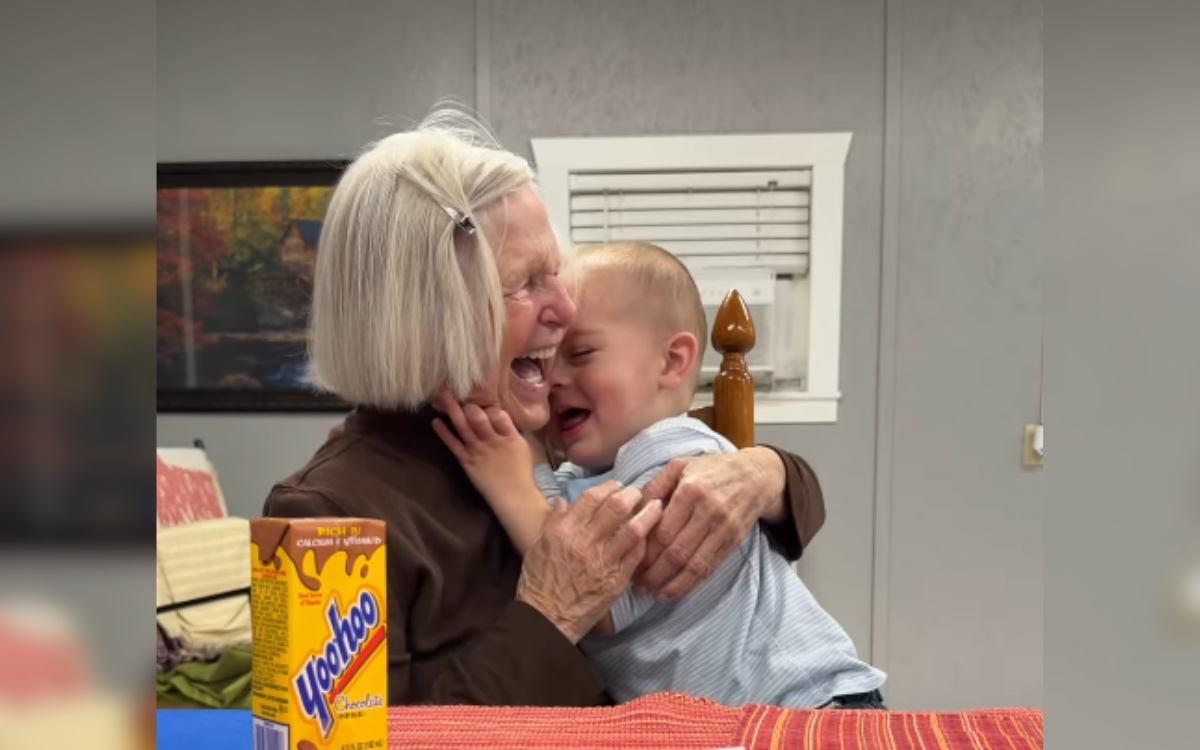
Staples has been sharing Macon’s journey on her Instagram, @madelinestaples. She recently shared a clip of her grandmother playing with Macon. “She always played with me growing up and it’s so special to see her play with my kids the same way,” Staples said. “I got to thinking how special it was that she’s getting the opportunity to see her great grandson healed from the same cancer that took her brother.”
Childhood cancer treatment has come a long way, but Staples believes more could be done.
“Being in the children’s oncology world, I have seen terribly sad things. I want a higher survival rate for ALL children’s cancers. I want more people to be aware of how underfunded research is for childhood cancer,” she said. “Every child’s life matters. I want everyone to have the same hope that my grandmother and I have been able to have!”
Read the full article here