






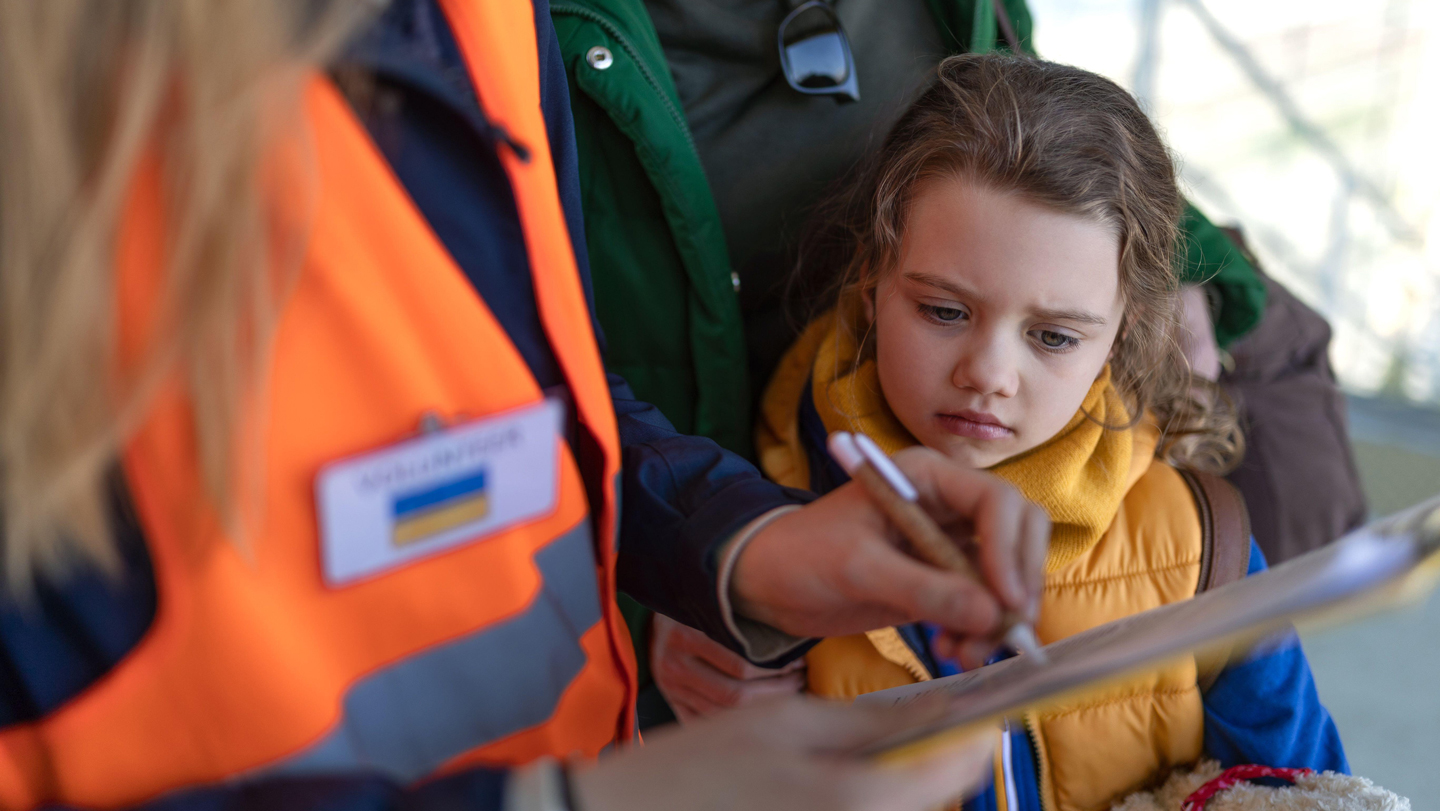
Cortisol in hair may be a better indicator of chronic stress in war refugees than a commonly used questionnaire, researchers reported March 19 at the annual meeting of the American Association of Biological Anthropologists in Denver.
That’s the finding from a study of some 300 women and children who fled to Poland following Russia’s February 2022 invasion of Ukraine. Roughly a quarter of people exposed to conflict and violence experience long-term mental health problems, including depression, anxiety and post-traumatic stress, estimates suggest.
Yet identifying those most at risk has proven elusive, in part because standard questionnaires used to assess stress are not specific to refugee populations, says Grazyna Jasienska, a human biologist at Jagiellonian University in Kraków, Poland.
In this unpublished work, Jasienska and her team had adults fill out a questionnaire aimed at assessing the degree of stress experienced in unpredictable and overwhelming situations. The adults completed a similar questionnaire for younger children while older children responded on their own.
Stress levels were almost identical across individuals directly exposed to combat or fleeing Russian-controlled areas and those indirectly exposed to the war, or living in Ukrainian-controlled areas, the survey results suggested.
Their hair, though, told a different story. Cortisol in hair builds up over time, and a few snippets can hint at a person’s stress levels over the previous three months or so, research from roughly the past 15 years suggests. Hair cortisol levels were much higher among those directly exposed to the war than those without such exposure.
For instance, among children ages 6 to 17, hair cortisol levels in the indirect exposure group averaged around 8.6 picograms per milligram. In the direct exposure group, those levels were 46 percent higher, or 12.5 picograms per milligram.
“Questionnaires don’t capture this [difference],” Jasienska says.
Moving forward, Jasienska would like to see researchers measure cortisol levels among the newly displaced. But collecting and analyzing biological samples can be tricky in challenging environments. Nor is all cortisol in hair reflective of chronic stress. People also release cortisol when they use energy for other reasons, such as exercise, Jasienska notes. She would also like researchers to develop and validate questionnaires targeted to war refugees.
“Questionnaires are not perfect. Cortisol is not perfect. Taken together, I think [that] will give us a better picture,” Jasienska says.
Read the full article here