






A new year means new skywatching events to look forward to, and January holds a few things worth seeing.
Most of the month’s skywatching events happen on the same day — Jan. 3.
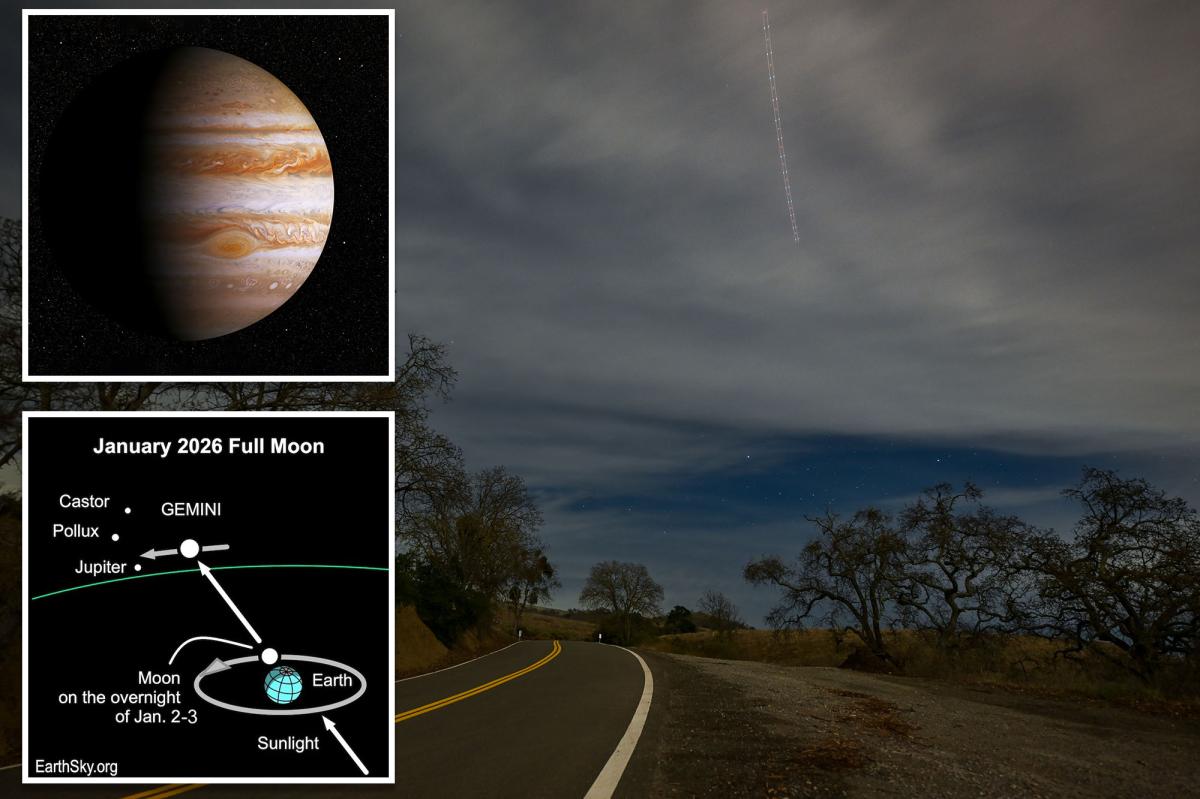
Jan. 3 is the first full moon of the year, known as the Wolf Moon, and will rise on the evening of Jan. 2, before peaking in the early morning hours on Jan. 3.
According to EarthSky.org, the Wolf Moon for 2026 will be a supermoon, meaning the moon’s orbit is closer to Earth than usual.
In addition to the full moon on Jan. 3, Earth will also be in perihelion, meaning our orbit will be closest to the sun.
The first major meteor shower of the year will also peak on Saturday, Jan. 3.
The Quadrantid meteor shower this year will likely be hard to see with the full Wolf Moon glowing in the sky, but you might be lucky enough to catch a few of the meteors if you block the moon’s light.
Just a week later, on Jan. 10, Jupiter, which will be clearly visible in the night sky for most of the month, will be at opposition.
According to The Planetary Society, when Jupiter is in opposition, it means that the planet will be on the opposite side of Earth from the sun.
Earth will fly between the sun and Jupiter on that day, EarthSky.org reported.
The last skywatching event of the month is the new moon, which will occur on Jan. 18.
After that, the next thing to look forward to in the sky will come in February.
There’s a partial solar eclipse that will take place on Feb. 17.
Read the full article here