

Albania’s tourism story is unlike any other. Closed off to the world for decades under the rule of dictator Enver Hoxha, foreign tourists began to slowly trickle in after his death and the fall of communism.
Today, the number of visitors has soared – in 2025, arrivals hit 11.9 million, up 3.3% year-on-year but up 93.6% compared to 2019, according to UN Tourism.
There’s no one single factor that has led to this meteoric rise, although we imagine the sheer number of travel publications referring to the Balkan nation as the “Maldives of Europe” (including Euronews Travel) has had something to do with it.
Here, we take a look into the boom, and where you should be heading on your next trip.
Hidden gem to holiday hotspot
Travellers are always looking for the next “hidden gem”: As soon as one place peaks in popularity, people begin to look for off-the-beaten path alternatives.
A decade ago, Croatia – and Dubrovnik in particular – hit the mainstream thanks to Game of Thrones. Then tourists began looking for quieter locales on the Dalmatian coast, landing on Montenegro. Now, people are headed further south still, with the Albanian Riviera earning praise for its clear waters and affordable prices.
The relative ease of moving around the region by bus has brought in plenty of travellers opting for multi-country trips, taking in North Macedonia, Kosovo and other spots in combination with Albania.
For those flying in, the expansion of Tirana International Airport has helped, but a more significant event was the launch of a Wizz Air base here in 2020, bringing with it affordable flights to and from cities across Europe including Barcelona, Budapest, London, Madrid, Rome and Stockholm.
A big part of why Albania is now so popular is also the sheer variety of its offering, whether you’re into history or just want to fly-and-flop.
Tirana: For history buffs
Albania’s capital Tirana is an excellent way into the country’s history and its rapid development over the past few decades.
Begin with a visit to Skanderbeg Square, so named for the statue dedicated to the country’s national hero who resisted the Ottomans in the 15th century.
While the National Historical Museum will remain closed until 2028, the mural on the outside still offers an insight into the country’s past through the figures represented, which include an Illyrian warrior, a fighter from the Albanian National Awakening period, a depiction of Mother Albania and a communist worker.
Communist-era Albanian history piqued my interest, which led me to the House of Leaves, a museum that focuses on the Sigurimi, the country’s secret police. You’ll get to see inside former interrogation rooms, and see first-hand documents, recordings and photos from that time.
Brutalist architecture isn’t the only legacy of Hoxha’s Albania: The country is also covered in bunkers, with 5.7 for every square kilometre. Most are derelict, but near Skanderbeg Square you can visit Bunk’art 2, which also looks at life under the fear of the secret police.
Bunk’art 1, the larger of the two, is on the outskirts of Tirana and covers various periods from the 1930s up to 1990. If you’re planning on taking the Dajti Mountain Cable Car, it’s just moments away from the lower station.
For tourist knickknacks and local food, you can visit Tirana Castle, aka the Fortress of Justinian, which is now the home of many independent restaurants, cafés and shops.
Tirana is known for being a cheaper city break than destinations in neighbouring countries, and it has a thriving nightlife scene as a result.
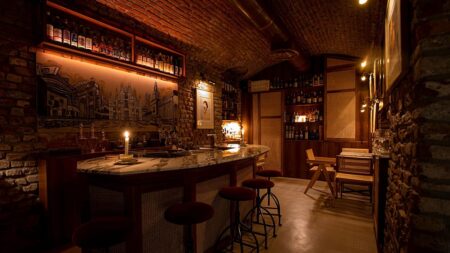
The Blokku district is a good place to start. For cocktail lovers, try Hemingway, which is known for its live jazz and rum-based beverages, or Radio Bar. For beers, I liked Ruka’s Bar 1991.
Wherever you go, be sure to try raki at some point…
Shkodër: For lakeside relaxation
The largest lake in Southern Europe is split between Albania and Montenegro.
Called Lake Shkodër on the Albanian side (and Lake Skadar on the Montenegrin side), you can explore the town by foot and visit Rozafa Castle, but the best thing to do here is rent a bike and make your way around the lake.
This is very much a place to slow down and not do very much at all. I stayed at Hotel Tradita, a boutique property within a building that originally dates back to 1694 and was once the home of poet Filip Shiroka.
Even if you don’t stay there, be sure to pay a visit to the restaurant, which serves up traditional dishes, wine, and raki, and often has live Albanian music, too.
Shala River and Lake Koman are popular day trips from Lake Shkodër, and adventures in the Albanian Alps start from here.
Albanian Alps: For nature lovers
The Valbona Pass is among the most popular hiking routes in the Albanian Alps, and you can read all about our writer Rebecca Ann Hughes’ time exploring the trail in detail here.
The TL;DR version is that the trail from Valbona and Theth is 12 kilometres and takes around seven to 10 hours, and along the way you can expect to see unspoilt scenery, with dramatic peaks and wildflower-strewn meadows.
Albanian Riviera: For beach bums
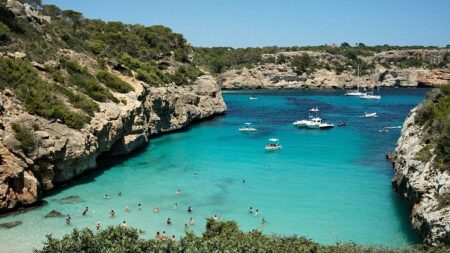
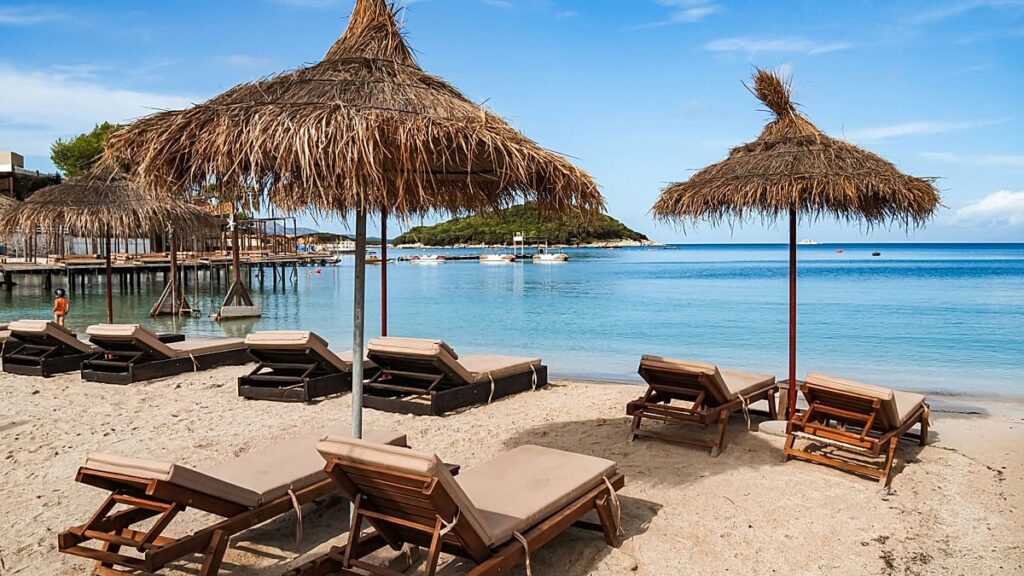
The place that you’ve probably heard the most about is undoubtedly the Albanian Riviera, aka the “Maldives of Europe”, so called because of its crystal clear waters and soft sandy shores.
Vlorë, Albania’s third-largest city, has seen the biggest influx of visitors, but other popular hotspots along the coast include Dhërmi, Sarandë and Ksamil.
The tourism boom in the country has brought with it plenty of investment in the tourism infrastructure, with five-star hotel options on the coast now including Green Coast Hotel – MGallery Collection (which opened in June last year), Crowne Plaza Durres by IHG (which opened earlier this year), and Miamar Luxury Hotel & Spa.
How to get there
There are direct flights to Tirana International Airport from major hubs across the continent, including London, Frankfurt, Amsterdam and Istanbul, although it should be noted that many of these flights are seasonal.
You can also take buses to Tirana from nearby cities including Skopje and Ohrid in North Macedonia, Podgorica and Budva in Montenegro, or Prishtina and Prizren in Kosovo.
Read the full article here