




The fastest land animal on the planet lies frozen in time beneath blistering desert sands. Researchers have discovered dozens of ancient cheetah skeletons and dehydrated bodies preserved in caves on the Arabian Peninsula, where the species hasn’t been spotted for decades.
The cats’ DNA may help humans reintroduce them to the region in the future. A new analysis of the naturally mummified and skeletal cheetahs’ genetics, published January 15 in Communications Earth & Environment, suggests the lost cheetahs were most closely related to two living subspecies rather than just one. These cheetahs could be used to found new populations on the Peninsula.
Cheetahs (Acinonyx jubatus) used to sprint after prey all over Africa and across large tracts of South Asia. But today, they’ve lost over 90 percent of that territory. The cats are now mostly restricted to Africa, with a tiny population of less than 70 Asiatic cheetahs in Iran. A combination of habitat and prey loss, conflicts with humans and the pet trade probably led to cheetahs’ extinction on the Arabian Peninsula, where they were last seen in the 1970s.
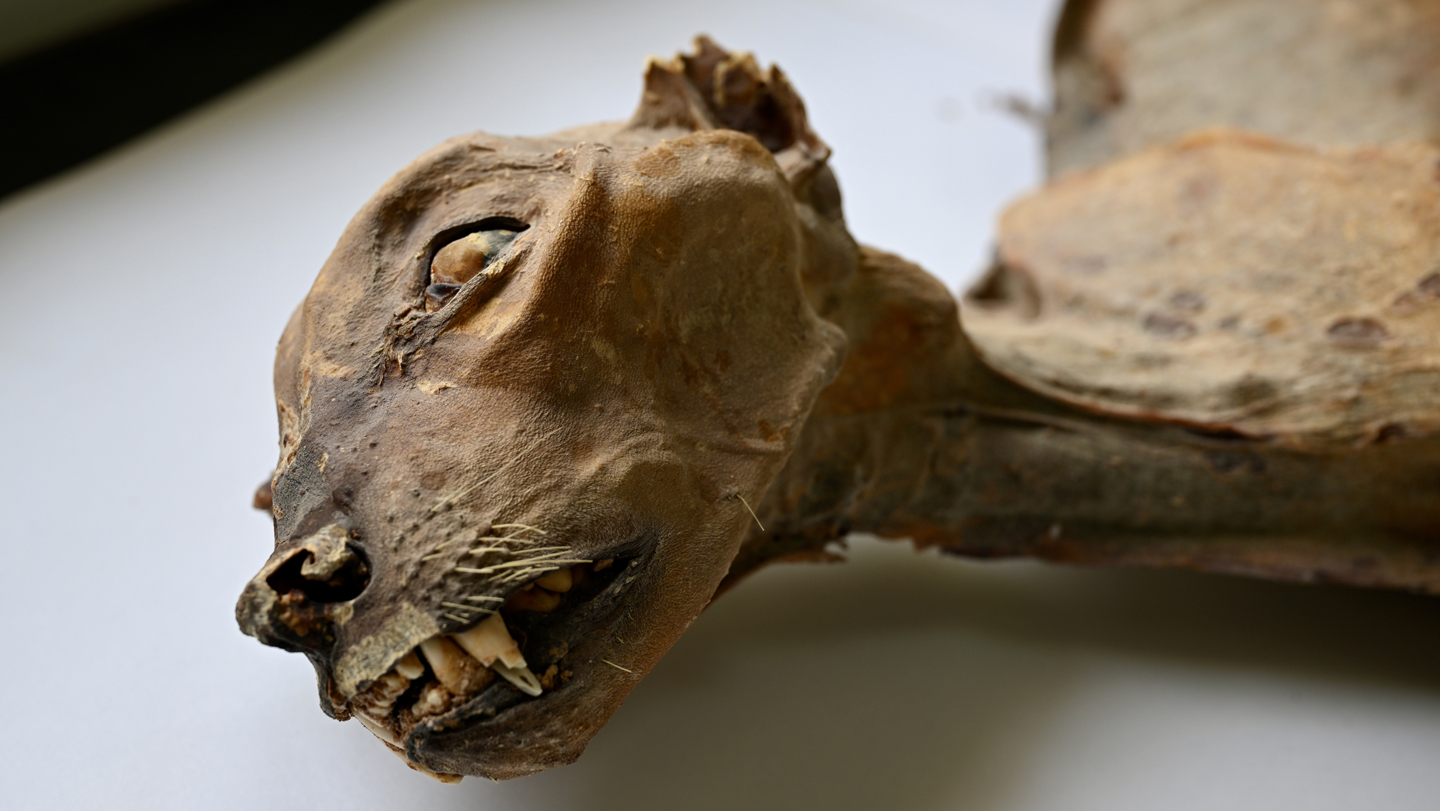
But their legacy remains in some surprising places. In 2022 and 2023, Ahmed Al-Boug — a wildlife biologist at the National Center for Wildlife in Riyadh, Saudi Arabia — and his colleagues conducted a wildlife survey in a network of 134 underground caves in northern Saudi Arabia. In five of those caves, the researchers found preserved cheetah remains: 54 skeletons, but also seven mummies, set and desiccated by the desert’s extreme aridity. Long ago, the cheetahs may have fallen into the caves and were unable to escape.

Liz Kierepka, a molecular ecologist at the North Carolina Museum of Natural Sciences in Raleigh who was not involved in the research, says the discovery is quite the rarity.
“The fact that they went into over one hundred caves and were able to find mummies — that’s highly unusual outside of [things like] permafrost,” where natural mummies of Ice Age megafauna abound, says Kierepka.
Al-Boug and his team used carbon dating on several remains, discovering that the cats ranged from only a century old to over 4,200 years old. The researchers also took genetic samples and compiled the full genomes — the genetic instruction books — of two cheetah skeletons and one of the mummies. One of these cats was closely related to Asiatic cheetahs (A. jubatus venaticus), thought to be the only subspecies once found on the Peninsula. But surprisingly, the other two were genetically allied with cheetahs from northwestern Africa (A. jubatus hecki).
The findings give researchers and conservation managers a second gene pool to seed any reintroduction effort in the region, including ongoing efforts by the National Center for Wildlife to breed cheetahs and reintroduce them to Saudi Arabia. When bringing back species to habitats where they’ve been extinguished, it’s ideal to use populations that might have adaptations to local conditions, says Kierepka. The northwest African cheetahs might be adequately related to the ancient Arabian cats to have some of those crucial adaptations.
However, both the modern subspecies are also critically endangered, notes Kierepka. Relocating cheetahs from these already tiny, struggling populations has the potential to cause new problems for the donor pools, and should be carefully taken into account, she says.
It requires more data, but Kierepka would be curious to see more genetic analyses looking for particularly helpful traits when selecting donor cheetahs. “If they really want to pursue rewilding,” Kierepka says, that could make reintroduction more likely to succeed.
Read the full article here