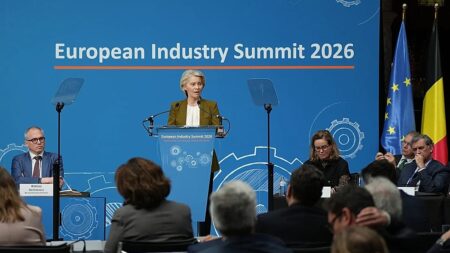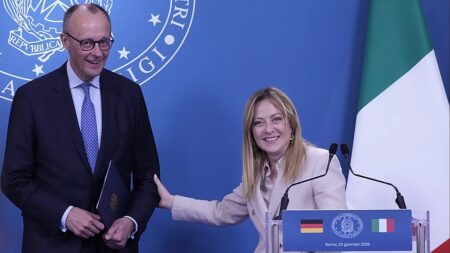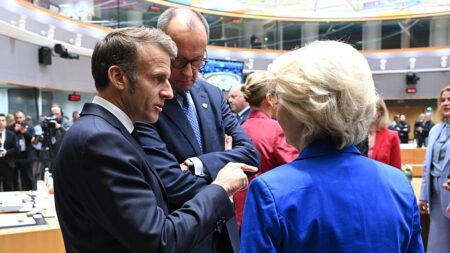






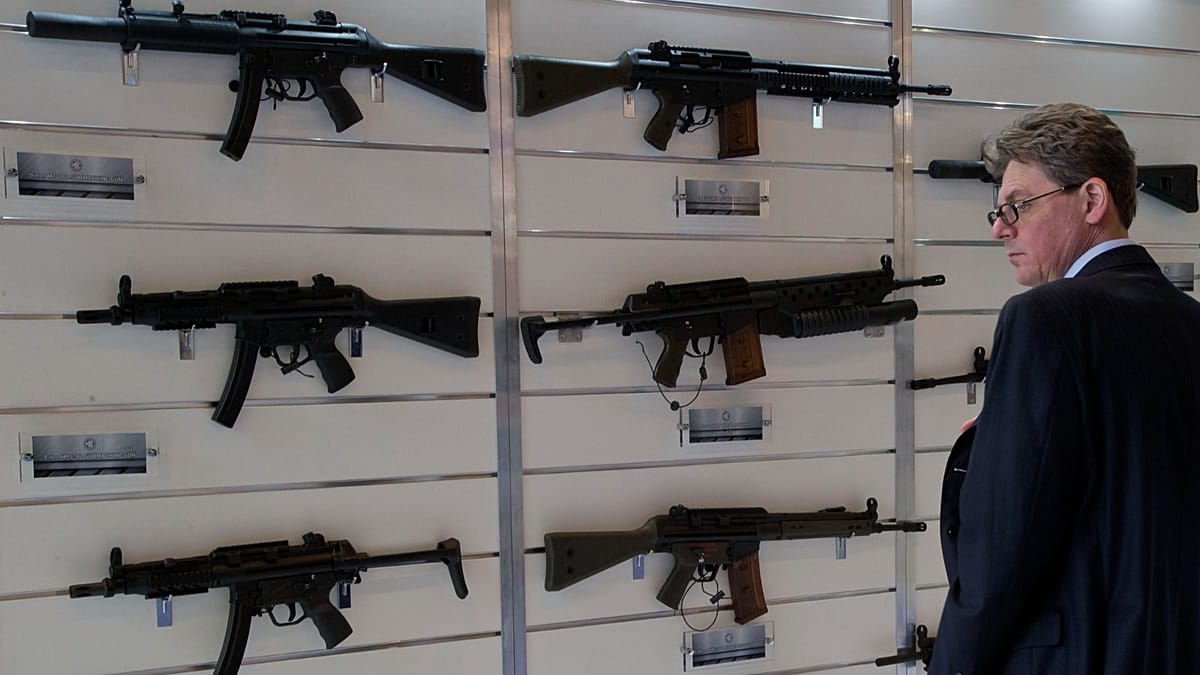
The European Union is working to strengthen its weapons industry, increase defence spending, and improve joint procurement. As it prepares for less US military involvement and aims to limit American companies’ roles in contracts, Brussels is encouraging faster production and closer cooperation. However, even with strict rules, loopholes and ambiguities still allow weapons to reach high-risk destinations.
A defence push reshaping the system
The EU has pledged to support Ukraine, strengthen its own defence industry, and buy more equipment from European sources through new plans such as EDIS and the 2025 Defence Readiness Omnibus. These strategies aim to simplify joint production, reduce licensing delays, and accelerate the delivery of ammunition, vehicles, and advanced systems. By 2030, the EU wants at least half of its defence purchases to come from European suppliers and to raise internal defence trade to 35% of the market.
Europe’s arms-export rules are not unified. Each country makes its own licensing decisions under Article 346 of the Treaty on the Functioning of the EU.
The EU Common Position 2008/944/CFSP sets out eight criteria, including human rights and conflict risk. COARM, the EU’s arms export group, shares information and denial notices, but it cannot overrule national decisions.
Loopholes and uneven standards
Since there is no central control, loopholes have emerged. Weapons can move easily within the EU under relaxed rules and then be sent to other countries with less stringent licensing requirements. “I think that’s where we see erosion of the [European] rules that were created already 20, 30 years ago. Now, because of geopolitical pressures, these rules are under pressure,” says Frank Slijper, Project Leader at Dutch peace organisation PAX.
Past examples show how rules can be bypassed. Since 2015, European weapons sent to Saudi Arabia and the United Arab Emirates have been widely used in the Yemen war. “It’s no secret that oil is one of the big drivers behind the arms trade. It enables European states to get access to oil on one end and supply weapons to these same oil-supplying countries on the other hand,” Slijper notes.
Post-delivery checks, intended to prevent weapon misuse, have little effect. “Even if weapons end up in banned or unwanted destinations… if there are any consequences, they’re relatively small, for a short time, and do not have a major effect on general arms export relations between those two countries,” Slijper explains. COARM can send denial notices and track exports, but without a binding EU authority, national governments often prioritise industrial and strategic interests over human rights rules.
The war in Ukraine has made the problem worse. To meet NATO goals and support Kyiv, the EU and its members have increased production and transfers, sometimes interpreting the Common Position rules more loosely. “Everything related to arms export control has come under big pressure because of the European Union wanting to increase its own arms industry, and then two strict rules are hindering progress,” Slijper says.
Internal market dilemma
One main goal of the Defence Readiness Omnibus is to facilitate the transfer of arms within the EU, but this could create a legal loophole. If equipment is made in several countries, only the country where it is assembled must check it, not the countries that supplied the parts. This could allow weapons to avoid stricter national checks as they move through Europe.
The arms industry also wields significant influence. “Clearly, the arms industry has an interest to grow and to make profit, but at the same time, it’s European politicians who support this growth of the European arms industry; those voices from the arms industry are so much louder than voices from civil society that indeed these concerns about human rights are overshadowed, unfortunately,” Slijper observes.
Calls for reform
Experts say the EU could address these problems with several reforms. It could move from voluntary guidelines to binding rules, so groups like COARM can enforce common licensing standards or block high-risk exports. It could tighten controls on transfers within the EU to stop equipment from moving under weaker rules and avoid stricter national checks.
The EU could also strengthen post-delivery monitoring by adding tougher penalties and possible EU-level enforcement. Publishing detailed data on exports, end-users, and denied licences would also make the process more transparent and accountable.
Slijper offers a simple way to deal with industrial and strategic pressures: “If you struggle to [build industrial capacity for Europe], then at least make sure that you do not export outside of the European Union. We need all the industrial power for Europe itself to restock on the weapons that we’ve supplied to Ukraine, but also to become much more independent from the United States.”
In practice, the loopholes are clear. Large member states can be less strict with the Common Position, transfers within the EU can avoid national checks, and post-delivery monitoring is weak. COARM also cannot enforce rules. Meanwhile, concerns from civil society about human rights are often pushed aside by industry lobbying and strategic interests.
Read the full article here