






Orcas are renowned hunters. Now, they have surprised scientists with an unexpected twist — possibly getting help from dolphins.
In the waters off British Columbia, marine ecologist Sarah Fortune and her colleagues regularly spotted fish-eating killer whales (Orcinus orca) and Pacific white-sided dolphins (Lagenorhynchus obliquidens) swimming together.
“We started to notice that the killer whales and the dolphins weren’t going for the same fish kind of at the same time in a competitive way. Instead, what we saw was there is a little bit of organization,” says Fortune, of Dalhousie University in Halifax, Canada.
This sparked a question: Are the two species actually hunting together?
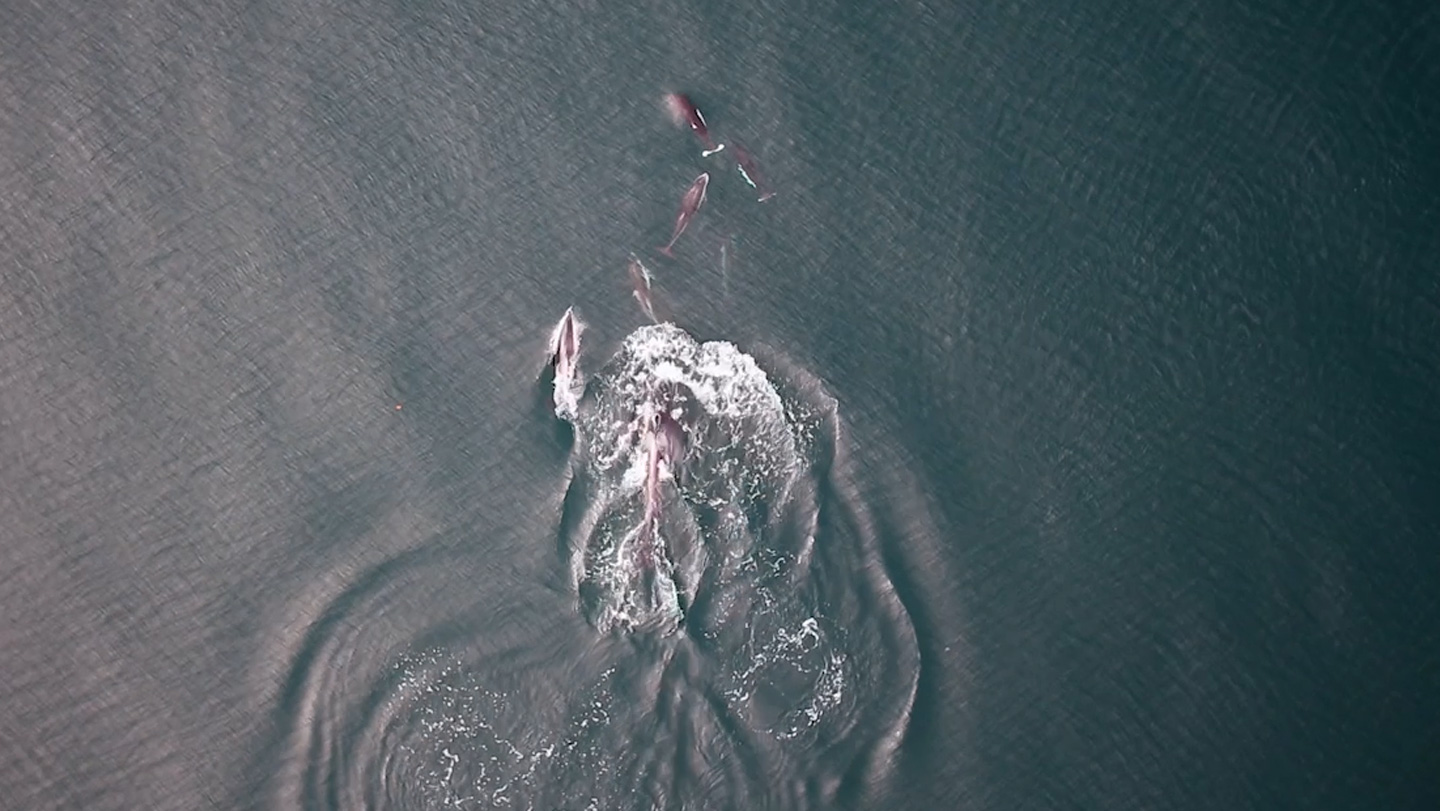
To investigate, Fortune and her colleagues deployed a drone to film the behaviors of the orcas and dolphins. A device emitting sound pulses, which come back as echoes, was used to identify whether there were salmon nearby. The team also attached suction cup tags to nine killer whales. The tags had cameras and recording devices to record audio and video underwater while tracking the animals’ movements.
Over four days of observation, the killer whales followed the dolphins on deep dives 25 times, possibly eavesdropping on the dolphins’ echolocating calls and using them as “scouts” to find schools of salmon.
https://www.tiktok.com/@sciencenewsofficial/video/7589759089211723021″ data-video-id=”7589759089211723021
Drone footage also showed the whales and dolphins swimming in a coordinated way. In hundreds of instances, the dolphins swam near the heads of the killer whales. In all the interactions between the two species, the orcas were either hunting, killing or eating salmon.
The dolphins were also present in four out of the eight occasions where killer whales were sharing the captured salmon; one of those times, the dolphins were seen eating the leftovers.
Altogether, the data suggest that the two marine mammals might hunt salmon together, Fortune and her colleagues report December 11 in Scientific Reports.

“If you have other animals that are also echolocating, able to track elusive prey that’s avoiding being eaten, then it could be beneficial to have multiple sonar-scanning animals to help keep track of where that fish is,” Fortune says.
The dolphins might benefit from the whales’ successful hunts by eating pieces of salmon, as they cannot swallow a whole adult salmon. At the same time, the dolphins might gain protection from other orca pods that might hunt them, the team hypothesizes.
“I was not surprised,” says Heather Hill, a marine mammal specialist at St. Mary’s University in San Antonio, who wasn’t involved in the study. “There are a number of instances in which there’s interspecific cooperation or coordination of activities for foraging purposes among many animals, including marine mammals.”
Though the behavior may not be intentional, Hill says, “it’s cool that the killer whales can potentially utilize what the dolphins are doing. And the dolphins are basically taking advantage of the killer whales.”
When speaking about collaborative hunting, “there’s a ton of open questions that we still need to answer,” adds Hill, who believes advancing technologies such as drones and underwater footage will “really will open up our eyes to see just how often these things happen.”
Read the full article here