





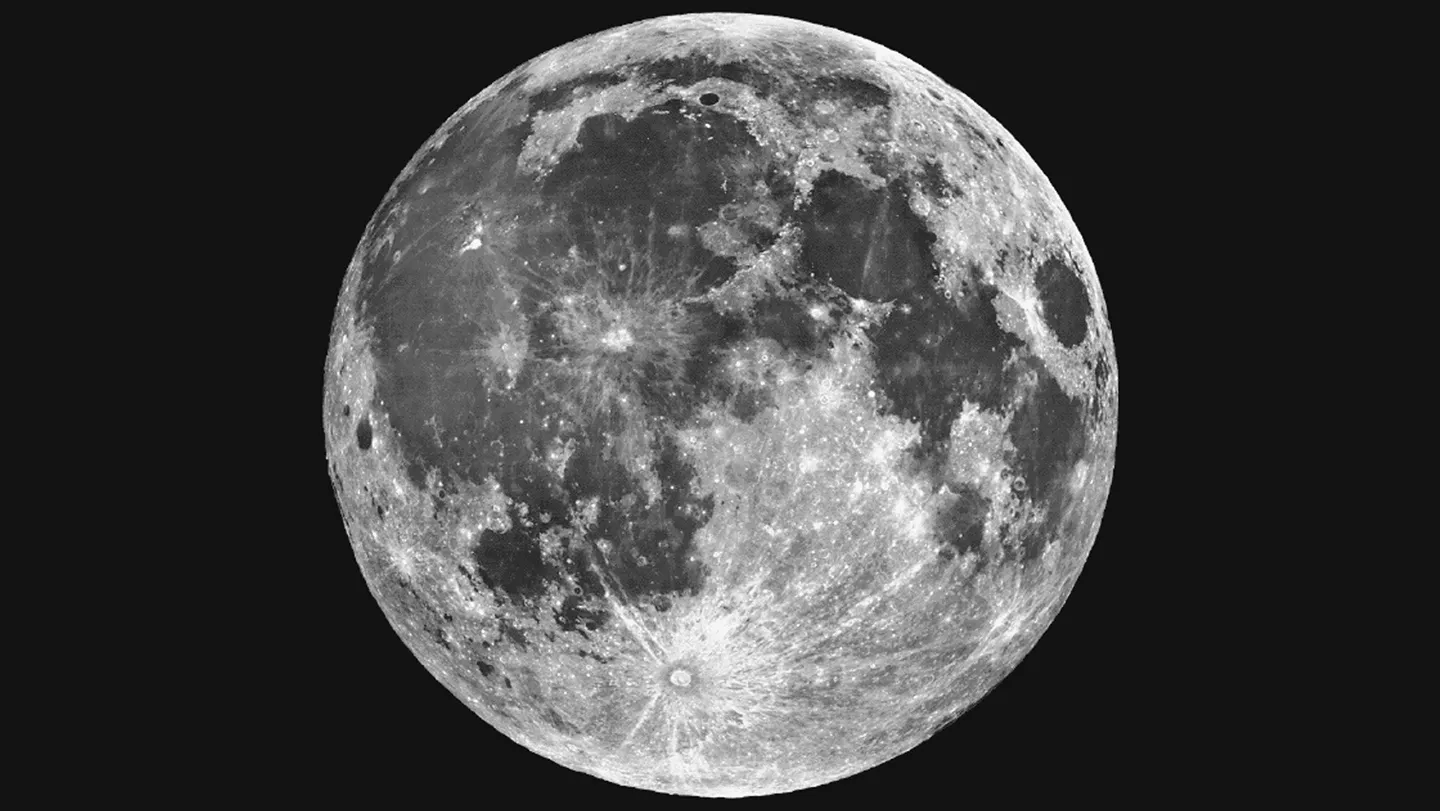
A once-in-a-century crater formed on the moon right under our noses. A routine search of images from NASA’s Lunar Reconnaissance Orbiter camera found a fresh crater as wide as two American football fields, planetary scientist Mark Robinson reported March 17 at the Lunar and Planetary Sciences Meeting in The Woodlands, Texas.
The crater is 225 meters wide and formed in April or May 2024, Robinson said. According to predictions based on other lunar landmarks, a crater that big should form only once in 139 years. The discovery can help highlight the risks impacts pose to future astronauts.
One of the first craters the orbiter spotted after it began its mission in 2009 was 70 meters wide, said Robinson, of Houston-based spaceflight company Intuitive Machines. “I used to joke with folks … that now the bar has been set, you have to find a 100-meter crater,” he said. “Now, lo and behold, we have 225 meters.”
The crater seems to have formed on a boundary between the cratered and craggy lunar highlands and a wide, flat mare, which formed from liquid magma pooling on the moon’s surface. Its depth, about 43 meters on average, and its steep edges suggest it formed in strong material like solidified lava. But its shape is slightly elongated, which suggests the ground beneath the crater is not all the same, Robinson said.
The crater is also surrounded by a bright blanket of ejecta — rock and dust that splashed out in all directions when the impact occurred — that extends hundreds of meters from the rim. Robinson and colleagues found other disturbances as far as 120 kilometers from the crater.
That could be bad news for future moon bases. Bits of rock ejected from impacts could hit lunar habitats at high speeds from very far away. Buildings will need to be designed to survive that. “You’ve got to protect your assets to withstand small particles hitting you at order of magnitude a kilometer per second,” Robinson said.
Read the full article here