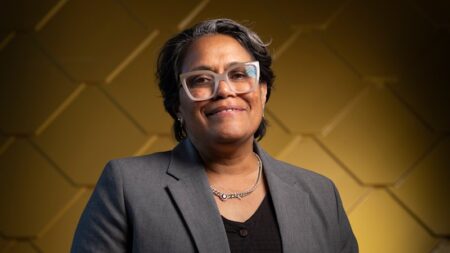





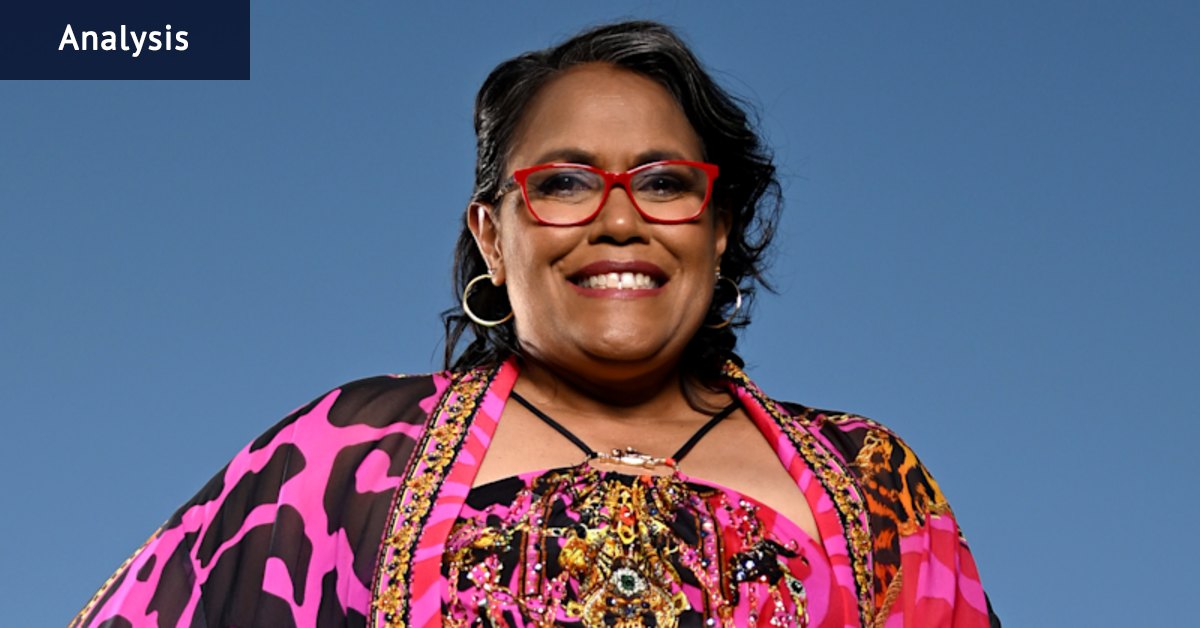
It’s been a long, sensitive journey for Cathy Freeman, the nation’s most prominent Indigenous athlete, to finally accept its top honour, a Companion of Australia award, after previously declining an upgrade from the Medal of the Order of Australia she won in 2001.
Freeman, who lit the cauldron at the 2000 Sydney Olympics and won a gold medal in the women’s 400-metre event, has joined other gold medal-winning Olympians, Dawn Fraser, Betty Cuthbert, Herb Elliott and Marjorie Jackson in being given Australia’s highest honour.
But it was never a sure thing. For a decade, Freeman quietly rebuffed attempts to put her name forward, concerned that associations with Australia Day – which many First Nationals people call invasion day – might be upsetting for some members of the Indigenous community.
Then recently Freeman had a change of heart, advising the Honours Secretariat that she would accept an AC award on Australia Day.
Freeman explained to this masthead: “It’s a great responsibility to accept this from the Aussie people. It means a lot. I’m definitely very interested in unity, harmony, peace. I remember as a little girl reading prayer books. The virtues were fed into my brain. On a day like Australia Day, we have to put out into the world the message of unity. After all, reconciliation is unity.”
‘On a day like Australia Day, we have to put out into the world the message of unity.’
Catherine Freeman, AC
John Coates, the former long-term president of the Australian Olympic Committee and senior vice president of the IOC, is a confidant of Freeman. He was pivotal in the initial approaches to her to accept an upgrade from an OAM, and in Freeman’s recent acquiescence to receiving the top award.
Coates says, “I approached her again in September 2022, and she said she was grateful and humble but not 100 per cent set on the dynamic of an Indigenous person accepting an award at either the Queen’s Birthday or Australia Day announcements. Nor did she want to be seen as publicly rejecting the honour. She didn’t want to make a public issue of rejecting it.”
In the intervening years, Coates was contacted by the Honours Secretariat and asked if he would support an upgrade to her OAM but, aware of her sensitivity about receiving an honour perceived in sections of the Indigenous community to be a relic of the colonial system, he declined.
In early 2024, the Honours Secretariat approached him again, pointing out there had been other prominent Indigenous members of the community who had accepted the nation’s top honour, including a woman, Lowitja O’Donoghue, a founding chair of ASIC who was awarded an AC in 1999. (Professor Megan Davis, a board member on the ARL Commission, received an AC last year).
Coates says, “So I approached Cathy again, and she told me she was of a mind to accept the nomination. The words she used were ‘I consider I now have a responsibility because of my position in the community to accept the award’. Lighting the cauldron by her was one of the most significant moments by anyone in the reconciliation process.”
He also pointed to Dawn Fraser’s role in social healing, following her impassioned speech in the aftermath of the Bondi mass shooting.
Fraser told this masthead, “I fully support Cathy’s award of an AC. In the same way, I hope there has been a path to reconciliation following the support I gave our wonderful Jewish community after the terrible event at Bondi. Cathy has done the same thing for the Indigenous community.”
Elliott, who won gold in the men’s 1500m final in Rome in 1960, said Freeman was a worthy recipient of the gong.
“Cathy is a very fine woman and a great athlete who delivered one of the greatest moments in sport in my lifetime. I’m delighted she has been made an AC,” he said.
Freeman said of her now-membership of such an elite club: “I’m very grateful to join such a distinguished group as Dawn and Herb.”
Of the long period of coming to terms with accepting the award, she added: “I’m also grateful to Coatsie for his forever support.”
Coates, himself one of Australia’s youngest recipients of the AC (for service to the Olympic movement), said: “In all my discussions with Cathy and the Honours Secretariat, I pointed out that all the Australian Olympians who had received the highest honour had contributed beyond their singular gold medal-winning performances.
“Cathy established the Catherine Freeman Foundation, which serves four remote Indigenous communities. Dawn works with young Australian swimmers.
“Herb Elliott has assisted Indigenous youth in Western Australia. Betty Cuthbert worked tirelessly to raise funds for multiple sclerosis. Marjorie Jackson, our first female gold medallist in athletics, later became the governor of South Australia. Following her husband’s premature death from cancer, she devoted herself to raising funds for medical research.”
John Landy, a world record holder in the mile, did not win an Olympic gold medal but was also awarded an AC following his tenure as governor of Victoria.
Coates chose Freeman, a young athlete who grew up in a marginalised Indigenous community in Queensland, to light the cauldron in Sydney, partly because it would advance Indigenous recognition but also because 2000 was the centenary of women’s participation in the Olympics.
It wasn’t tokenism then, nor was it tokenism 15 years later when Freeman supported Coates in the change he made to the AOC constitution “to recognise the heritage, culture and contribution of our nation’s First People and to give practical support to the issue of indigenous recognition through sport”.
Start the day with a summary of the day’s most important and interesting stories, analysis and insights. Sign up for our Morning Edition newsletter.


From our partners
Read the full article here