





Gridlocked roads, Disneyfied attractions and loss of local culture: these are just some of the woes plaguing tiny European villages that have shot to fame on social media.
Whether they’ve gone viral as movie filming locations or are sought after for their local delicacies, these hotspots are crumbling under the pressure.
Taking notes from overtouristed cities like Venice, Dubrovnik and Barcelona, locals are striking back with anti-tourism protests and authorities are imposing restrictions on visitors.
So which European villages are struggling the most with these one-attraction tourists?
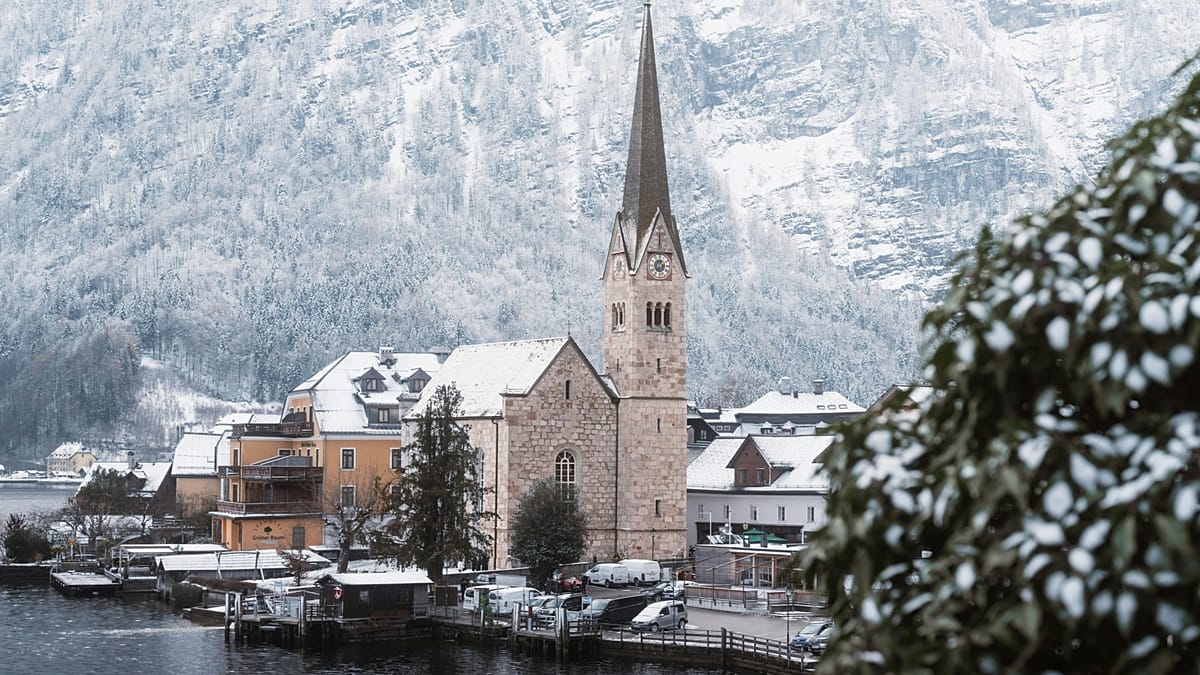
Hallstatt, Austria: The alpine village cursed by its own fairytale beauty
Part of the Hallstatt-Dachstein/Salzkammergut Cultural Landscape, a UNESCO World Heritage Site, the tiny Alpine village of Hallstatt is famed for its outstanding natural beauty and ancient salt mining history.
Widely believed to be the inspiration for Frozen’s Kingdom of Arendelle, it is now however visited by thousands of Disney fans.
With a tiny population of around 700 to 800, the village is overrun by up to 10,000 tourists per day. Most of these are only after the Instagrammable lakeside views, with several making a day trip here only for a quick photo, without staying overnight or spending much locally.
At times, hundreds of tour buses and cars have strained the village’s tiny roads and necessitated extensive traffic management. This has led to severe disruption of local life, with crowds blocking walkways, residents facing constant noise, and people trespassing on private property for photos, while ignoring signs that request quiet and respect.
To counter this, there have been an increasing number of resident protests, including blocked roads, with the mayor also putting up barriers at viewpoints to control the crowds. Caps on cars and tour buses have been implemented as well. However, limits are still frequently reached, despite these measures.
Mont-Saint-Michel, France: A medieval island that draws endless pilgrims
Mont-Saint-Michel, a small tidal island and commune in Normandy, France, is another UNESCO World Heritage Site that has come under severe pressure from overtourism.
A major pilgrimage and historic site, the island boasts a stunning natural bay, unique architecture and Europe’s highest tides.
However, viral social media posts and popular shows like ‘Lupin’ have turned the site into a cult pilgrimage destination, attracting around three million visitors annually.
This has overwhelmed the commune’s narrow medieval streets, caused shuttle bus congestion, and pressured other infrastructure.
It has also worsened the visitor experience. Endless souvenir shops, long queues and crowds create a theme park feel and accelerate damage to fragile historic structures.
This has led to the government exploring booking systems, visitor caps and turnstiles to better manage the flow of people. Tourists are also encouraged to visit during off-peak times, such as before 10am and after 4pm, or even during shoulder seasons, with incentives such as cheaper off-peak parking.
Kinderdijk, Netherlands: Where 18th century windmills power modern crowds
Another UNESCO Heritage Site, the minuscule village of Kinderdijk is also heavily overtouristed.
Famous for its 18th century Dutch windmills, the village of just 60 permanent residents is overrun by 600,000 visitors annually, many from cruise ships.
Residents have complained of disrespectful visitor behaviour, from being asked to move for photos, to entering private gardens and treating homes like an Instagram backdrop.
Not only does this make life more difficult for those who live there, it strains local infrastructure and threatens the village’s authenticity.
Bottlenecks at popular spots are only set to worsen with more plans to increase cruise ship docks and visitor numbers by the Kinderdijk World Heritage Foundation. These decisions have led to significant backlash by locals who have expressed that they feel disregarded and excluded from these plans.
Pushing back, locals have organised protests, and sent out gentle reminders to visitors via social media and ‘polite postcards’ asking them to be cognisant of overtourism.
The village has imposed measures such as banning tour buses and camper vans from the centre and raising fines for violations. It has also imposed permits for drone photography, to protect locals’ privacy.
However, the village is still heavily reliant on tourism income to conserve and maintain its historic 19 windmills, creating a conflict between visitor management and preservation needs.
Pienza: The Tuscan village undone by cheese
Pienza, a charming Tuscan village, is renowned for its revolutionary Renaissance urban planning. But it’s not the blueprint central square that’s drawing modern visitors: instead, many come in search of its famed pecorino cheese.
Especially popular with day-trippers, the tiny village – another UNESCO World Heritage Site – is struggling to contain the sheer numbers. Locals feel increasingly pushed out by touristic cheese and souvenir shops, which leave less room for essentials like pharmacies and other necessities.
Restaurants have also modified menus to cater more to visitor tastes, causing authentic, regional gastronomy to fade.
One of the biggest losses of local traditions due to overtourism has been the silencing of the historic bell tower between 10pm and 7am due to numerous noise complaints, mainly by tourists.
While other major Italian towns like Venice and Rome are taking measures to curb overtourism, Pienza is yet to implement similar rules.
Goathland, England: How a rural train station became Harry Potter’s busiest stop
Goathland, a small North Yorkshire town in England, has shot to fame in recent years as a filming location for popular shows and movies like ‘Heartbeat’ and ‘Harry Potter’.
Goathland Station was Hogsmeade Station in the first Harry Potter film, and continues to draw hordes of visitors years after all the films have come out. The hype around the new HBO series coming in 2027 has also boosted tourist numbers.
This has led to crowded village streets, overburdened local infrastructure and many cars parked illegally due to lack of space.
With village communal spaces being overtaken by visitors, shops changing focus, more litter in natural areas and long queues for photos at key spots like the Aidensfield Arms location, locals are feeling increasingly pushed out.
While the North Yorkshire Council has not taken any Goathland-specific overtourism measures, it is implementing strategic Destination Management Plans (DMPs) in the wider region, which should focus on sustainable growth and managing the impacts of surging visitor numbers.
Read the full article here