






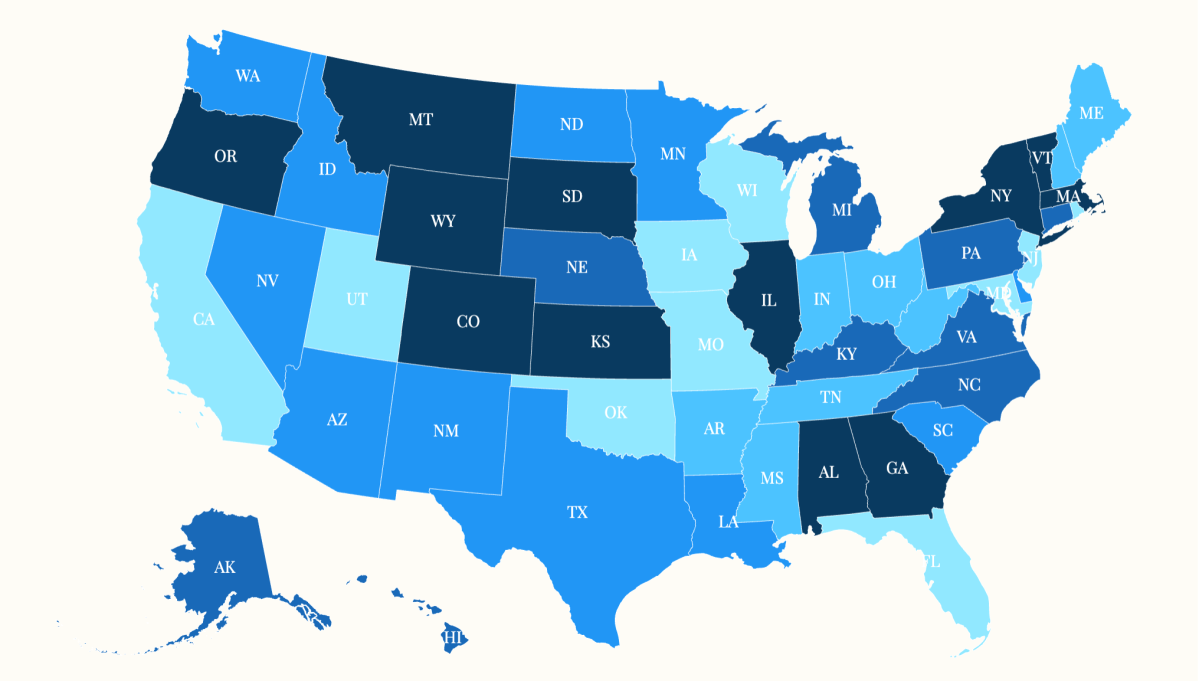
Being “rich” means a very different thing depending on which state you live in—at least from a paycheck perspective.
For residents of West Virginia, for example, earning under $200,000 is enough to be considered “rich” or within the 10 percent top earners in the state, according to a new report by Visual Capitalist.
But this is the lowest threshold to being “rich” in the entire country. In Massachusetts, households need to earn nearly twice as much to reach the top 10 percent and in Washington, D.C., an outlier in the nation, it takes more than $630,000 to join this group.
Who Is ‘Rich’ In the US?
At the national level, a household needed to earn about $210,000 or hold $1.8 million in net worth in 2024 to rank among the wealthiest 10 percent, according to a recent Visa analysis. Back in 2020, before the spike in inflation that accompanied the pandemic, that threshold was reached with just $170,000.
About 12.2 million U.S. households qualified as “rich” under that definition in 2024, with Gen X making up 57 percent of them and Boomers 12 percent. Younger generations, millennials and Gen Z, accounted for a combined 31 percent.
But in different parts of the country, being affluent has a very different price tag based on how much households pay for housing, goods and everyday services. This is what drove the massive wave of domestic migration that took place during the pandemic, when the rise of remote work allowed many Americans to relocate to more affordable states which would allow them to stretch their paychecks further.
Despite the economic woes that have followed the start of the pandemic, wealthy Americans have gotten wealthier in the past six years thanks to rising stocks and home values. According to the Federal Reserve’s distribution of wealth data, households which were already in the top 10 percent by net worth saw their wealth grow more than any other cohort between 2020 and 2025.
Not only the richest are getting rich, but the income inequality gap in the country is getting wider. The richest 1 percent in the U.S. gained nearly 1,000 times more wealth than the poorest 20 percent in the past 35 years, according to a recent Oxfam study.
What the Income Threshold To Be Rich Is, by State
In general, a household needs to earn between $198,000 and $387,000 in annual income to be considered among the top 10 percent earners, according to Visual Capitalist data.
Their analysis was based on data from Germany-based tax platform BuchhaltungsButler and the Berlin-based data studio DataPulse Research, which crunched gross household income numbers from the U.S. Census Bureau across all 50 states and the District of Columbia.
In the District of Columbia, residents need to earn the most money to be considered wealthy, at $635,000 per year.
After this anomaly, the top 10 states where it takes the most money to be considered among the richest 10 percent are Massachusetts, Connecticut, New Jersey, Washington, New York, Hawaii, Alaska, and California, with Maryland and Rhode Island tied.
In each state, earning enough to be in the top 10 percent means earning at least double what the middle class earns, but in some of the most expensive states in the country, such as New York, Connecticut, and Massachusetts, it means earning three times as much.
Living is more expensive in general in these states. In places such as Arkansas or Mississippi, on the other hand, living costs are among the lowest in the country and the threshold to be rich falls well below most other states.
These are among 16 states where the rich are earning at least $270,000 annually while prices are below the national average, BuchhaltungsButler reported, making those dollars stretch further than in relatively expensive states like California, Hawaii, or New York.
“That’s why the ‘best’ state to be rich isn’t necessarily the one with the highest salaries, but the one where those salaries translate into real comfort,” the company wrote in its report.
Read the full article here