





A new way to beat back the bald?
While over 80% of men and nearly half of women experience significant hair loss, going bald isn’t completely inevitable.
One of the most popular treatments, minoxidil — commonly sold as Rogaine — is proven to stimulate follicles. Recent research finds that adding an extra ingredient to the over-the-counter foam can give tresses a sweet boost.
Minoxidil is one of the few FDA-approved OTC treatments for male and female pattern baldness, but it doesn’t always get to the root of the problem, literally.
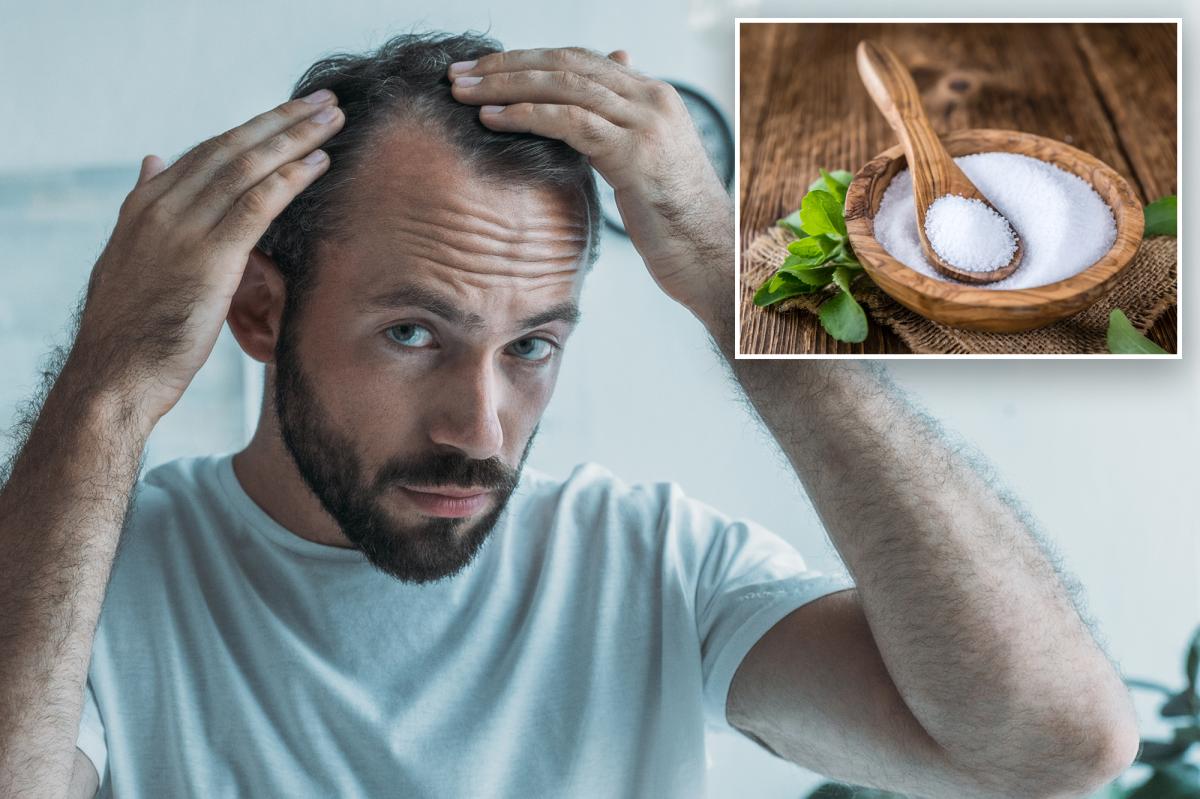
The study reports that the natural sweetener Stevia can improve the absorption and efficacy of minoxidil when delivered via a specialized, dissolving microneedle patch.
The researchers combined minoxidil with stevioside derived from the stevia plant.
They applied the mixture to mice with hair loss, which prompted hair follicles to re-enter the growth phase, the first stage of new hair growth.
“Using stevioside to enhance minoxidil delivery represents a promising step toward more effective and natural treatments for hair loss, potentially benefiting millions worldwide,” said study co-author Lifeng Kang of the University of Sydney in Australia.
Rogaine and topical foams containing minoxidil are popular hair loss treatments, but they’re not without their flaws.
Not only do they sometimes have trouble soaking into the scalp, but they also don’t fully dissolve in water or disperse properly across the skin.
Manufacturers might add extra ingredients like ethanol to improve penetration.
However, this can lead to unpleasant side effects like itching, rashes or dandruff.
The new mixture of Stevia and minoxidil is promising as it seemingly eliminates these issues while providing a convenient and long-lasting option.
The combination ensures prolonged drug release directly into the targeted area with accurate dosage. The findings were published in Advanced Healthcare Materials.
This isn’t the first minoxidil combo researchers have tried to combat balding.
It’s often paired with the prescription drug finasteride, an FDA-approved hair loss treatment that blocks the conversion of testosterone into dihydrotestosterone (DHT), a major player in hair loss.
But there is mounting evidence that finasteride can increase the risk of mood disorders and suicidal thoughts.
Read the full article here