



“You know why … I don’t want to say too much.”
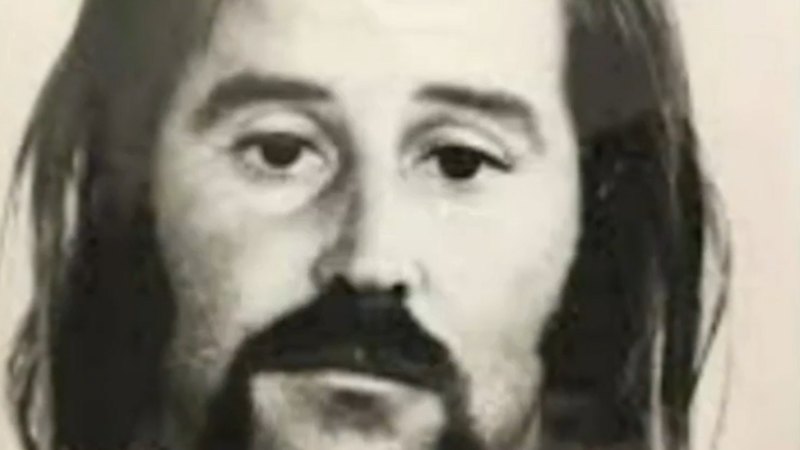
These were some of the final words spoken by cold-blooded killer Garry Dubois as he called his family from prison the day before he was found dead in his cell.
The conversations, released on Friday, have fuelled speculation about whether Dubois’ 2021 suicide was connected to the chance he may have been called to give evidence at the Whiskey Au Go Go inquest.
Dubois, 74, was one of Queensland’s most notorious criminals. He had been serving time at Maryborough Correctional Centre for multiple offences, including murder, rape, manslaughter, and deprivation of liberty.
In 2016, he was found guilty by a Supreme Court jury of the manslaughter of Barbara McCulkin, and the rape and murder of her daughters, Vicki, 13, and Leanne, 11, in January 1974.
He had taken the three family members from their home in Brisbane’s Highgate Hill.
His accomplice, Vincent O’Dempsey, was found guilty of all three McCulkin murders.
During their trials, the court was told the men may have been motivated to kill Mrs McCulkin over fears she would try to implicate O’Dempsey in the firebombing of the Whiskey Au Go Go nightclub the year before.
Fifteen people died in the planned attack in Fortitude Valley. Two men, who have since died, were sentenced to life imprisonment over the fatal fire.
McCulkin’s estranged husband, Billy, had connections with O’Dempsey and Dubois, so she may have been able to implicate them through what he may have told her.
Due to the high-profile status of his crimes, Dubois was housed in cell 41, level 2 of Secure Unit 2 – the protection block – while he served his life sentence.
Inquest findings by Deputy State Coroner Stephanie Gallagher released on Friday paint a picture of Dubois’ final days.
Dubois had been concerned about the inquest into the fire, which was scheduled to start on June 14, 2021, according to evidence in the investigation into his death.
Detective Senior Constable Martin Payne, of the QPS Corrective Services Investigation Unit, investigated Dubois’ death and concluded he died from suicide, and that he was aware of the upcoming inquest.
Payne opined that it was likely that Dubois believed he would be summonsed to give evidence.
At 8.30am on the day before his death, he had an in-person visit with his wife, Jan, and daughter Nicole at the prison.
Later that morning and into the afternoon, he spoke with them over the phone. His daughter told him she loved him, and that she was proud of him.
Throughout the call, his wife said: “I don’t like it … I get it … you know. You’re sick and tired of being sick and tired.”
Dubois responded: “It’s been too long … I’ve done my best … this is hard for me.”
Dubois told them he loved them. He also stated: “I’ve got nothing to say … I’ll always be thinking of you. I’m not going to prolong this battle.”
When his wife suggested that it was probably because “they reduced your medication”, Dubois disagreed, saying: “I’ve just had enough.”
Jan Dubois refused to be interviewed after her husband’s death. In a 2016 interview with Nine News, she denied he was a killer, saying “no, not a chance”.
Nine News
Dubois was discovered in his cell, after having last been checked on about 8.15pm the day before.
After a delay of about nine minutes, staff performed CPR. Staff had incorrectly declared the cell a crime scene before his death had been verified. But upon realising the mistake, they instructed the cell be opened, and first aid be given.
A large volume of letters and documents in brown paper bags was found in the shelves of his cell. There was no indication Dubois had been suicidal, according to his interactions with prison staff.
Other prisoners in the unit reported that Dubois, who was a cleaner, was well liked and respected, and was noted for being healthy and regularly exercising. One of the inmates told investigators Dubois had confided in him about killing himself, but the inmate had stopped him.
He claimed Dubois told him he did not want to put his family through the upcoming inquest.
In her findings, Gallagher said a pre-inquest conference in April 2021 heard that Dubois would be called to give evidence. The inquest was then adjourned to June 14.
But she said there was no evidence to suggest that Dubois was subsequently called to give evidence.
The findings also state corrections staff had no information on file to indicate Dubois would be called, or that he needed to be transferred to court, which Gallagher accepted.
“It follows that while I find that the QPS investigation into Mr Dubois’ death was conducted thoroughly and professionally, I consider there is insufficient evidence before me to make a determination that Mr Dubois was motivated to end his life due to the impending Whiskey Au Go Go inquest and/or the prospect that he may be required to give evidence at it,” she said.
Gallagher said she was satisfied following suggestions made regarding first-aid training in an earlier review, and as such, there were no other recommendations to make. She accepted that even if chest compressions had been performed earlier, it would not have changed the outcome for Dubois.
She also accepted there was no evidence to suggest Dubois’ phone calls should have been monitored, or that he presented a mental health risk.
She found that in the three months before his death, Dubois’ supervision was adequate and appropriate.
If you, or someone you know, needs support you can call Lifeline on 13 11 14 or Beyond Blue on 1300 224 636.
Start the day with a summary of the day’s most important and interesting stories, analysis and insights. Sign up for our Morning Edition newsletter.


From our partners
Read the full article here