





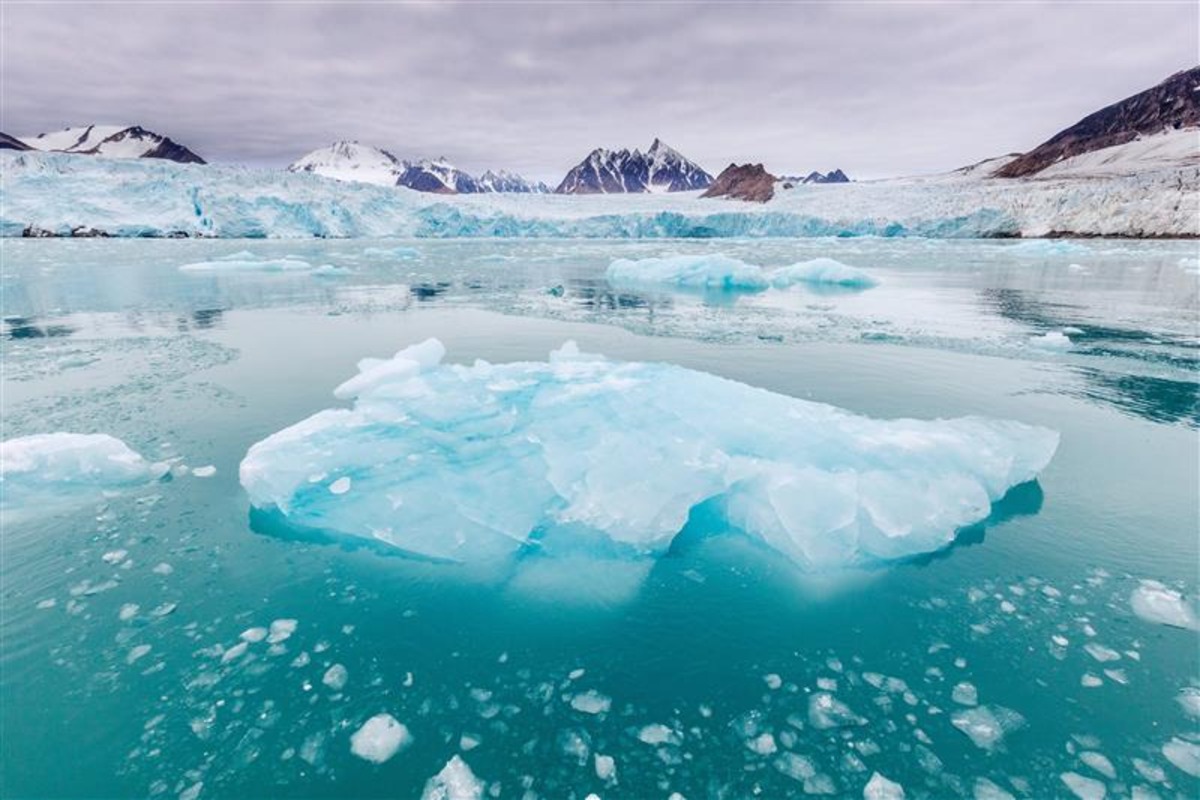
Norway has doubled down on its territorial claim to a remote Arctic archipelago as attention increasingly turns to one of the world’s most austere regions and the U.S. refuses to back down from threats to take Greenland by force if necessary.
Why It Matters
Svalbard, one of the world’s northernmost inhabited areas, has long had an open-door policy, earning its reputation as somewhat of a neutral zone, with collaboration between citizens from competing global powers.
But the Arctic is changing, reshaped by climate change, glacial relations between Russia and the NATO Arctic states, and U.S. President Donald Trump’s fixation with controlling Greenland—a semiautonomous part of Denmark—apparently at almost any cost.
The White House’s refusal to rule out using military action against a fellow NATO member to take the sparsely populated, mineral-rich expanse by force has deeply shaken the alliance.
What To Know
Svalbard is “Norwegian sovereign territory,” Eivind Vad Petersson, the state secretary for Norway’s Foreign Ministry, told The New York Times in an article published on Sunday.
“When political attention is raining on Greenland, of course some of it drips on Svalbard,” Petersson said.
The Norwegian official said Svalbard had become known for welcoming all newcomers, perceived as a territory where “everyone who wants to can come up and do almost whatever they want.”
“That’s not the fact,” Petersson added.
Norwegian sovereignty over Svalbard was recognized in the aftermath of World War I, although a more than century-old treaty has granted close to 50 countries equal access to the archipelago and its natural resources.
Norway, like the U.S., is a founding member of NATO. It shares about 120 miles of land border with Moscow, with Norwegian soil stopping not far west of Russia’s major military bases clustered around the Arctic cities of Murmansk and Severomorsk.
The Trump administration has said Washington needs control of Greenland to safeguard its national security, shore up NATO defenses and bat away burgeoning Russian and Chinese influence in the Arctic. But onlookers say sharp U.S. interest in the island is also about expanding Washington’s sphere of influence in the Western Hemisphere and securing vital resources.
Many Greenlanders are in favor of the territory eventually separating from Denmark, but opinion polls show the vast majority of Greenlanders do not want the island to become part of the U.S.
Greenlandic Prime Minister Jens-Frederik Nielsen said on Tuesday that the territory’s inhabitants would choose Denmark, NATO and the European Union over the U.S. Trump, hitting back at the remarks, said he disagreed with Nielsen and “that’s going to be a big problem” for the Greenlandic leader.
Republican Representative Randy Fine of Florida this week introduced a bill that would pave the way to the U.S. annexing Greenland, which legal experts rebuked as heralding a violation of international law. A competing bill from Democratic Representative Jimmy Gomez of California seeks to block federal funds from being used to pursue U.S. control of Greenland and altering the U.S. military presence there.
If the U.S. moves to take Greenland by force, it will likely spell the end of NATO, as Copenhagen has warned. Until now, the prospect of NATO’s most powerful nation attacking another alliance member was unfathomable.
What People Are Saying
Eivind Vad Petersson, the state secretary for Norway’s Foreign Ministry, said: “Norway now finds itself in the most serious security situation since 1945.”
What Happens Next
U.S. Vice President JD Vance and Secretary of State Marco Rubio are expected to meet with Danish and Greenlandic diplomats later on Wednesday.
Read the full article here