





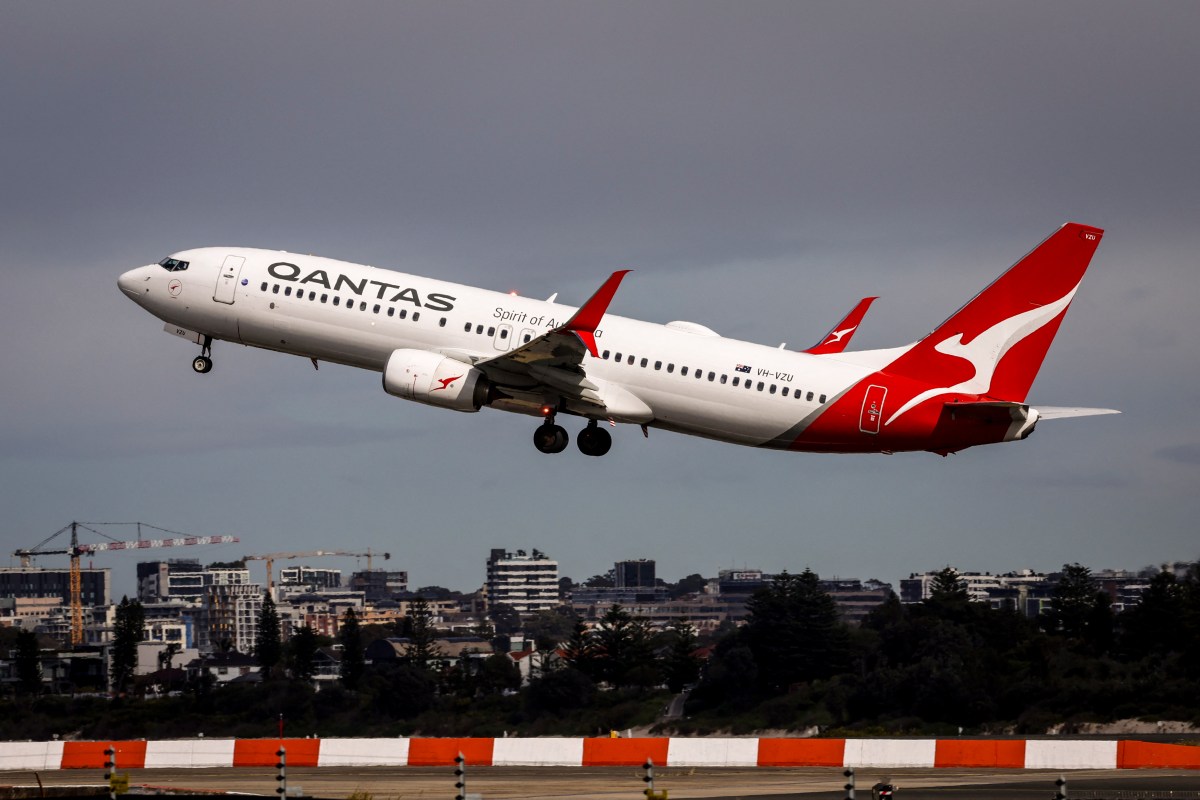
A passenger jet departed an airport in Australia after a critical data error left 51 passengers unaccounted for.
According to a new report from the Australian Transport Safety Bureau (ATSB), the country’s principal watchdog in the field, the Boeing 737 operated by Qantas Airways departed from Canberra Airport on December 1 2024, after the faulty data input led to the passengers mistakenly being marked as not onboard.
The error resulted in the flight crew receiving incorrect data on the plane’s weight, which the ATSB said could have led to significant issues during takeoff, such as insufficient speed or incorrect runway use.
Newsweek contacted the ATSB via email outside of regular hours and Qantas through its website for comment.
Why It Matters
While no injuries occurred as a result, and Qantas has taken several safety actions to avoid such an incident in the future, the ATSB’s report said that the mistake created handling risks for the aircraft while it was on the runway.
The event, it wrote, underscores the importance of all those involved in air transport “proactively identifying, addressing, and, when necessary, escalating unusual situations.”
What To Know
The 737 was originally bound for Sydney from Perth, but inclement weather forced it to divert to Canberra. Prior to the December 1 flight from Canberra, ATSB’s director of transport safety Stuart Godley said a Qantas staff member had “inadvertently input a smaller aircraft type into the flight plan, resulting in the system automatically removing passengers from the flight.”
The staff member realized the mistake and corrected it, the report explains, but this did not reallocate the 51 passengers onto the correct flight. Qantas airport staff attempted to address this, but failed to successfully board the passengers within the system.
“They then took no further action to address the issue, assuming load control would be aware of the error and resolve it,” the report reads.
An erroneous loadsheet—the manifest listing passenger numbers and aircraft weight—was issued to the flight crew, which understated the weight by 4,291 kilograms (9,460 pounds) and resulted in calculated takeoff speeds below what was necessary.
Before departure, this error was discovered, but radio and phone attempts to reach the flight crew went unanswered. Gate agents were asked to relay the information—contrary to procedure—but mistakenly assumed the aircraft’s cabin manager had overheard a radio call outlining the issue.
“The flight crew were therefore not made aware of the loadsheet error until they had taken off,” the report reads.
“Fortunately, the flight crew elected to use the full length of the runway for the takeoff, and did not apply the headwind component, which added an increased safety margin for takeoff performance,” said Godley.
As a result of the incident and the multiple errors the investigation has outlined, the ATSB said Qantas will implement several changes to its communications and safety protocols.
What People Are Saying
ATSB director of transport safety Stuart Godley said: “This incident highlights that It is not sufficient to rely on downstream controls or other functions to intervene or trap errors.”
“The safety margins built into the performance calculations by the flight crew meant that the incorrect data did not lead to a more consequential outcome,” he added.
What Happens Next
The ATSB said that Qantas “will amend its procedures to allow load control personnel to contact flight crews directly via the aircraft communications addressing and reporting system, when a loadsheet error is identified.”
The airline is also now mandating that airport personnel conduct headcounts whenever a passenger discrepancy is identified, and briefings have been issued to Canberra Airport staff detailing how handovers of this kind should be handled.
Read the full article here