



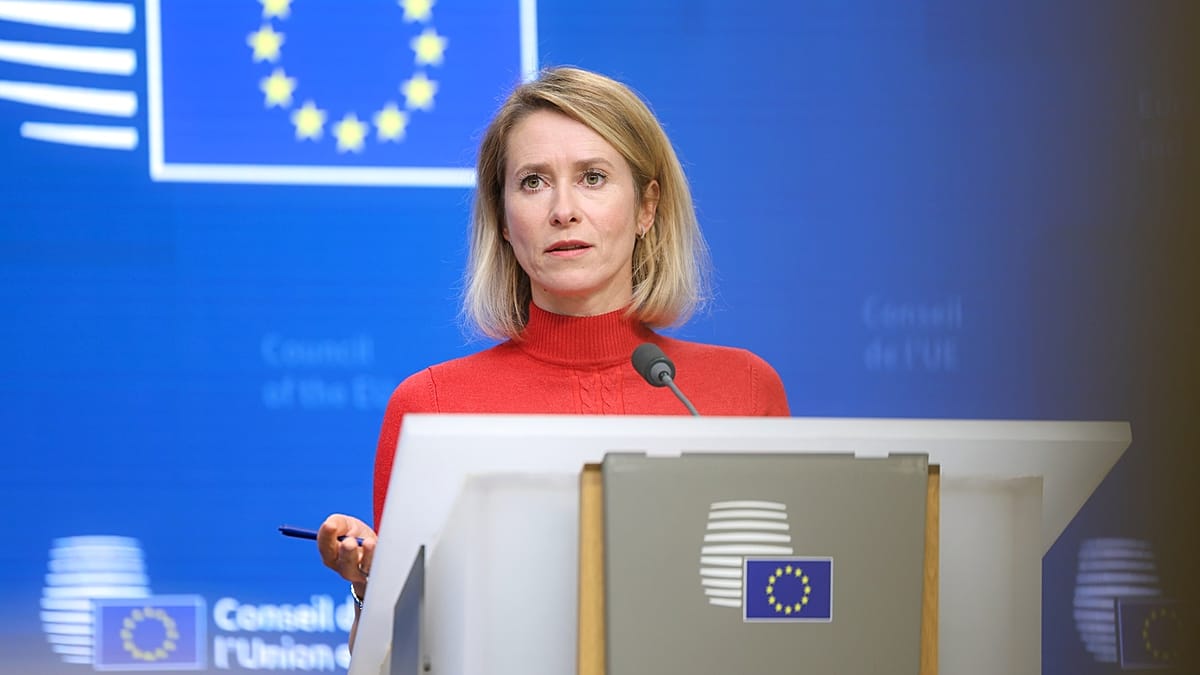
Russian President Vladimir Putin should make tangible concessions before the European Union picks up the phone to re-establish direct communications, High Representative Kaja Kallas said on Thursday as more European leaders call for direct engagement with the Kremlin as part of the Russia-Ukraine peace process currently being brokered by the White House.
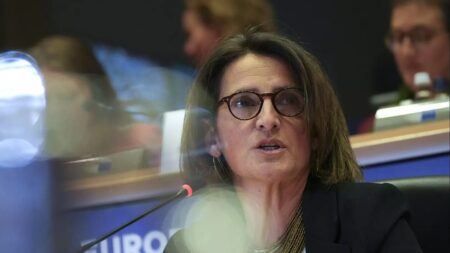
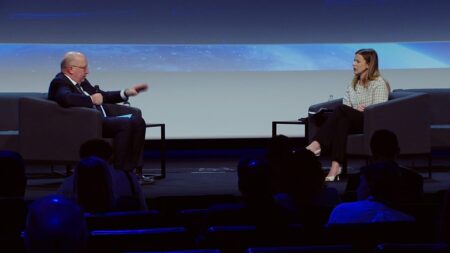
“We can’t be the demandeurs here that, you know, we go to Russia (and say) talk to us,” Kallas said on Thursday after a meeting of foreign affairs ministers in Brussels.
“The concessions that the Americans are putting on Ukraine are quite strong,” she added, referring to reports that Washington is asking Kyiv to give up the areas of the Donbas still under Ukrainian control in exchange for security guarantees.
“I don’t think there is anything that we can offer to Russia on top of what they already get in their understanding with the Americans, which means that why should they talk to us? Because they get what they want in this relationship.”
Kallas pointed to the fact that in the recent round of trilateral talks in Abu Dhabi between Ukrainian, Russian, and American officials, Moscow was represented by a military officer, General Igor Kostyukov, rather than a political envoy “with the right to make decisions”.
Both Kyiv and Moscow described the talks as constructive, though their stances differ.
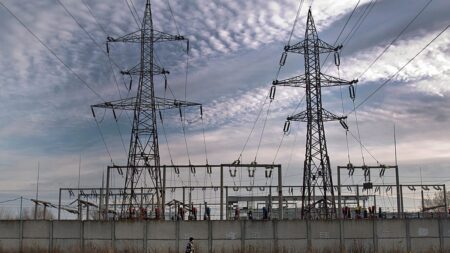
Instead of focusing on who should talk to Putin, Kallas added, European countries should devote their energy to further crippling his war machine, which has plunged Ukrainians into blackouts at sub-zero temperatures. Brussels aims to approve a new package of sanctions on Russia around the war’s fourth anniversary on 24 February.
“What we are working on is putting more pressure on Russia so that they would go from pretending to negotiate to actually negotiate, and also to take into account the worries that we have with Russia that this war will not continue and this war will not expand to other territories,” Kallas said in reply to a Euronews question.
“I think this is important to understand.”
To talk or not to talk
The contentious issue of re-engagement with Russia is high on the agenda after public backing from French President Emmanuel Macron and Italian Prime Minister Giorgia Meloni, who argued the EU needed to speak with a unified voice vis-à-vis Putin.
“I believe the time has come for Europe to also speak with Russia,” Meloni said. “If Europe decides to take part in this phase of negotiations by talking only to one of the two sides, I fear that in the end the positive contribution it can make will be limited.”
The Italian leader suggested the EU appoint a special envoy to lead the conversation on behalf of all 27 member states, though she did not put forward a specific name.
The European Commission, a long-standing advocate of the strategy of diplomatic isolation, later admitted that direct talks will happen “at some point” but not yet.
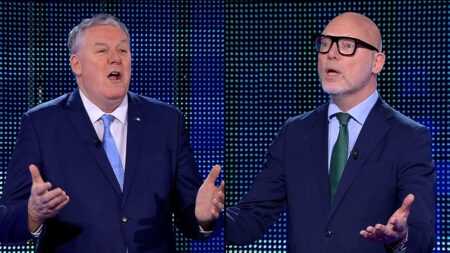
On Thursday, before heading into the ministerial meeting that Kallas chaired, Luxembourg’s Foreign Minister Xavier Bettel told Euronews that discussions with the Kremlin should not be off the table.
“We need to talk with them if we want a solution,” Bettel told Euronews’ flagship morning programme Europe Today. “And if I am too small to do it, then President Macron or someone else (should be) able to represent Europe, because they don’t want to talk to Kaja Kallas,” he added.
Bettel, who met Putin in Moscow in 2015 while serving as Luxembourg’s Prime Minister, said he did not have the “ego” to say he is the “right person” to act as an EU envoy.
“But if people are convinced that I could be helpful I will do it in any position,” he explained. “And I don’t need to be on the front of the scene. I can do it also in the back.”
Still, the idea of re-engaging with Putin remains unpalatable for some capitals, who fear the EU would fall into a trap and legitimise a president accused of war crimes.
Read the full article here