




As the tide crept in and a massive storm threatened Ocean Grove, scientists battled the elements in a desperate bid to extract a massive 23-million-year-old whale fossil.
The palaeontologists were keen to uncover the fossil they described as “one of the most complete whale skeletons ever found in Australia” after a family holidaying at the Bellarine Peninsula stumbled upon it in December.
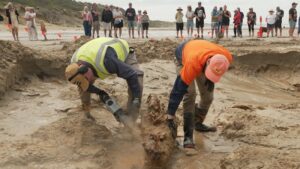
But nature had already reclaimed the site once, burying it beneath layers of sand. The crew now faced a harsh deadline: just a few hours to pinpoint the remains, excavate the fossil, and haul it to safety before the ocean returned to finish the job.
If they failed, they’d need to wait another year to try again.
The team of 20 scientists and construction workers armed themselves with jackhammers, shovels and an excavator, and set up a 25-metre exclusion zone to keep dozens of captivated beachgoers safe.
It was, one palaeontologist said, the most complicated effort to recover a whale fossil in the history of Australian science.
The newly discovered fossil features half the spine of the ancient creature – from the neck to the ribcage – as well as ribs, some of its flipper, back of the skull and the tip of a tooth.
Dr Erich Fitzgerald, who led the dig, said the rare find would offer vital new insights.
“[This fossil is from] one of the least understood episodes globally in the history of whales and dolphins, and there were really major shifts in global climate at the time,” he said.
“This is the closest thing we get to genuine time travel until physicists build us a machine.”
Fitzgerald was thrilled when he heard about the find in late December and grateful that the Davidson family, from far north Queensland, had alerted Museums Victoria.
But before scientists could unlock the rock’s secrets, they first had to dig it out of the sand. Upon closer inspection, they found the 300-kilogram sandstone block containing the fossil was attached to a larger rock, making it a one-tonne problem.
The experts carefully separated the smaller block from the larger one, then lugged it up the beach before the tide came in, loading it onto a ute just as the rain arrived.
They will now spend up to three years analysing the bones in the fragile block. Fitzgerald likens it to slow-cooking: “There’s no fast food with palaeontology when it’s done properly.”
Fitzgerald hopes the fossil will eventually be returned to the Bellarine Peninsula for public viewing.
Though Victoria’s south-west coast is a well-known hotspot for fossil finds, Fitzgerald said big discoveries like this were rare and unpredictable.
But he warned prospective archaeologists to be careful, as it is not permitted in Victoria to remove embedded rocks or fossils without formal consent in consultation with traditional owners.
“By and large, I’m always impressed that when it comes down to it, people do want to share what they have found and do the right thing,” he said.
Start the day with a summary of the day’s most important and interesting stories, analysis and insights. Sign up for our Morning Edition newsletter.
From our partners
Read the full article here