





Firefighters have plenty of ways to battle the spread of flames, but some first responders have a different approach to wildfire response.
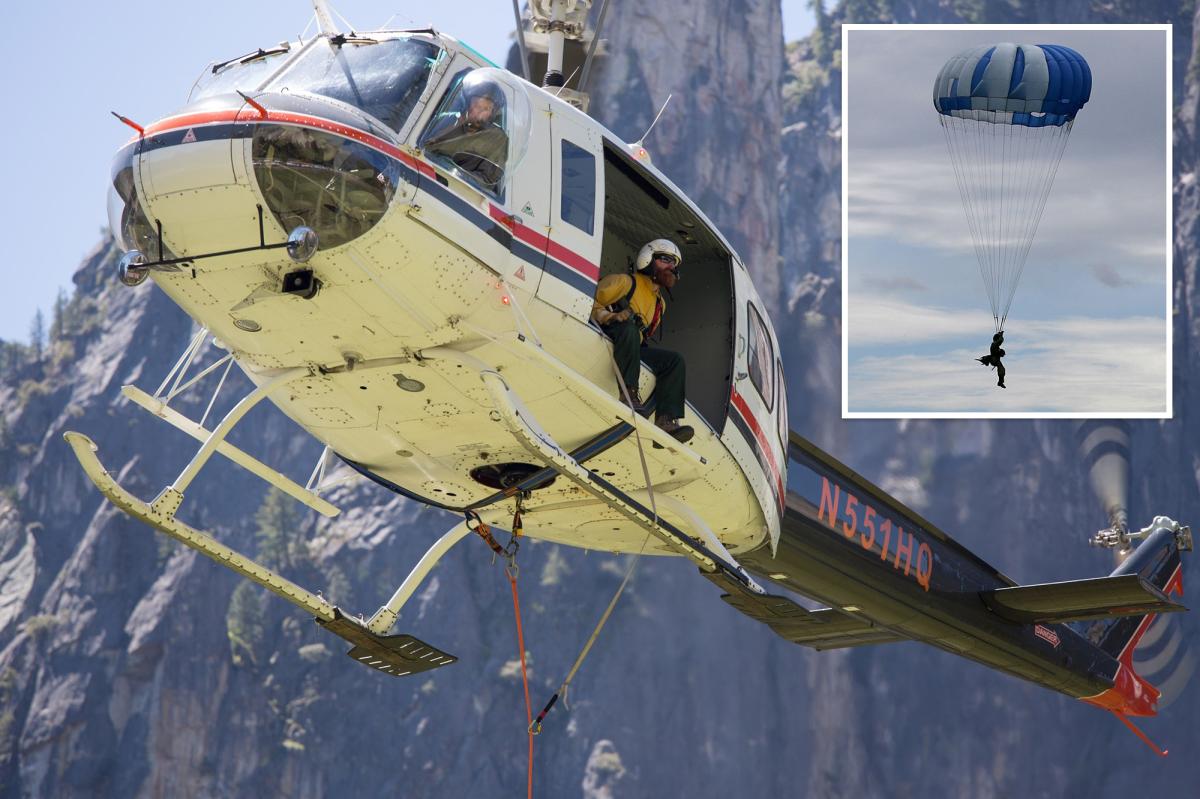
A smokejumper is a unique type of wildland firefighter that’s trained to reach remote fires by parachuting from about 3,000 feet to attack a designated area, typically without road or trail access, according to the National Interagency Fire Center.
This type of response allows firefighters to arrive hours before anyone could hike or drive to a location to extinguish the flames.
These first responders receive intensive training in parachuting, aircraft safety and firefighting tactics, along with specialized skills such as tree climbing, aerial cargo delivery, chainsaw use, parachute equipment manufacturing and prescribed burning.
Footage shared by the U.S. Wildland Fire Service shows smokejumpers leap from a plane, strapped with equipment, into rugged desert terrain where a wildfire rages in the distance.
Large plumes of smoke can be seen rising high into the sky as wrist responders parachute into the region.
Smokejumpers must undergo intensive training in parachuting, aircraft safety, firefighting tactics, tree climbing, aerial cargo delivery, chainsaw use, parachute equipment manufacturing and prescribed burning.
According to the U.S. Department of Agriculture, the smokejumping program began in 1939 as an experiment, but was fully established in 1943, proving to provide outstanding service across the nation.
Notably, the 555th Airborne Battalion Paratrooper unit served as smokejumpers to combat the Japanese balloon bomb offensive during World War II, when Japan launched close to 9,000 balloons during a five-month period to be carried by high-altitude winds into the U.S. carrying anti-personnel and incendiary bombs.
Read the full article here