





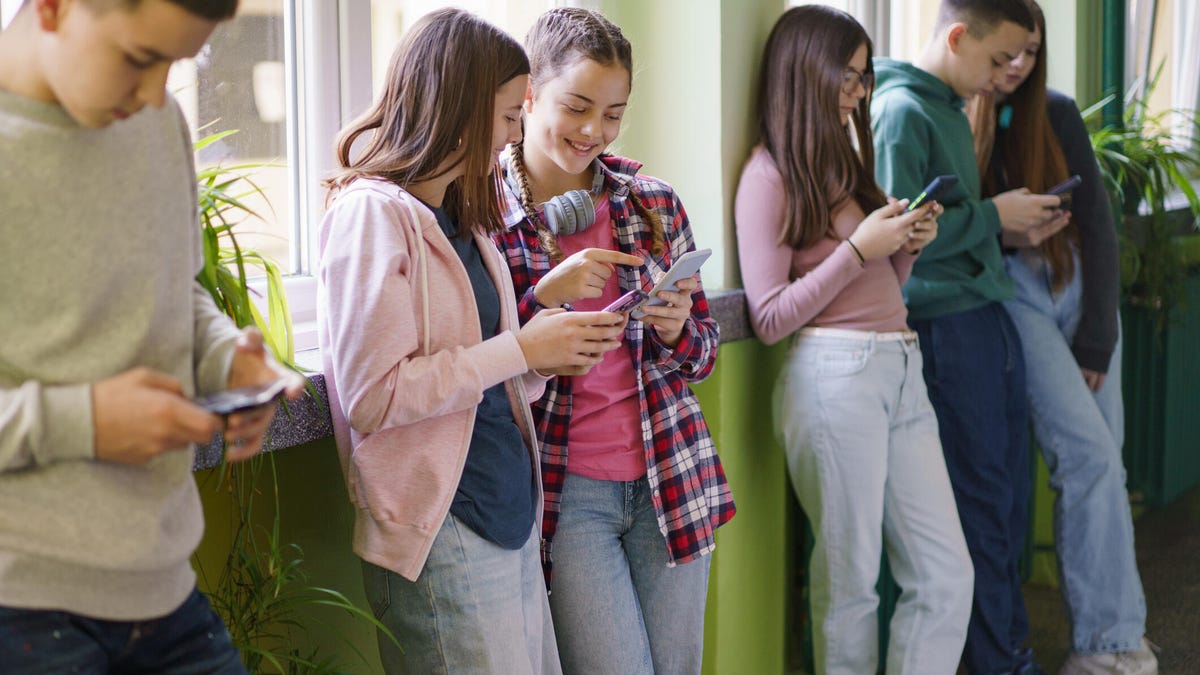
US high schoolers between the ages of 13 and 18 spend more than an hour per day on phones during school hours, according to research by the University of Washington School of Medicine, as published in the Journal of the American Medical Association on Monday. Researchers say social media apps are designed to be addictive.
The study tracked 640 teens’ Android smartphone usage between September 2022 to May 2024, with parental consent. The data shows that teens spend an average of 1.16 hours per day on their smartphones while at school. Social media apps such as Instagram, TikTok and Snapchat are most used, followed by YouTube and video games. Interestingly, older teens, between ages 16 and 18, from lower-income households have higher smartphone usage than other students surveyed.
Don’t miss any of our unbiased tech content and lab-based reviews. Add CNET as a preferred Google source.
“These apps are designed to be addictive. They deprive students of the opportunity to be fully engaged in class and to hone their social skills with classmates and teachers,” said Dr. Dimitri Christakis, the paper’s senior author, in a press release. Some states and school districts have already been enforcing phone restrictions and outright bans, although Christakis says more needs to be done.
“To date, they’ve been very poorly enforced, if at all,” said Christakis. “I think the US has to recognize the generational implications of depriving children of opportunities to learn in school.”
Phone use for teens remains controversial
The new data comes as American education grapples with the prevalence of smartphone usage among children and teens. Social media apps that automatically pull algorithmically tuned content for instant entertainment release dopamine in the brain, according to research from Brown University. This creates a positive feedback loop, which can keep phone users locked in. The rush of quickly digestible entertainment is leading to declining focus and attention spans, according to a study by Nanyang Technological University in Singapore.
The prevalence of teenage smartphone usage coincides with an ongoing decline in math and reading scores, which has been further accelerated by the COVID-19 pandemic. Many school districts are experimenting with outright phone bans. Others argue that phones, when used properly, can benefit students in the classroom, thanks to educational apps.
Thirty-five states and Washington DC have some kind of phone ban policy in effect, and 74% of adults say they’d support banning phones in middle and high school.
The proposed UNPLUGGED Act, aimed at reducing smartphone and personal electronic device distractions in public schools, and the Focus on Learning Act, intended to study and address the impact of mobile device use in schools, have not yet reached the White House for final consideration.
Read the full article here