



Loading
She said any retailer “should be proud to be in the building”.
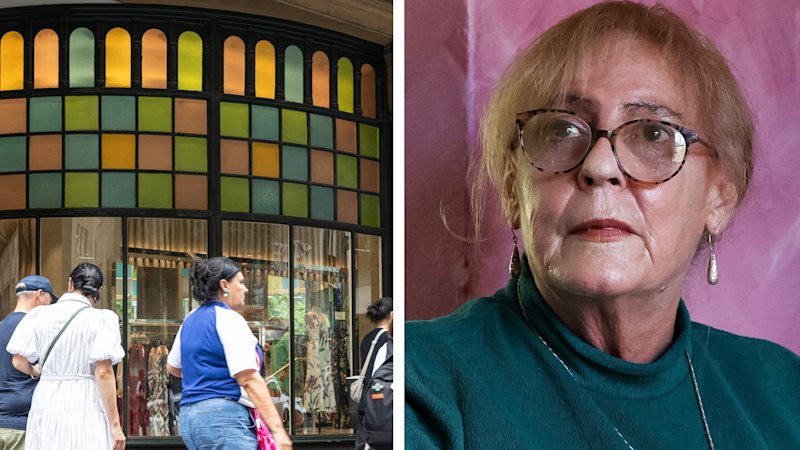
“It’s vital to actually keep what’s there and appreciate it. Even to replace it with modern glass today, it would probably cost a lot more than what it did,” de Bussey said.
And it isn’t the first time there has been a push for change. In 1959, the QVB faced complete demolition when then-lord mayor of Sydney Harry Jensen announced plans to replace the building with a civic square and car park.
Although it was saved, the building remained idle as debate over its fate swirled for decades before it– the country’s second-largest retail landlord and co-owner of the QVB – was classified by the National Trust in 1974.
Lord Mayor Clover Moore was on the council committee that approved the restoration in the 1980s, and said the QVB was one of her favourite buildings in Sydney.
These stained-glass windows outside Market St could be replaced with clear ones if a development application is waved through.Credit: Louie Douvis
“The Queen Victoria Building is an icon, and one of our most important heritage buildings in the City,” Moore said.
“Today the QVB stands in all her glory, testimony to the original vision for the building and the superb craftsmanship of the artisans who put it all back together again.”
Who else was part of the glass restoration efforts?
Standing underneath the QVB’s vast central dome that is 19 metres wide and 58 metres tall, it is difficult to imagine how one person could have painted all the glass – but that was precisely what glass artist Rodney Marshall did.

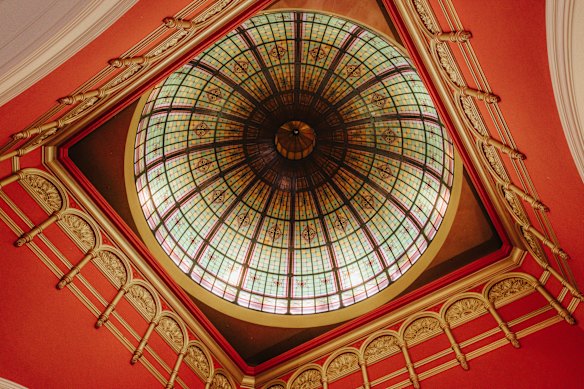
Rodney Marshall painted the QVB’s central dome, which spans 19 metres.Credit: James Brickwood
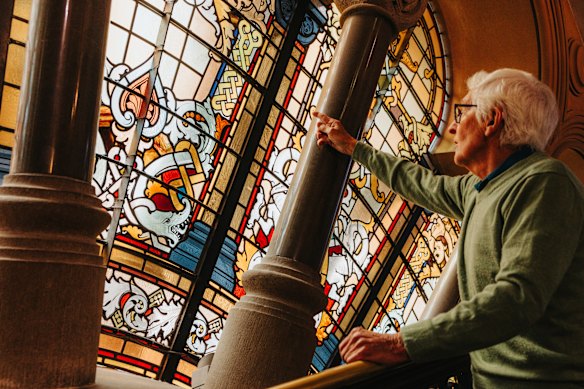
Rodney Marshall was one of the glass painters behind the 1980s refurbishment of the QVB.Credit: James Brickwood
Marshall and his business partner Steve Taylor won a competitive tender process, and in 1985 were tasked with the mammoth effort to restore and repaint almost every glass panel in the building, with the help of apprentices such as de Bussey.
“We didn’t think we’d get the job, there were a few people quoting. We were very excited about the whole thing,” Marshall said.

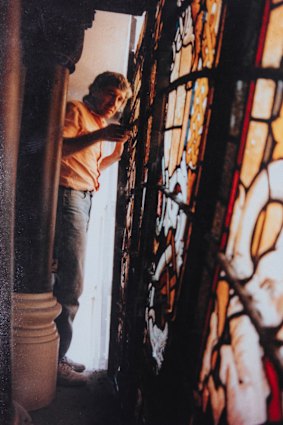
Rodney Marshall working on the QVB in the 1980s.
Shockwaves from the nearby 1978 Hilton Hotel bombing caused extensive damage to the QVB and presented the pair with further challenges, but together they meticulously combed through council archives, library records, architect designs, and even the Herald’s own archives to piece together accurate blueprints of the original glass.
When he could not find any design traces for one of the main windows, Marshall opted to paint the panels with original designs instead.
The process also involved removing the windows, measuring them, cutting glass with templates, painting the panels, kiln firing, coating the glass with putty, and then reinforcing it with steel bars for added strength.
“It was a huge job, with long hours and some days that ended at 9 or 10pm. But it was a wonderful thing to work on – there was no doubt about it,” the 84-year-old said.
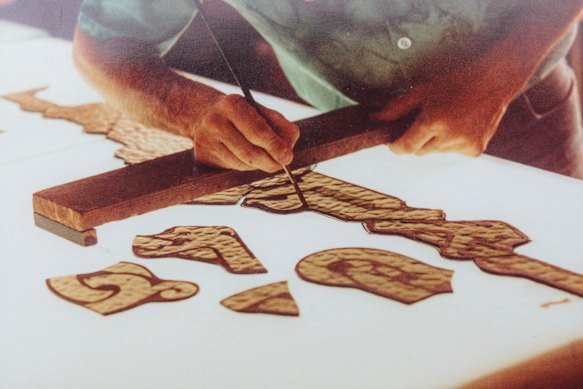
Working with glass was an extremely tedious and meticulous process, Marshall said.
And while Marshall’s intricate glass windows aren’t the ones on the chopping block – the ones that could be scrapped were glazed by a different company – he is adamant that nothing of heritage significance should be removed from the QVB.
“I don’t think many tourists would come to Sydney and head down to a big financial building – but they’ll go and look at the QVB. I hope people appreciate it,” he said.
A spokesperson for Vicinity Centres – the country’s second-largest retail landlord and co-owner of the QVB – said the changes were “minor adjustments”, which, if approved, would “improve natural light and visibility while maintaining architectural consistency along this key streetscape”.
The City of Sydney’s local planning panel will determine the outcome after public submissions close on February 6.
Read the full article here